Where’s your passage?

In all the places wherein I have walked with all the children of Israel spake I a word with any of the tribes of Israel, whom I commanded to feed my people Israel, saying, Why build ye not me an house of cedar?” (2Sam 7:7)

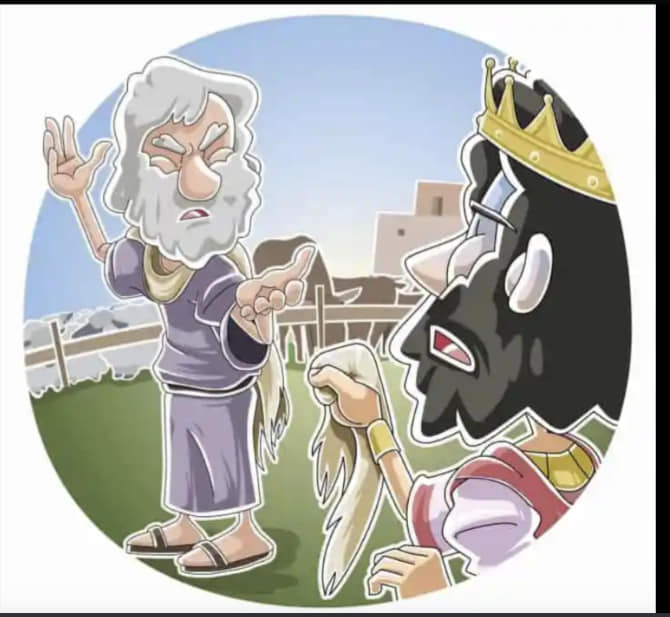
Do you understand what this verse is saying? David had come up with what appeared to be a good idea to build a permanent temple out of cedar. The prophet Nathan agreed that this indeed appeared to be a good idea, even telling him that the LORD agreed that it was a good idea.

Go, do all that is in thine heart; for the LORD is with thee” (2Sam 7:3).

So, here we have this mighty king, a man after God’s own heart, with what appeared to be a good idea, to build God a permanent dwelling place. Reasoning thusly, “I dwell in an house of cedar, but the ark of God dwelleth within curtains” (2Sam 7:2).

We also have a prophet of God in agreement with the King, even asserting that God is also in agreement. However,

…God DID NOT agree that it was a good idea for David to build Him a house of cedar. The way He says it to them is very interesting. He doesn’t say, “No, do not build me a house of Cedar.” Neither does He say, “I didn’t want you to do that, but since you’re very sincere, go ahead anyway.” Some will argue this same way, “where does it say He forbids it?” They also say, “We don’t have a command, but God will accept it because it’s from the sincerity of our heart.”

Here’s how God answers David. “In all the places wherein I have walked with all the children of Israel spake I a word with any of the tribes of Israel, whom I commanded to feed my people Israel, saying, Why build ye not me an house of cedar?

In effect, God asks, “Where is your scripture for your good idea?”

When I ask this question of folks, they respond with some version that they don’t need a scripture. “Look at the results,” they say. “Look at how much good we’ve done.” If 2Samuel 7:7 did not exist, I may have to agree with them. But it does exist, and there are other such passages.

Look at this example in Acts 15. “Forasmuch as we have heard, that certain which went out from us have troubled you with words, subverting your souls, saying, Ye must be circumcised, and keep the law: to whom we gave no such commandment” (Act 15:24).

Here we see the same type of discussion. The converted Jews had the “good idea” that gentiles must become circumcised, and keep the Law of Moses to become Christians. The problem with that “good idea” was that there was no command for it. Both David, and the Christian Jews of the 1st century had come up with “good ideas” from the SILENCE of God. James points out to them that the SILENCE of God prohibits action, not allow it.

Another example in Hebrews says, “For it is evident that our Lord sprang out of Juda; of which tribe Moses spake nothing concerning priesthood” (Heb 7:14).

The SILENCE on a matter prohibited an action. In this case, the LORD had commanded that the Priests under the Law of Moses were to be taken from the tribe of Levi (Ex 28:1-4). Since Jesus was to be a Priest and a King (Heb 5:6), He could not hold that position, for the Law Prohibited it, and Jesus was from the tribe of Judah, something the Law spoke nothing concerning priesthood. Thus, the Law was changed because Christ is both Priest and King (Heb 7:12-13).

From these passages we learn that silence prohibits. When we receive a specific command from God, it prohibits any alteration, addition, or abatement. From these examples we learn 6 things when God is SILENT on a matter.

We are limited to what has been revealed in SCRIPTURE. This is how God communicates to us, through His divine written word (Deut 29:29).

We learn that without a command, there can be no INFERENCES, necessary or otherwise. God’s silence does not IMPLY His permission, it prohibits it.

In Hebrews we learn that we are under the will and testament of Christ. In the LAWS of Contracts & Wills, we are LIMITED to what it says, not given permission by what it does not say (cf. Heb 9:15-17). Think about how difficult it would be to defend a Will if we could change it based on things that are not in it. Could I claim a right to Bill Gates’ will, though I’m not in it? He didn’t say not to include me.

This brings us to the fourth point. If Silence doesn’t limit, then it creates a condition where EVERYTHING is permitted. All we would have to do is say, “God never said I can’t, so I’m going to do it.” It would lead to chaos and confusion. Oh wait, that’s exactly what we see in the denomination realm (cf. 1Cor 14:33).

The reality is, and we understand in other areas, that Silence is NO PERMISSION at all. For example, if you were to order a pepperoni pizza, what does your silence about smoked oysters say? (smoked oysters were a common ingredient in Fairbanks, AK back when I worked in a pizza joint in high school). You would never accept a pizza with smoked oysters when you ordered a pepperoni pizza. Your specific statement and your silence prohibit additional toppings.

Which brings me to the fifth point. We are limited in action when we have a “THUS SAITH THE LORD.” When God specifies something, He need not list all the aberrations. Specific is terrific. We know what He wants. There is another form of His command called Generic commands, in which He gives us liberty to take action He hasn’t specified, but that’s for another article. When we have a specific “Thus saith the LORD” we are limited to the specific statements and commands and cannot alter, add, nor abate His command. Silence prohibits.

–Spencer

“Is it less dishonest to do what is wrong because it is not expressly prohibited by written law? Let us hope our moral principles are not yet in that stage of degeneracy.”

— Thomas Jefferson

Spencer is an evangelist for the church of Christ on Franklin & Juniper in Borger Texas.

Jesus is the LIFE

Jesus said unto her, I am the resurrection, and the life: he that believeth in me, though he were dead, yet shall he live:”

(John 11:25)

One of the great questions of life that everyone eventually asks is, “where are we going when we die?”

We all recognize that we will die physically, and many hope that there’s something more spiritually.

It is better to go to the house of mourning, than to go to the house of feasting: for that is the end of all men; and the living will lay it to his heart.” (Ecc 7:2)

Jesus statement to Mary, “I am the resurrection and the life,” occurred at the mourning of her brother Lazarus. These become a source of comfort for the living. 

Jesus is LIFE. We’ll examine just a few ways in which He is the LIFE and the comfort that brings to His church.

Jesus is the LIGHT & LIFE.

The Gospel of John opens with this description of Jesus. “All things were made by him; and without him was not any thing made that was made. In him was life; and the life was the light of men. And the light shineth in darkness; and the darkness comprehended it not” (John 1:3-5).

This statement made by the inspired Apostle demonstrates that Jesus is the origin of LIFE and Light. The Apostle Paul will make a similar statement to the epicurean and stoic philosophers in Athens.

For in him we live, and move, and have our being; as certain also of your own poets have said, For we are also his offspring” (Acts 17:28).

Since He is the LIGHT & LIFE, all other religions must be Darkness & Death. Jesus is the LIGHT & LIFE

Jesus is the life because He is the IMAGE of the INVISIBLE God.

In whom we have redemption through his blood, even the forgiveness of sins: Who is the image of the invisible God, the firstborn of every creature: For by him were all things created, that are in heaven, and that are in earth, visible and invisible, whether they be thrones, or dominions, or principalities, or powers: all things were created by him, and for him: And he is before all things, and by him all things consist” (Col 1:14-17).

Jesus is God. His presence on earth represented the fulness of the Godhead. “For in him dwelleth all the fulness of the Godhead bodily” (Col 2:9)

Jesus is the IMAGE of the INVISIBLE God.

Jesus is the life because He is FAITHFUL to Forgive.

Then said Jesus, Father, forgive them; for they know not what they do” (Luke 23:34).

He is faithful to forgive, but this same audience was told at Pentecost… “Now when they heard this, they were pricked in their heart, and said unto Peter and to the rest of the apostles, Men and brethren, what shall we do? [38] Then Peter said unto them, Repent, and be baptized every one of you in the name of Jesus Christ for the remission of sins, and ye shall receive the gift of the Holy Ghost” (Acts 2:37-38). What we learn is that Jesus, at the point of His sacrifice, was making available the forgiveness of sins.

Part of the purpose of His miracles of healing was to show that He has the power to FORGIVE. “But that ye may know that the Son of man hath power on earth to forgive sins, (he saith to the sick of the palsy,) I say unto thee, Arise, and take up thy bed, and go thy way into thine house” (Mark 2:10-11).

Jesus is faithful to FORGIVE those that are in Christ. “If we confess our sins, he is faithful and just to forgive us our sins, and to cleanse us from all unrighteousness” (1John 1:9).

Jesus is FAITHFUL to FORGIVE.

Finally, Jesus is the author of ETERNAL LIFE.

And being made perfect, he became the author of eternal salvation unto all them that obey him” (Heb 5:9). “Then Simon Peter answered him, Lord, to whom shall we go? thou hast the words of eternal life” (John 6:68).

What did Jesus Himself say about salvation and eternal life?

(HEAR) Matthew 7:24

Therefore whosoever heareth these sayings of mine, and doeth them, I will liken him unto a wise man, which built his house upon a rock:

(BELIEVE) John 8:24

I said therefore unto you, that ye shall die in your sins: for if ye believe not that I am he, ye shall die in your sins.

(REPENT) Luke 13:3,5

I tell you, Nay: but, except ye repent, ye shall all likewise perish. [5] I tell you, Nay: but, except ye repent, ye shall all likewise perish.

(CONFESS) Matthew 10:32 JV

Whosoever therefore shall confess me before men, him will I confess also before my Father which is in heaven.

(BAPTIZED) Mark 16:16

He that believeth and is baptized shall be saved; but he that believeth not shall be damned.

(FAITHFULNESS) Matthew 28:20

Teaching them (baptized disciples) to observe all things whatsoever I have commanded you: and, lo, I am with you alway, even unto the end of the world. Amen.

Jesus has the words of ETERNAL Life.

–Spencer

Hearing the Voice of Jesus, Pt2

My sheep hear my voice, and I know them, and they follow me” (John 10:27)

Last week we began the discussion about hearing the VOICE of Jesus. The previous article included the first 3 of 5 points.

This article will touch on the next 2 points in this series.

What does it mean to hear the VOICE of Jesus? Some claim He will speak directly, personally, and miraculously to us. What is the truth?

Hearing the VOICE of Jesus.

The voice of Jesus (through the study of His Word) is a source of comfort for us in our pains, sorrows, and hurts. The letters of the New Testament are also the commands of Jesus; “If any man think himself to be a prophet, or spiritual, let him acknowledge that the things that I write unto you are the commandments of the Lord” (1Cor 14:37), The truths contained therein contain comfort. One example is in 1Thess 4.

But I would not have you to be ignorant, brethren, concerning them which are asleep, that ye sorrow not, even as others which have no hope. For if we believe that Jesus died and rose again, even so them also which sleep in Jesus will God bring with him. For this we say unto you by the word of the Lord, that we which are alive and remain unto the coming of the Lord shall not prevent them which are asleep. For the Lord himself shall descend from heaven with a shout, with the voice of the archangel, and with the trump of God: and the dead in Christ shall rise first: Then we which are alive and remain shall be caught up together with them in the clouds, to meet the Lord in the air: and so shall we ever be with the Lord. Wherefore comfort one another with these words” (1Thess 4:13-18).

We can find comfort through the words of Jesus. “Blessed be God, even the Father of our Lord Jesus Christ, the Father of mercies, and the God of all comfort; Who comforteth us in all our tribulation, that we may be able to comfort them which are in any trouble, by the comfort wherewith we ourselves are comforted of God” (2Cor 1:3-4)

Another one of the ways His word comforts us is through the assurance we have from His promises. “That by two immutable things, in which it was impossible for God to lie, we might have a strong consolation, who have fled for refuge to lay hold upon the hope set before us: Which hope we have as an anchor of the soul, both sure and stedfast, and which entereth into that within the veil” (Heb 6:18-19). “But without faith it is impossible to please him: for he that cometh to God must believe that he is, and that he is a rewarder of them that diligently seek him” (Heb 11:6).

Paul wrote; “I have fought a good fight, I have finished my course, I have kept the faith: Henceforth there is laid up for me a crown of righteousness, which the Lord, the righteous judge, shall give me at that day: and not to me only, but unto all them also that love his appearing” (2Tim 4:7-8).

When we seek His voice through the reading & study of His inspired word, and we Obey it, we can have the assurance that He will reward us.

Finally, His voice has the words of ETERNAL Life.

My sheep hear my voice, and I know them, and they follow me: And I give unto them eternal life; and they shall never perish, neither shall any man pluck them out of my hand” (John 10:27-28).

Sadly, some will hear it & turn from it. “From that time many of his disciples went back, and walked no more with him. Then said Jesus unto the twelve, Will ye also go away? Then Simon Peter answered him, Lord, to whom shall we go? thou hast the words of eternal life” (John 6:66-68).

Jesus said, “He that rejecteth me, and receiveth not my words, hath one that judgeth him: the word that I have spoken, the same shall judge him in the last day” (John 12:48). “It is the spirit that quickeneth; the flesh profiteth nothing: the words that I speak unto you, they are spirit, and they are life” (John 6:63).

The writer of Hebrew was inspired to write, “And being made perfect, he became the author of eternal salvation unto all them that obey him” (Heb 5:9). Cornelius was told he needed to hear words, so he sent for Peter who came to tell him words and they were ready to, “hear all things that are commanded thee of God” (Acts 10:6, 22, 33).

When we read, we can believe that we might have life, “But these are written, that ye might believe that Jesus is the Christ, the Son of God; and that believing ye might have life through his name” (John 20:31). When we read, we can understand the mystery, “Whereby, when ye read, ye may understand my knowledge in the mystery of Christ” (Eph 3:4).

The VOICE of Jesus is represented as a sword in the imagery seen by John in Revelation 1:16. The Hebrew writer said, “For the word of God is quick, and powerful, and sharper than any twoedged sword, piercing even to the dividing asunder of soul and spirit, and of the joints and marrow, and is a discerner of the thoughts and intents of the heart” (Heb 4:12).

The sheep will find comfort, peace, assurance, and salvation through the words of the Good Shepherd, Christ Jesus.

–Spencer

Hearing the VOICE of Jesus pt1

Hearing the VOICE of Jesus?

My sheep hear my voice, and I know them, and they follow me” (John 10:27)

The Hebrew writer wrote, “God, who at sundry times and in divers manners spake in time past unto the fathers by the prophets, Hath in these last days spoken unto us by his Son, whom he hath appointed heir of all things, by whom also he made the worlds” (Heb 1:1-2).

We now live under the New Testament of Jesus Christ. The Old Covenant was nailed to the cross and is obsolete (Col 2:14; Heb 8:13).

Any who desire to go back to do one part of the Old Law of Moses is obligated to do the whole; “For I testify again to every man that is circumcised, that he is a debtor to do the whole law. Christ is become of no effect unto you, whosoever of you are justified by the law; ye are fallen from grace” (Gal 5:3-4).

But that is not good, for that Law was a shadow of the good things we have in Christ now (Heb 10:1; Col 2:17).

God Himself said, “This is my beloved Son: hear him” (Mark 9:7). Seeing that all this is true, believers are to hear Jesus. What does it mean to hear the VOICE of Jesus? Some claim He will speak directly, personally, and miraculously to us. What is the truth?

Hearing the VOICE of Jesus.

Contrary to mainstream belief, the sheep that follow Jesus do so of their own volition. God is seeking those that seek Him. “But seek ye first the kingdom of God, and his righteousness; and all these things shall be added unto you” (Matt 6:33). God’s desire that all to come to repentance and be saved (2Pet 3:9) is evidence that we have free choice. We voluntarily seek Him, listen to His voice, and it’s His voice (words) that will judge us in the last day. “He that rejecteth me, and receiveth not my words, hath one that judgeth him: the word that I have spoken, the same shall judge him in the last day” (John 12:48).

Therefore, all are invited to follow the Good Shepherd of our own free will.

Those that choose to follow Jesus also Obey His VOICE. “If ye love me, keep my commandments” (John 14:15; 15:14). “And why call ye me, Lord, Lord, and do not the things which I say” (Luke 6:46)? “Not every one that saith unto me, Lord, Lord, shall enter into the kingdom of heaven; but he that doeth the will of my Father which is in heaven. Many will say to me in that day, Lord, Lord, have we not prophesied in thy name? and in thy name have cast out devils? and in thy name done many wonderful works? And then will I profess unto them, I never knew you: depart from me, ye that work iniquity” (Matt 7:21-23).

It makes zero sense to call oneself a “follower” of Christ, and not actually follow Him in obedience to His word. People keep using that word “follower” without doing anything He says. I constantly hear folks living in sin claiming also to be a follower of Jesus. Paul warned; “Know ye not that the unrighteous shall not inherit the kingdom of God? Be not deceived: neither fornicators, nor idolaters, nor adulterers, nor effeminate, nor abusers of themselves with mankind, Nor thieves, nor covetous, nor drunkards, nor revilers, nor extortioners, shall inherit the kingdom of God. And such were some of you: but ye are washed, but ye are sanctified, but ye are justified in the name of the Lord Jesus, and by the Spirit of our God” (1Cor 6:9-11). If these cannot inherit the kingdom of God, how can we say at the same time that we are followers of Christ while continuing in them?

Therefore, all true followers of Jesus are obedient to His voice.

This next point is vital to understand. Some also claim that Jesus will speak to us personally, miraculously, and separately from the Inspired word. Jesus never made this claim.

In His prayer in the garden, while praying for His Apostles, He then prayed for folks that would believe in Him after His death. He said, “Neither pray I for these alone, but for them also which shall believe on me THROUGH THEIR WORD; That they all may be one; as thou, Father, art in me, and I in thee, that they also may be one in us: that the world may believe that thou hast sent me” (John 17:20-21). We who come to Jesus after His death will believe based on the words of the Apostles. The Apostles were given the promise of divine Holy Spirit Inspiration (John 16:13; cf, 14:26; 15:26), not us.

We hear the voice of the Chief Shepherd in as much as we read His inspired word delivered through the Inspired writers. Paul wrote through inspiration; “If any man think himself to be a prophet, or spiritual, let him acknowledge that the things that I write unto you are the commandments of the Lord” (1Cor 14:37). He also wrote; “How that by revelation he made known unto me the mystery; (as I wrote afore in few words, Whereby, when ye read, ye may understand my knowledge in the mystery of Christ)” (Eph 3:3-4; cf 2Tim 3:15-17).

The Apostle John wrote, “And many other signs truly did Jesus in the presence of his disciples, which are not written in this book: But these are written, that ye might believe that Jesus is the Christ, the Son of God; and that believing ye might have life through his name” (John 20:30-31). He also wrote, “These things have I written unto you that believe on the name of the Son of God; that ye may know that ye have eternal life, and that ye may believe on the name of the Son of God” (1John 5:13; emph mine seb).

Therefore, all true followers of Jesus hear His VOICE through the reading, studying, and memorizing His written inspired word.

Next week we’ll look at a few more points regarding the VOICE of Jesus. To recap; we Voluntarily hear His voice. We who hear it will Obey His voice. Those that hear, and obey are Informed of His will through the reading, study, and memorizing of His Inspired word.

–Spencer

Who is Jesus pt2

And he said, Who art thou, Lord? And the Lord said, I am Jesus whom thou persecutest: it is hard for thee to kick against the pricks” (Acts 9:5)

We live in a time where there are many Christs being preached.

For if he that cometh preacheth another Jesus, whom we have not preached, or if ye receive another spirit, which ye have not received, or another gospel, which ye have not accepted, ye might well bear with him” (2Cor 11:4).

We need to know the Real Jesus of the Bible. Last week we made just a few observations about the True Christ. It is impossible for a few articles to say all that could be said about Him. “And there are also many other things which Jesus did, the which, if they should be written every one, I suppose that even the world itself could not contain the books that should be written. Amen” (John 21:25).

This article will look at a few more things we learn from scripture about Jesus.

Here are the observations from last week:

Jesus is the Savior of the world. “And we have seen and do testify that the Father sent the Son to be the Saviour of the world” (1John 4:14).

Jesus is a Sympathetic and Understanding Savior. “For in that he himself hath suffered being tempted, he is able to succour them that are tempted” (Heb 2:18).

Jesus is the Son of God. “God, who at sundry times and in divers manners spake in time past unto the fathers by the prophets, Hath in these last days spoken unto us by his Son, whom he hath appointed heir of all things, by whom also he made the worlds; Who being the brightness of his glory, and the express image of his person, and upholding all things by the word of his power, when he had by himself purged our sins, sat down on the right hand of the Majesty on high” (Heb 1:2-3).

Who is Jesus? Part 2.

Jesus is the Express Image of the Godhead. “And he is the head of the body, the church: who is the beginning, the firstborn from the dead; that in all things he might have the preeminence. For it pleased the Father that in him should all fulness dwell” (Col 1:18-19). “For in him dwelleth all the fulness of the Godhead bodily” (Col 2:9).

While much could be said about this, I want to focus on the fact that Jesus is Divine, He is Deity, He is God. Some religions do not see Jesus as God, but as a created being. This simply is not true. Jesus is God.

The Scriptures teach “In the beginning was the Word, and the Word was with God, and the Word was God” (John 1:1). In this passage Jesus is called “the Word.” Note the Scriptures said Jesus “the Word” was “God.” Some will use their rewritten bibles to argue about “definite articles” and misquote passages in attempt to make Jesus not God, but “a God.” We know better.

The Scriptures affirm the deity and godhood of Jesus. Jesus calls Himself the name “I AM” which is the name used for God (John 8:58; Exo 3:14). Jesus said God is “My Father” which made “Himself equal with God” (John 5:18). Jesus accepted the identification “My Lord and my God!” from Thomas (John 20:28). Jesus’ agreement with Thomas in verse 29 is a shattering deathblow to the false doctrine that Jesus is only “a god.”

Jesus said to him, ‘Thomas, because you have seen Me, you have believed. Blessed are those who have not seen and yet have believed’” (20:29). Jesus affirmed what Thomas “believed” was in fact the truth; Jesus is “Lord” and “God.”

There are other Scriptures that confirm the deity of Christ. “For unto us a child is born, unto us a son is given: and the government shall be upon his shoulder: and his name shall be called Wonderful, Counsellor, The mighty God, The everlasting Father, The Prince of Peace”. (Isaiah 9:6; Acts 20:28; Matt 1:23; Heb 1:8).

Jesus is the final Judge of the world. While living on earth He did not come to bring judgment at that time. Now that He has Died, was Buried, and is Resurrected, He sits on His Judgment seat and everyone will appear before Him. “For we must all appear before the judgment seat of Christ; that every one may receive the things done in his body, according to that he hath done, whether it be good or bad. Knowing therefore the terror of the Lord, we persuade men” (2Cor 5:10-11a).

It will be a terrifying thing to appear before Him if we’re found to be disobedient. “It is a fearful thing to fall into the hands of the living God” (Heb 10:31). But, how can we appear before His throne with confidence? “Let us therefore come boldly unto the throne of grace, that we may obtain mercy, and find grace to help in time of need” (Heb 4:16). We can know when we know His word.

Jesus said, “He that rejecteth me, and receiveth not my words, hath one that judgeth him: the word that I have spoken, the same shall judge him in the last day” (John 12:48). Jesus has given us His Divine word to guide us. “And that from a child thou hast known the holy scriptures, which are able to make thee wise unto salvation through faith which is in Christ Jesus. All scripture is given by inspiration of God, and is profitable for doctrine, for reproof, for correction, for instruction in righteousness: That the man of God may be perfect, throughly furnished unto all good works” (2Tim 3:15-17). “And ye shall know the truth, and the truth shall make you free” (John 8:32).

These are comforting words. We can know the Real, Living, & True Jesus.

Do you remember the list from that social media post last week? Could you verify the validity of them? Did you look them up? Here’s what I found.

  • Joy Giver, John 17:13.
  • Eternal life Giver, John 10:28.
  • Strength Giver, 2Cor 12:9.
  • Unconditional Lover, Rom 5:8. (this one is often misleading)
  • Sins forgiver. Mark 2:10.

–Spencer

Who is Jesus

And he said, Who art thou, Lord? And the Lord said, I am Jesus whom thou persecutest: it is hard for thee to kick against the pricks” (Acts 9:5)

Jesus saith unto him, I am the way, the truth, and the life: no man cometh unto the Father, but by me.”    (John 14:6).

Years ago, we were driving home from worship. We had a young relative with us and he asked, “Who is Jesus?”

His question broke our hearts. While he was not under our care, we felt a responsibility toward him and our other relatives.

I’m not surprised anymore if a person has this question. In reality, most of the people who claim to believe in Jesus do not know the Jesus of the Bible. They only know a different Jesus.

For if he that cometh preacheth another Jesus, whom we have not preached, or if ye receive another spirit, which ye have not received, or another gospel, which ye have not accepted, ye might well bear with him” (2Cor 11:4).

Who is Jesus?

One person posted to social media that Jesus is…

  • Joy Giver,
  • Eternal life Giver,
  • Strength Giver,
  • Unconditional Lover,
  • Sins forgiver.

They posted this without any scripture references, which is typical. Here’s a little homework: is the above true? If so, how would we know?

This got me to thinking about our own study about Jesus. The scriptures say, “And there are also many other things which Jesus did, the which, if they should be written every one, I suppose that even the world itself could not contain the books that should be written. Amen” (John 21:25). While one bulletin article is insufficient to fully answer the question, I’ll give just a sampling about who is Jesus.

Jesus is the Savior of the world. “And we have seen and do testify that the Father sent the Son to be the Saviour of the world” (1John 4:14). I was talking to someone and they asked if one could be saved in a religion that doesn’t believe in Jesus. I asked what this verse meant; “Jesus saith unto him, I am the way, the truth, and the life: no man cometh unto the Father, but by me.” (John 14:6). He said that Jesus is the only way to God. Only Jesus is the Savior of the world.

Jesus is a Sympathetic and Understanding Savior. “For in that he himself hath suffered being tempted, he is able to succour them that are tempted” (Heb 2:18). “For we have not an high priest which cannot be touched with the feeling of our infirmities; but was in all points tempted like as we are, yet without sin. Let us therefore come boldly unto the throne of grace, that we may obtain mercy, and find grace to help in time of need” (Heb 4:15-16).

This is a hugely comforting quality. It points to the fact that Jesus walked this earth and experienced the pain and suffering common to all. He hungered, He wept, He thirsted, He was alone. He knows what we’re going through, and He Understands.

Jesus is the Son of God. “God, who at sundry times and in divers manners spake in time past unto the fathers by the prophets, Hath in these last days spoken unto us by his Son, whom he hath appointed heir of all things, by whom also he made the worlds; Who being the brightness of his glory, and the express image of his person, and upholding all things by the word of his power, when he had by himself purged our sins, sat down on the right hand of the Majesty on high” (Heb 1:2-3).

The demon world acknowledged this truth, “And, behold, they cried out, saying, What have we to do with thee, Jesus, thou Son of God? art thou come hither to torment us before the time (Matt 8:29; Mark 3:11)?

This understanding is essential. “But these are written, that ye might believe that Jesus is the Christ, the Son of God; and that believing ye might have life through his name” (John 20:31). Jesus, as the Son of God, is God. “Therefore the Jews sought the more to kill him, because he not only had broken the sabbath, but said also that God was his Father, making himself equal with God” (John 5:18).

There are two more qualities of Jesus I’d like to share next week.

The Jesus of the Bible, the Savior, The Understanding Son of God is amazing. He’s more than we can even imagine, but He is not a figment of our imagination. We need to be careful to make Him into something He’s not by overlooking the whole council of God. “Thanks be unto God for his unspeakable gift” (2Cor 9:15)

–Spencer

Hebrews ch12 The ENDURING Kingdom

OUTLINE of HEBREWS.

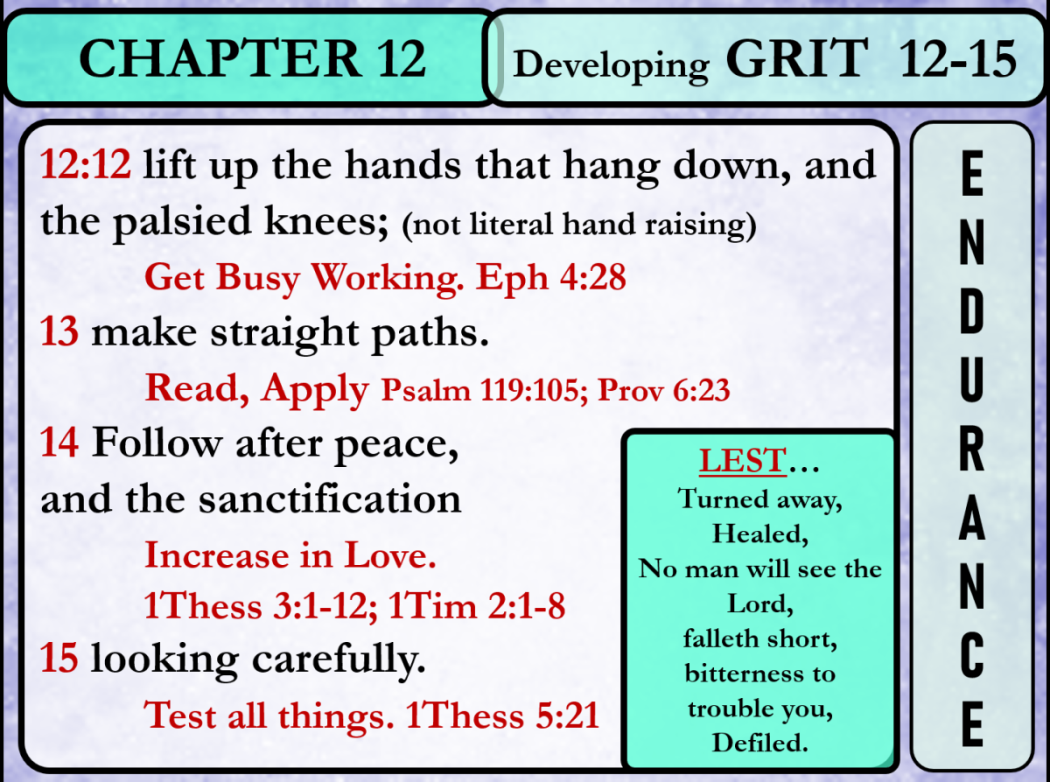
ENDURE. Heb 12.

  1. ENDURANCE of Jesus on the cross for us. 1-2
    1. A RACE.
  2. NOT YET RESISTED to bloodshed. 3-4
    1. BOXING metaphor
    1. Martyrdom like Stephen, or Paul, or James.
    1. See 1Cor 9:24-27
  3. DISCIPLINE as sons. 5-11
    1. Father training a Son.
      1. Love, Perfect (non erring) Father, for highest good.
    1. Training. See James 1:2-4
    1. Love not punitive
    1. HOW
  4. UNHOLY unrighteous Esau. 12-17
  5. REGISTERED in Heaven. 18-24
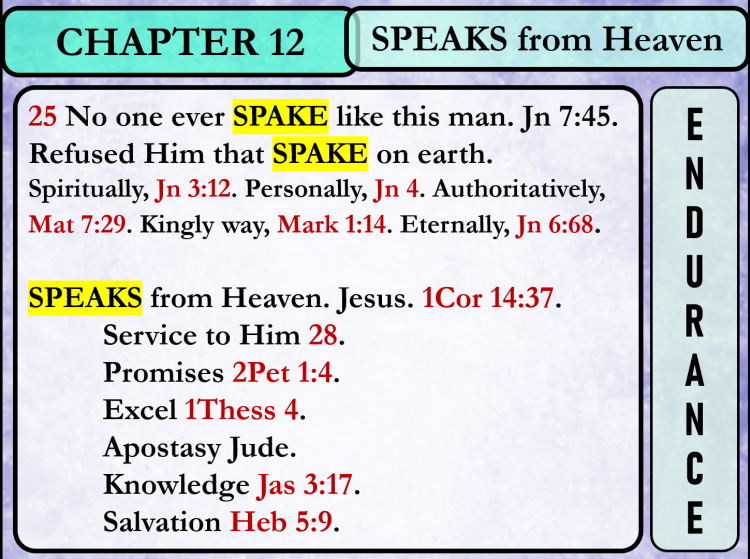
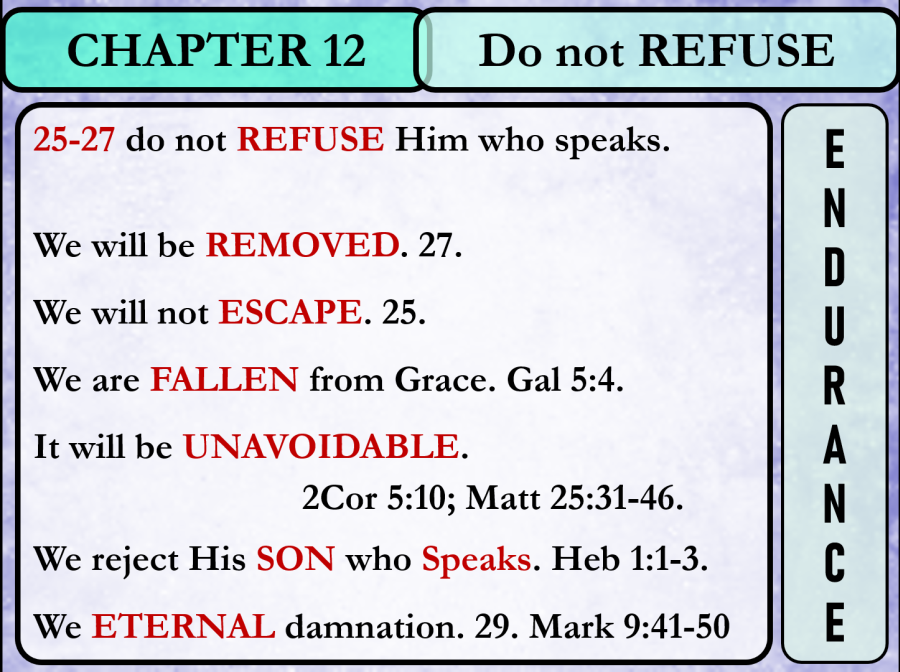
  6. No ESCAPE if we refuse. 25-29

Overview of Hebrews.

Hebrews ch11; FAITH

FAITH is used in multiple senses in Scripture. It is a much deeper concept than just “belief & trust.”

FAITH is used in these ways.

The FULL Body of information from God. Heb 11:1-3; Jude 3; Rom 10:17

To ACT upon hearing. Jas 2:14-26.

It INSISTS in being loyal to the One in whom we have faith. Heb 11:35

To TRUST fully in the One we believe. Heb 11:17-19

Is to HOPE in the One we have heard. Heb 11:13

Here is a link to the overview of Hebrews.

Do you love your enemies?

you LOVE your ENEMY?

But I say unto you which hear, Love your enemies, do good to them which hate you, Bless them that curse you, and pray for them which despitefully use you.”    (Luke 6:27-36).

All this month we’ve been talking about LOVE. Here’s a recap.

Love the LORD week 1;

First, GOD IS LOVE. (1John 4:8)

Second, GOD LOVES. (1John 4:9)

Third, HE LOVED US FIRST. (1John 4:19)

Last, GOD DIED FOR US. (1John 3:16)

Love OTHERS week 2:

Love The Brethren. (John 13:34)

Love Others. (1Thess 3:12)

Love to Visit the needy. (Jas 1:27)

Love our Enemies. (Luke 6:27)

Love His Appearing week 3:

We Look for His return. (Luke 12:37)

We Obey Him. (Luke 6:46)

We add Virtue, etc. (2Pet 1:5-11)

We Endure this life. (Matt 10:24)

This week we’ll look at the Lord’s command to Love our Enemy.

It’s unambiguous that we are to love our enemies. Who our enemies are varies. As much as it lies within us, we try to live at peace with all men (Rom 12:18), but there are some that just don’t like us, are rude, mean, or antagonistic to the church. It matters not why; Jesus taught us to LOVE our ENEMIES.

How are we to LOVE an ENEMY?

First, with EMPATHY. We need to have empathy for we were once enemies to the Lord.

For if, when we were enemies, we were reconciled to God by the death of his Son, much more, being reconciled, we shall be saved by his life” (Romans 5:10).

And such were some of you: but ye are washed, but ye are sanctified, but ye are justified in the name of the Lord Jesus, and by the Spirit of our God” (1Cor 6:9-11).

No matter what a person may say to provoke us, we must remain NICE. The anger of man does not produce the righteousness of God (Jas 1:20)

And if ye do good to them which do good to you, what thank have ye? for sinners also do even the same” (Luke 6:33).

This teaching doesn’t mean we put ourselves in harm’s way. Paul avoided many attacks on his life by the Jews, but he still desired they be saved.

Brethren, my heart’s desire and prayer to God for Israel is, that they might be saved” (Rom 10:1).

This next one is difficult, but we need to have a heart to EVANGELIZE.

Some will, some wont, but you’ll never know until you try. We seldom think about, nor even desire to teach an enemy the truth of the gospel.

I ask myself this question whenever interacting with an “enemy;” Could I invite them to worship despite our conflict? Look at this example:

Jesus sent Ananias to Saul of Tarsus to teach him the gospel. “Then Ananias answered, Lord, I have heard by many of this man, how much evil he hath done to thy saints at Jerusalem” (Acts 9:10-16).

Within the command to love our enemy is to be Merciful.

Be ye therefore merciful, as your Father also is merciful” (Luke 6:36).

Merciful means… compassionate, experiencing deep pity (lamentation) as God has for people who look to Him for help in their difficult situations. Consider the example of the stolen servant girl who told Naaman of a cure for leprosy. (2Kings 5:1-3). “Would God my lord were with the prophet that is in Samaria! for he would recover him of his leprosy.”

Finally, and very importantly, YOUR forgiveness depends on it. Let’s read from our passage in Luke:

For if ye love them which love you, what thank have ye? for sinners also love those that love them. And if ye do good to them which do good to you, what thank have ye? for sinners also do even the same. And if ye lend to them of whom ye hope to receive, what thank have ye? for sinners also lend to sinners, to receive as much again. But love ye your enemies, and do good, and lend, hoping for nothing again; and your reward shall be great, and ye shall be the children of the Highest: for he is kind unto the unthankful and to the evil” (Luke 6:32-35). To love only those that love us is no better than the enemies themselves. Look at what Jesus taught:

For if ye forgive men their trespasses, your heavenly Father will also forgive you: But if ye forgive not men their trespasses, neither will your Father forgive your trespasses

(Matt 6:14-15; Mt 18:35; Mr 11:25-26; Eph 4:32; Col 3:13).

People mistake these concepts as having to take abuse, pain, etc. That’s a mistake. We have authority to avoid our enemies attacks, if we do it without sin, and without denying the Lord.

Think about the Apostle Paul in Acts 23:12-31. Some of the very people he was trying to reach with the Gospel had sworn to lie in wait for him so they would have occasion to ambush and kill him. He loved those in Judaism who were persecuting him (Rom 10:1-3), but that didn’t mean he had to be killed if it could be avoided (see, Acts 9:25; 2Cor 11:33).

Dearly beloved, avenge not yourselves, but rather give place unto wrath: for it is written, Vengeance is mine; I will repay, saith the Lord. Therefore if thine enemy hunger, feed him; if he thirst, give him drink: for in so doing thou shalt heap coals of fire on his head. Be not overcome of evil, but overcome evil with good

(Rom 12:19-21).

–Spencer