Why I PREACH

Recently, someone asked me why I got into preaching. I gave an answer that had two main motivations. Afterward, I got to thinking about why we preach at all. From this study I came up with 4 more reasons why we preach.

Why do we PREACH?

HEARING requires preaching. Rom 10:14) How then shall they call on him in whom they have not believed? and how shall they believe in him of whom they have not heard? and how shall they hear without a preacher? Hearing is the first step in God’s plan to save mankind. There will be no “zapping” of the Holy Spirit to save us. We must Seek Him through a study of His word.

CHRIST commanded preaching. Mark 16:15) And he said unto them, Go ye into all the world, and preach the gospel to every creature. Before He ascended into heaven, Christ commanded that the Gospel be preached. Who am I to go against a command of Christ?

Luke 6:46) And why call ye me, Lord, Lord, and do not the things which I say?

ANGELS are looking into it. 1Pet 1:10-2) Of which salvation the prophets have enquired and searched diligently, who prophesied of the grace that should come unto you: 11 Searching what, or what manner of time the Spirit of Christ which was in them did signify, when it testified beforehand the sufferings of Christ, and the glory that should follow. 12 Unto whom it was revealed, that not unto themselves, but unto us they did minister the things, which are now reported unto you by them that have preached the gospel unto you with the Holy Ghost sent down from heaven; which things the angels desire to look into. The gospel that was preached by the Apostles, then recorded for us in the written word, was searched out by Angels. That’s amazing to me. Yet we often don’t read it, much less to search through it diligently.

EVERYONE I know needs it. Matt 28:19; Col 1:27-28) To whom God would make known what is the riches of the glory of this mystery among the Gentiles; which is Christ in you, the hope of glory: 28 Whom we preach, warning every man, and teaching every man in all wisdom; that we may present every man perfect in Christ Jesus: Every person needs Christ and to obey His gospel. The gospel is about the death, burial, and resurrection of Jesus. (cf 2Thess 1:7-8; 2Pet 3:9)

I’m REQUIRED to preach. 1Cor 9:16) For though I preach the gospel, I have nothing to glory of: for necessity is laid upon me; yea, woe is unto me, if I preach not the gospel! Now it gets a little more personal. Since I’ve become an evangelist, one who’s main work is to preach the gospel, woe unto me if I don’t. This is what I do, spread the gospel. I’ve become that guy who needs to talk about Jesus anytime I’m in the presence of another person.

PERSONAL REASONS Luke 16:19-31) And it came to pass, that the beggar died, and was carried by the angels into Abraham’s bosom: the rich man also died, and was buried; 23 And in hell he lift up his eyes, being in torments, and seeth Abraham afar off, and Lazarus in his bosom. The last reason, and maybe the most emotional reason, is that those that I love the most are dying OUTSIDE of Christ. They have not all obeyed the Gospel and are in jeopardy of their souls. All of us need to take this seriously. In the story of the Rich man & Lazarus, the Rich man became very evangelistic upon discovery of his fate. This motivates me to be evangelistic in life!!

This is why I PREACH the Gospel.

Agape,

Spencer

Spencer is a gospel preacher for the church of Christ at Franklin & Juniper in Borger, Texas.

What is God’s PLAN for you?

The phrase “God has a plan for you” is one of the most Disheartening, Destructive, and Dangerous false Doctrines taught today. It’s based on an abuse of the context of Jeremiah’s prophecy.
God does have a plan for you. It’s the same plan for everyone.
Ecclesiastes 12:13 KJV
Let us hear the conclusion of the whole matter: Fear God, and keep his commandments: for this is the whole duty of man.
2 Peter 3:9 KJV
The Lord is not slack concerning his promise, as some men count slackness; but is longsuffering to us-ward, not willing that any should perish, but that all should come to repentance.
Mark 16:15-16 KJV
And he said unto them, Go ye into all the world, and preach the gospel to every creature. [16] He that believeth and is baptized shall be saved; but he that believeth not shall be damned.
1 Thessalonians 4:11-12 KJV
And that ye study to be quiet, and to do your own business, and to work with your own hands, as we commanded you; [12] That ye may walk honestly toward them that are without, and that ye may have lack of nothing.

God’s PLAN for you and me.
God is no respect of persons. Acts 10:34.
He has the same PLAN for the whole world. SADLY, MOST WON’T FOLLOW IT.
1) PUT on Christ.
Galatians 3:27 KJV
For as many of you as have been baptized into Christ have put on Christ.
Mark 16:15-16 KJV
And he said unto them, Go ye into all the world, and preach the gospel to every creature. [16] He that believeth and is baptized shall be saved; but he that believeth not shall be damned.
2) LOVE the Lord, His commands, His children, and everyone.
Matthew 22:37,39 KJV
Jesus said unto him, Thou shalt love the Lord thy God with all thy heart, and with all thy soul, and with all thy mind. [39] And the second is like unto it, Thou shalt love thy neighbour as thyself.
1 John 5:3 KJV
For this is the love of God, that we keep his commandments: and his commandments are not grievous.
3) ASPIRE to live a quiet and peaceful life.
1 Thessalonians 4:11-12 KJV
And that ye study to be quiet, and to do your own business, and to work with your own hands, as we commanded you; [12] That ye may walk honestly toward them that are without, and that ye may have lack of nothing.
1 Timothy 2:2-4 KJV
For kings, and for all that are in authority; that we may lead a quiet and peaceable life in all godliness and honesty. [3] For this is good and acceptable in the sight of God our Saviour; [4] Who will have all men to be saved, and to come unto the knowledge of the truth.
4) NEVER quit being faithful even in the face of pain, persecution, and personal struggles.
Revelation 2:10 KJV
Fear none of those things which thou shalt suffer: behold, the devil shall cast some of you into prison, that ye may be tried; and ye shall have tribulation ten days: be thou faithful unto death, and I will give thee a crown of life.
Matthew 10:22 KJV
And ye shall be hated of all men for my name’s sake: but he that endureth to the end shall be saved.

Public Conversations

“Therefore disputed he in the synagogue with the Jews, and with the devout persons, and in the market daily with them that met with him.”  (Acts 17:17)

For several years it has been my custom to carry my bible into the public and to read privately, but openly. Many folks will comment, or be complimentary. Many more will walk on by. A few will stop to talk about their faith.

This article is a blending of several of those conversations. These two examples are representative of almost all of them. Most of these folks have the identical objections to the Bible. The objections are so common that I’ve actually made a list of the top 10 most common ones along with scriptural answers.

I have not raised my voice, become angry (Jas 1:20), and have avoided any rudeness on my part. I wish it could be said of the other part. Some have been very pleasant and have resulted in a few conversions.

May these be of aid in your efforts. 

A conversation on baptism.

(A blending of several actual conversations)

Person A: You don’t have to be baptized to be saved? You just need to ask Jesus into your heart.

Person B: So, you believe this version of Mark 16:16? “He that believeth and is (NOT) baptized shall be saved.”

Person A: My grandma was a wonderful woman. She never went to church, never had religion, but she was so kind to all.

Person B: So, you believe this version of Mark 16:16? “He that believeth (NOT) and is (NOT) baptized shall be saved.” Are you suggesting a works-based salvation?

Person A: I have a friend whose baby was baptized (sprinkled).

Person B: So, they believe this version of Mark 16:16? “He that believeth (NOT) and is baptized (sprinkled) shall be saved.” Babies are incapable of faith, so they’re safe according to Jesus (Mark 10:13-15).

Person A: I have heard that there’s only heaven and not eternal hell.

Person B: So, you believe this version of Mark 16:16? “He that believeth and is baptized shall (NOT) be saved.” Jesus said, “And these shall go away into everlasting punishment: but the righteous into life eternal.” (Matt 25:46). Jesus uses the same word (aiōnion) to describe both. Jesus said, “He that believeth and is baptized shall be saved; but he that believeth not shall be damned.” It’s so simple, let’s just do what Jesus said.

Person A: you’re going to hell if you believe baptism saves you.

Person B: “The like figure whereunto even baptism doth also now save us (not the putting away of the filth of the flesh, but the answer of a good conscience toward God,) by the resurrection of Jesus Christ:” (1Pet 3:21)

Person A: what about the thief on the cross? Ha! Gotcha.

Person B: The thief received his inheritance before the testator died. (Think about how WILLS work). Now that the Testator (Jesus) has died (and rose again to heaven), we are bound to follow His will. “For where a testament is, there must also of necessity be the death of the testator. [17] For a testament is of force after men are dead: otherwise it is of no strength at all while the testator liveth.” (Heb 9:16-17)

Person A: (screaming) YOU DON’T HAVE TO BE BAPTIZED TO BE SAVED!!!!!

Person B: I see that you’re upset. I’ll not talk to you about it anymore. (Matt 15:14)

Person A: Satan quoted scripture too.

Person B: have a nice day.

“That’s just your opinion”

(Based on an actual conversation)

Person B is handing out religious tracks at the fair.

Person A: (using person B’s personal pocket Bible they used to show scripture) the Bible says; “He that believeth and is baptized shall be saved; but he that believeth not shall be damned.” (Mark 16:16)

Person B: That’s just your opinion.

Person A: wait, what? I just read the scripture directly.

Person B: That’s just your interpretation.

Person A: I didn’t interpret nor did I comment. I just quoted the passage. We could read the whole chapter (Bible) and it wouldn’t change it.

Person B: You’re just a legalist.

Person A: How’s that? I’m reading the words of Jesus. Are you saying Jesus is a legalist too?

Person B: We’re saved by grace alone, through faith alone, in Christ alone.

Person A: Are you interested in reading the only passage in all of the Bible that says “by faith alone?”

Person B: (closes their pocket New Testament & places it in back pocket) “nope.”

Person A: I’m sorry to have bothered you. Have a nice day.

Person B: ☹

Agape,

Spencer is an evangelist for the church of Christ at Franklin & Juniper in Borger Texas.

Where’s your passage?

“In all the places wherein I have walked with all the children of Israel spake I a word with any of the tribes of Israel, whom I commanded to feed my people Israel, saying, Why build ye not me an house of cedar?” (2Sam 7:7)

Do you understand what this verse is saying? David had come up with what appeared to be a good idea to build a permanent temple out of cedar. The prophet Nathan agreed that this indeed appeared to be a good idea, even telling him that the LORD agreed that it was a good idea.

“Go, do all that is in thine heart; for the LORD is with thee” (2Sam 7:3).

So, here we have this mighty king, a man after God’s own heart, with what appeared to be a good idea, to build God a permanent dwelling place. Reasoning thusly, “I dwell in an house of cedar, but the ark of God dwelleth within curtains” (2Sam 7:2).

We also have a prophet of God in agreement with the King, even asserting that God is also in agreement. However,

…God DID NOT agree that it was a good idea for David to build Him a house of cedar. The way He says it to them is very interesting. He doesn’t say, “No, do not build me a house of Cedar.” Neither does He say, “I didn’t want you to do that, but since you’re very sincere, go ahead anyway.” Some will argue this same way, “where does it say He forbids it?” They also say, “We don’t have a command, but God will accept it because it’s from the sincerity of our heart.”

Here’s how God answers David. “In all the places wherein I have walked with all the children of Israel spake I a word with any of the tribes of Israel, whom I commanded to feed my people Israel, saying, Why build ye not me an house of cedar?”

In effect, God asks, “Where is your scripture for your good idea?”

When I ask this question of folks, they respond with some version that they don’t need a scripture. “Look at the results,” they say. “Look at how much good we’ve done.” If 2Samuel 7:7 did not exist, I may have to agree with them. But it does exist, and there are other such passages.

Look at this example in Acts 15. “Forasmuch as we have heard, that certain which went out from us have troubled you with words, subverting your souls, saying, Ye must be circumcised, and keep the law: to whom we gave no such commandment” (Act 15:24).

Here we see the same type of discussion. The converted Jews had the “good idea” that gentiles must become circumcised, and keep the Law of Moses to become Christians. The problem with that “good idea” was that there was no command for it. Both David, and the Christian Jews of the 1st century had come up with “good ideas” from the SILENCE of God. James points out to them that the SILENCE of God prohibits action, not allow it.

Another example in Hebrews says, “For it is evident that our Lord sprang out of Juda; of which tribe Moses spake nothing concerning priesthood” (Heb 7:14).

The SILENCE on a matter prohibited an action. In this case, the LORD had commanded that the Priests under the Law of Moses were to be taken from the tribe of Levi (Ex 28:1-4). Since Jesus was to be a Priest and a King (Heb 5:6), He could not hold that position, for the Law Prohibited it, and Jesus was from the tribe of Judah, something the Law spoke nothing concerning priesthood. Thus, the Law was changed because Christ is both Priest and King (Heb 7:12-13).

From these passages we learn that silence prohibits. When we receive a specific command from God, it prohibits any alteration, addition, or abatement. From these examples we learn 6 things when God is SILENT on a matter.

We are limited to what has been revealed in SCRIPTURE. This is how God communicates to us, through His divine written word (Deut 29:29).

We learn that without a command, there can be no INFERENCES, necessary or otherwise. God’s silence does not IMPLY His permission, it prohibits it.

In Hebrews we learn that we are under the will and testament of Christ. In the LAWS of Contracts & Wills, we are LIMITED to what it says, not given permission by what it does not say (cf. Heb 9:15-17). Think about how difficult it would be to defend a Will if we could change it based on things that are not in it. Could I claim a right to Bill Gates’ will, though I’m not in it? He didn’t say not to include me.

This brings us to the fourth point. If Silence doesn’t limit, then it creates a condition where EVERYTHING is permitted. All we would have to do is say, “God never said I can’t, so I’m going to do it.” It would lead to chaos and confusion. Oh wait, that’s exactly what we see in the denomination realm (cf. 1Cor 14:33).

The reality is, and we understand in other areas, that Silence is NO PERMISSION at all. For example, if you were to order a pepperoni pizza, what does your silence about smoked oysters say? (smoked oysters were a common ingredient in Fairbanks, AK back when I worked in a pizza joint in high school). You would never accept a pizza with smoked oysters when you ordered a pepperoni pizza. Your specific statement and your silence prohibit additional toppings.

Which brings me to the fifth point. We are limited in action when we have a “THUS SAITH THE LORD.” When God specifies something, He need not list all the aberrations. Specific is terrific. We know what He wants. There is another form of His command called Generic commands, in which He gives us liberty to take action He hasn’t specified, but that’s for another article. When we have a specific “Thus saith the LORD” we are limited to the specific statements and commands and cannot alter, add, nor abate His command. Silence prohibits.

–Spencer

“Is it less dishonest to do what is wrong because it is not expressly prohibited by written law? Let us hope our moral principles are not yet in that stage of degeneracy.”

— Thomas Jefferson

Spencer is an evangelist for the church of Christ on Franklin & Juniper in Borger Texas.

Can we Trust our COPY of the Bible?

Modified from Manuscript evidence for superior 
New Testament reliability,
CHRISTIAN APOLOGETICS & RESEARCH MINISTRY  www.carm.org

Can we Trust the Authenticity of the BIBLE?

One of the criticisms of the Bible is that it has been perverted over the years and we don’t have an accurate copy of the Bible. For our discussion today we’ll focus on the accuracy of the New Testament.

The critics will only offer conjecture as evidence that the Bible is corrupted. However, to know if something is corrupt, one must have an accurate sample by which to compare.

That’s where this article comes in; to show that we do have ancient examples to compare that our newly printed Bibles are accurate to the original.

This article doesn’t attempt to lay out ALL of the evidence for the Authenticity of the Bible. It will focus on the availability of ancient copies dating as far back as the 2nd Century AD.

By just looking at the available COPIES of the New Testament and comparing them, we can be certain of its accuracy. We’ll note the number of copies found so far, the accuracy between those copies, and the earlies dates of those copies.

The bible teaches that early CHRISTIANS made COPIES for themselves and shared them with other CHRISTIANS. “And when this epistle is read among you, cause that it be read also in the church of the Laodiceans; and that ye likewise read the epistle from Laodicea” (Col 4:16). These were circulated, copied, and shared with other Christians, and this during the time of the operation of the Holy Spirit and the lives of the Apostles. Any error was quickly rooted out and destroyed. (cf. 3John 10; 1Cor 4:21; 2Cor 12:20-21)

There exist very OLD copies and very OLD fragments of the New Testament. By comparing all available copies, especially the OLDEST ones, we can assemble a complete translation in our modern language. This is what the translators did in the early part of the 1600’s. The New Testament was penned as late as AD68 or 70. The oldest complete copy of the New Testament is the Codex Sinaiticus which dates to about AD350.

There are OLDER, and nearly complete, copies of the NT. The Codex Vaticanus is dated to around AD325. OLD fragments of nearly complete books of the NT can be traced as far back as AD150, and some as early as AD125. (Bodmer Papyrus, the Gospel of John; John Rylands Fragment of John’s Gospel). Consider this information as you continue to read about other ancient and accepted writings.

Authors such as PLATO (300-400 bc), Aristotle (384BC), and Homer (8th century BC), are accepted despite having very few surviving copies of their works. Homer’s Iliad has only 643 manuscripts. Aristotle only has 49 MSS. Plato only has 263 copies.

Compare these number to the number of copies of the NT. We have well over 5,600 manuscripts (MSS) of the New Testament, not counting copies in other languages (Coptic, Syriac, Armenian, Nubian), and not counting the multiple thousands of fragments of individual NT books dating as far back as AD150. Combine these with those copied into other languages and we are approaching 10,000 ancient copies of the NT. Following the rules of authenticity, the New Testament thoroughly passes this test..

Another reason you can trust the authenticity of the New Testament is by the number of YEARS between the writing and the number of copies. Those ancient writers of Plato, Aristotle, and Homer are separated from their copies by over 1,000 years in some cases. The ‘Clarke Plato’, the oldest manuscript for about half the dialogues of Plato, was written by John the Calligrapher in AD895. Homer wrote around 900BC, but the earlies copy of his work dates to 400BC. Aristotle lived in the 4th century BC, yet the earliest copy of his work dates to AD1100.

If scholars agree with the accuracy of those writers, (90% of the manuscripts agree in content), can we not therefore trust the accuracy of the New Testament? All of these copies of the NT, along with the various fragments, agree 99% with each other. If you assembled all of the discrepancies you could fit them on one sheet of a modern Bible. None of the differences changes the meaning of the text or alters anything about how to be saved. Besides, God is able to preserve His word as He says.

“For all flesh is as grass, and all the glory of man as the flower of grass. The grass withereth, and the flower thereof falleth away: But the word of the Lord endureth for ever. And this is the word which by the gospel is preached unto you” (1Peter 1:24-25). Jesus said, “Heaven and earth shall pass away, but my words shall not pass away” (Matt 24:35).

Conclusion:

  • Early Christians made Copies of the originals for personal use and distribution. (Col 4:16)
  • The Oldest copies are more numerous than any other ancient work.
    •  5,600 Manuscripts, Thousands more in other languages, and tens of thousands of fragments of nearly complete books.
  • Plato, Aristotle, and Homer are accepted as accurate despite having fewer copies than the NT and being separated by 400-1,000 years from their original authorship.
  • The copies of the NT were written within 60 years of the original writings, far surpassing the works of other ancient writings.

Just on this information alone, one can trust that we have an accurate copy of the New Testament. Combine this with other evidence, both internal and external, we can be confident that we have God’s word preserved for us today. We CAN know the truth and the truth will set us free. (John 8:32)

Spencer

4 Things we Get when we READ #1

4 things we get when we READ. (Part 1)

READY to give and answer for the HOPE that is in you.

1 Peter 3:15 KJV

But sanctify the Lord God in your hearts: and be ready always to give an answer to every man that asketh you a reason of the hope that is in you with meekness and fear:

2 Peter 3:15-16 KJV

And account that the longsuffering of our Lord is salvation; even as our beloved brother Paul also according to the wisdom given unto him hath written unto you;

Ephesians 3:3-4 KJV

How that by revelation he made known unto me the mystery; (as I wrote afore in few words, [4] Whereby, when ye read, ye may understand my knowledge in the mystery of Christ)

Bonus point…

We will discover the REASON to HOPE.

Romans 15:4

For whatsoever things were written aforetime were written for our learning, that we through patience and comfort of the scriptures might have hope.

Where we read we can be READY.

Let’s read the bible through in 2023

Here’s a link to some printable Bible reading Bookmarks.

If you live in the Borger area and would like to study the bible better, we invite you to one of our services with the church of Christ on Franklin and Juniper.

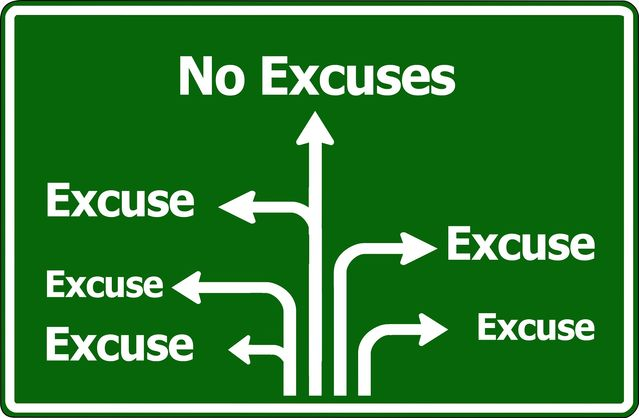
4 Excuses to reject God

4 excuses some give for disobedience.

It’s not fair. Gen 3:9-13

I can’t do it. Ex 3:10-4:14

I have a better way. 2King 5:1-14; 1Sam 15:20-23

I’ll do it later. Acts 26:24-29

Romans 1:20 For the invisible things of him from the creation of the world are clearly seen, being understood by the things that are made, even his eternal power and Godhead; so that they are without excuse:

How to TEST the spirits. 1Thess 5:21

1Thess 5:21 Test all things; hold fast what is good. (NKJV)

1John 4:1; 1Thess 5:21

  1. Are they just TROUBLERS? Gal 1:7
  2. Do they EXAMINE the scriptures to see if what is said is true? Act 17:11
  3. Do they SHOW the SCRIPTURES? 2Tim 3:15-17
  4. Do they TAKE TIME with you to teach, learn, or clarify. Like Paul & Aquila, Priscilla at Ephesus. Acts 18:26; 19:9-10

Spencer

Living STONES

https://www.bible.ca/premillennialism-rapture-replacement-theology-supersessionism-kingdom-is-church.htm

There’s a common misconception about the Kingdom of God. It’s taught in error that Jesus will one day set up a physical kingdom, reigning in Jerusalem. According to the error, His plans were foiled by the Jews who rejected Him, and murdered Him. This is commonly called the doctrine of PREMILLENIALISM. Is this true?

It’s against scripture for Christ to reign from a physical throne in Jerusalem. “Thus saith the LORD, Write ye this man childless, a man that shall not prosper in his days: for no man of his seed shall prosper, sitting upon the throne of David, and ruling any more in Judah” (Jer 22:30).

Never trust a doctrine based on the premise that mankind foiled God’s plans. LOL. “He shall not fail nor be discouraged,” (Isaiah 42:4).

His own disciples expected an earthly kingdom, but Jesus said, “Neither shall they say, Lo here! or, lo there! for, behold, the kingdom of God is within you” (Luke 17:21; cf John 18:36).

However, He does have a Kingdom and it does have a TEMPLE on earth, a spiritual house. In Christ’s Spiritual Kingdom, the church, there is a Temple and it’s being built continually with LIVING STONES. What does the bible say about these living STONES?

“Ye also, as lively stones, are built up a spiritual house, an holy priesthood, to offer up spiritual sacrifices, acceptable to God by Jesus Christ” (1Peter 2:5).

God’s Temple today is a SPIRITUAL HOUSE. “For we are labourers together with God: ye are God’s husbandry, ye are God’s building” (1Cor 3:9-15; cf. 1Pet 2:5). The church of Christ is the Spiritual House of God, the individuals are the living stones.

The church of Christ is the TEMPLE of God and individual members are the living stones. “Know ye not that ye are the temple of God, and that the Spirit of God dwelleth in you” (1Cor 3:16-17)? “What? know ye not that your body is the temple of the Holy Ghost which is in you, which ye have of God, and ye are not your own” (6:19; Eph 2:21-22)? Anyone that claims that there will be a physical kingdom on earth has overlooked that the Kingdom of God is the church of Christ. “Who hath delivered us from the power of darkness, and hath translated us into the kingdom of his dear Son” (Col 1:13).

There is only ONE Kingdom, ONE BODY. “And hath put all things under his feet, and gave him to be the head over all things to the church, Which is his body, the fulness of him that filleth all in all” (Eph 1:22-23; cf. Eph 4:4). Since the church is the Kingdom, and the church is His body, then there is only ONE BODY (temple) in His Kingdom.

Every Temple has a foundation, and this Spiritual Temple is no exception. NO OTHER FOUNDATION exists except the Chief Cornerstone, which is Christ. “And are built upon the foundation of the apostles and prophets, Jesus Christ himself being the chief corner stone; In whom all the building fitly framed together groweth unto an holy temple in the Lord” (Eph 2:20-21). Referring back to a previous passage about the Spiritual House, Paul said, “For other foundation can no man lay than that is laid, which is Jesus Christ” (1Cor 3:11; cf. Matt 16:18).

As was prophesied, this Kingdom is an ENDURING Kingdom if we keep His commands “And in the days of these kings shall the God of heaven set up a kingdom, which shall never be destroyed: and the kingdom shall not be left to other people, but it shall break in pieces and consume all these kingdoms, and it shall stand for ever” (Daniel 2:44). “But Christ as a son over his own house; whose house are we, if we hold fast the confidence and the rejoicing of the hope firm unto the end” (Heb 3:6).

Lastly, since people are the Living Stones, we are to STAND FIRM. “If ye continue in the faith grounded and settled, and be not moved away from the hope of the gospel,” (Col 1:23). The stones that STAND FIRM are precious STONES, but those stones that are not of precious material will be burned. “Now if any man build upon this foundation gold, silver, precious stones, wood, hay, stubble; Every man’s work shall be made manifest: for the day shall declare it, because it shall be revealed by fire; and the fire shall try every man’s work of what sort it is” (1Cor 3:12-13).

— spencer

Spencer is an evangelist in Borger, Texas.

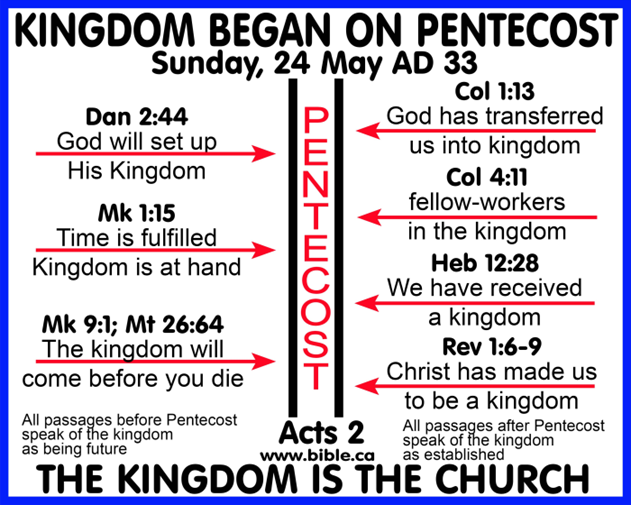
THE KINGDOM is the CHURCH:

The Same Beginning: Pentecost. (Mark 9:1; Acts 2:47)

The Same Duration: Forever.

(Daniel 2:44; Matthew 16:18; Hebrews 12:28; Ephesians 3:21)

The Same Ownership: God and Christ. (Ephesians 5:5)

The same historical period: During Roman empire.

(Luke 2:1; Acts 2:1; Colossians 1:13)

The same eschatological beginning: In the “Last Days” or “end times”

(Hebrews 1:2; 1 Peter 1:20; Acts 2:15–17; James 5:1–3)

Kingdom and church used interchangeably: (Matthew 16:18)

5 Myths about the BIRTH of Jesus

Yes, I can hear your eyes rolling after having read the title, perhaps thinking, “Another holiday bashing lesson.”

Before you toss this bulletin aside, know that this article is about seizing opportunities as they become available. Every year for about 5 or 6 weeks, the world is talking about Jesus. [1Co 16:9; 2Cor 2:12]

We might as well join in the conversation, but more accurately. (Where have we heard that before? Acts 18:26)

We can have friendly conversations about Christ with the hopes that we may lead others to Him.

Many of the Myths about the BIRTH of Jesus surround the popular manger scenes on display and many of the pageants performed this time of year. The rest are based on assumptions of what people think the bible says.

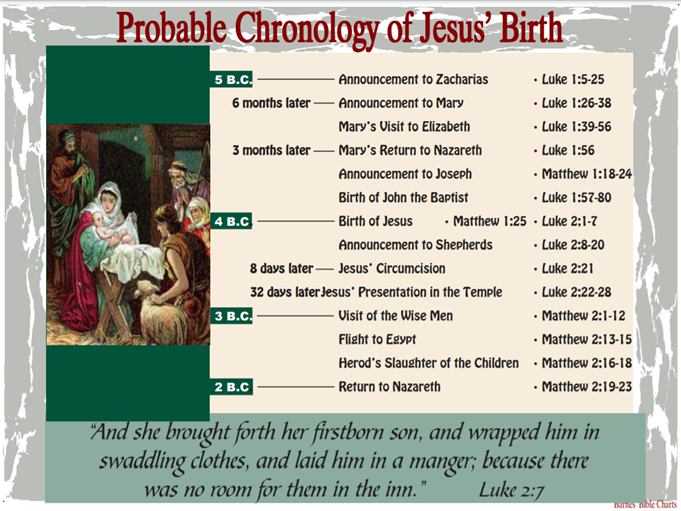
The FIRST Myth is that Jesus was BORN on December 25th (or January 6, or 7 according to some denominations). If you were to ask the average person when Jesus was born, they would say, “Dec 25th of course!” When you point out that no date is revealed, they may say, “It doesn’t matter, let’s just all agree.”

How can we have the conversation? Instead of taking the “you’re wrong, here’s why approach” we might ask, “do you know a day of birth that we are certain about?” The day of Pentecost is the day the church BEGAN. [Mat 16:18, 28; Acts 2]

The SECOND Myth is that the shepherds came to worship Jesus and brought Him gifts. My favorite unscriptural song this time of year is the little drummer boy. Full of emotion, zero scripture.  

How can we talk about this? The shepherds truly did see the star and hear the announcement of His birth, the angel saying, “And this shall be a sign unto you; Ye shall find the babe wrapped in swaddling clothes, lying in a manger.” [Luke 2:12]. What did they do? They went to INVESTIGATE the words of the angel to see the sign. “So it was when the angels had gone away from them into heaven, that the shepherds said to one another, ‘Let us now go to Bethlehem and see this thing that has come to pass, which the Lord has made known to us.’ And they came with haste and found Mary and Joseph, and the Babe lying in a manger. And when they had seen Him, they made widely known the saying which was told them concerning this Child” [Luke 2:15- 17]

The FOURTH Myth is that Joseph & Mary RECEIVED the wise men at the manger. What does the Bible say and how can we have a conversation about it?

Perhaps you could show folks the scriptures where Herod ordered children under 2yo and younger be killed. “Then Herod, when he saw that he was mocked of the wise men, was exceeding wroth, and sent forth, and slew all the children that were in Bethlehem, and in all the coasts thereof, from two years old and under, according to the time which he had diligently enquired of the wise men.” [Matt 2:9-12] This same passage has Joseph & Mary RECEIVING the wise men in their “HOUSE” after they returned to their home from Bethlehem.

Which brings us to the FOURTH Myth; the Myth that there were THREE wise men. The bible says there were THREE kinds of gifts of “gold, and frankincense, and myrrh.” The number of wise men is unrevealed. The divine text simply states, “behold, wise men from the East came to Jerusalem” [Matt. 2:1].

Why do we do this? The goal is to get folks to read for themselves the biblical narrative. Perhaps we could invite our friends to read the BIRTH story with us and they would see it for themselves. If folks read it, perhaps they’ll question the many other false things they have heard.

Which brings us to the FIFTH Myth, that this is a HOLY DAY (Holiday) we are commanded to observe. Many folks are CEO believers (Christmas & Easter Only). Some are commanded to attend a midnight mass. Clearly the BIRTH story of Christ is important especially as a fulfillment of prophecy.

Why should we talk about this? There is a day specified that we are commanded to observe; A Memorial of His Death, upon the first Day of the Week. Jesus commands us to remember His Death each first day of the week.

“…this do in remembrance of me.” [Matt 26:26-30; Mark 14:22-26; Luke 22:14-23; 1Cor 11:17-34; Acts 20:7]

     — spencer