The Franklin and Juniper church of Christ begins an overview study of the book of 1John. If you live in the Borger area, We invite you to join us at 9:30am each Sunday Morning for the next few weeks.
Click here for the Overview Chart and links to other study outlines in this series.
God has not at any time authorized gratuitous service be rendered to Him. This means that God requires worship toward Him to be in accordance with His instructions.
From the very beginning we see this principle. In Genesis four, Abel offered an acceptable sacrifice by faith, and Cain did not. “By Faith” is first speaking about divine instruction, followed by our trust in His acceptance when we follow those instructions. “So then faith cometh by hearing, and hearing by the word of God.” (Rom 10:17).
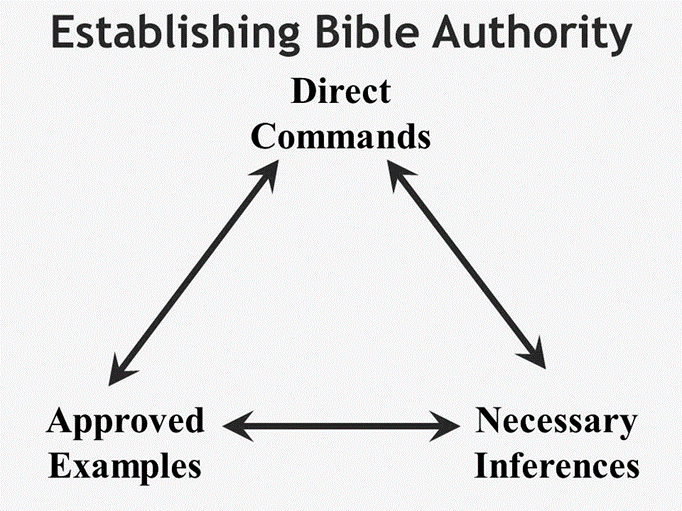
One cannot be walking by faith in Christ while offering strange worship God commanded us not. How do we know what God wants? We can answer that question if we will learn how God communicates. He gives DIRECT commands & statements, He gives EXAMPLES, and He IMPLIES things from which we may infer. He also expects us to respect when He is SILENT on a matter.
I) God communicates through Direct commands & statements.
In the Gospel of Mark, Jesus gives a direct command to his disciples in the Great Commission. He says, “And he said unto them, Go ye into all the world, and preach the gospel to every creature.” (Mark 16:15). These are clear instructions from God on how his followers are to spread the message of salvation.
The Direct commands of God come in 2 forms:
1) SPECIFIC. God tells us exactly what He wants. We cannot add to, nor take away from the specific command. A specific command eliminates all other possibilities.
2) GENERIC. God gives a command but doesn’t tell us how. He leaves those details for us to implement.
The how of a generic command is called an expedient. We need to find the most efficient & effective means to fulfill the command. We cannot bind an expedient on others as being the only way. We have liberty.
II) God communicates using Approved Examples. There are many examples in the bible, but not every one of them is binding, nor authorized. Some examples are incidental like meeting in an upper room (Acts 1:13).
What makes an example an APPROVED EXAMPLE? When the example is in compliance with a Direct command of God. Jesus said “And he said unto them, Go ye into all the world, and preach the gospel to every creature. He that believeth and is baptized shall be saved; but he that believeth not shall be damned.” (Mark 16:15-16). In the Acts one we see exactly that. They preached the Gospel to everyone on Pentecost and baptized for remission of sins.
Another example is found in Acts 8. “Then Philip opened his mouth, and began at the same scripture, and preached unto him Jesus. And as they went on their way, they came unto a certain water: and the eunuch said, See, here is water; what doth hinder me to be baptized? And Philip said, If thou believest with all thine heart, thou mayest. And he answered and said, I believe that Jesus Christ is the Son of God. And he commanded the chariot to stand still: and they went down both into the water, both Philip and the eunuch; and he baptized him.” (Acts 8:35-38). Here we see Philip Going, Preaching, and Baptizing as was commanded by Jesus in the great commission. Philip is one of many APPROVED EXAMPLES.
Without a command an example is just an example. It is not to be bound on others. Examples are only APPROVED (or Apostolic) when there is a command from God. How can we sift the binding from non-binding examples? Here are 4 questions to ask.
Is there Uniformity in all examples of same event? Baptism was all by immersion, but circumstances around event were different.
Is there Unity in Harmony? The Example must harmonize with God’s commands. Without a command there is not an approved example.
Is there Universal application? It must apply and be able for all. Grapes (fruit of the vine) grow everywhere. Water is everywhere man is. Truth is Universal to all mankind.
Is the example Unnecessary or relevant to the command? The disciples met in an upper room.
People are constantly attempting to worship God according to their own desires (Col 2:23). They have introduced Mechanical Music, plays, interpretive dance, and in one place Roller Skating Praise.
Here are 4 types of False worship.
Vain. Mark 7; Matt 15:9.
Against His will. 1Cor 11:17-34; 1Sam 15:22-23
Ignorant. Acts 17:23
Narcissistic Self-Willed worship. Col 2:20-23
These should serve as warnings about doing what God FORBIDS, OMISSION of what God commands, or adding EXTRA to the commands of God that He has not commanded.
“Ye shall not add unto the word which I command you, neither shall ye diminish ought from it, that ye may keep the commandments of the LORD your God which I command you”
(Deut 4:2; 12:32; Pr 30:6; Ec 12:13; Re 22:18-19).
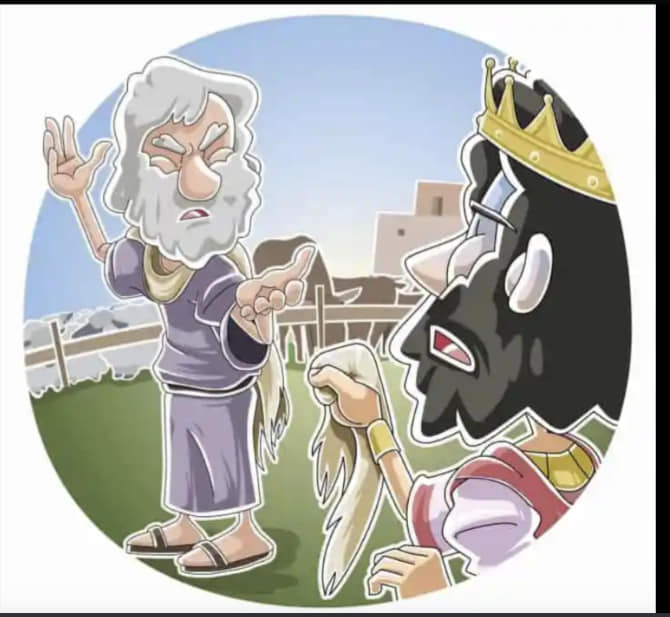
“But now thy kingdom shall not continue: the LORD hath sought him a man after his own heart, and the LORD hath commanded him to be captain over his people, because thou hast not kept that which the LORD commanded thee.” (1Sam 13:14)
After King Saul’s first mistake, the tearing of the kingdom away from him had begun.
We need to learn the lessons from Saul’s mistakes so that we will avoid having the kingdom of Christ torn from us.
“And hath made us kings and priests unto God and his Father; to him be glory and dominion for ever and ever. Amen”
(Rev 1:6; cf. 1Pet 2:9).
While Saul started out strong, the 4 mistakes in this article describe why the kingdom was torn from him so dramatically. Saul made other errors after these, but these are the reasons given by Samuel for the kingdom being given to David.
SACRIFICING without AUTHORITY: “And he tarried seven days, according to the set time that Samuel had appointed: but Samuel came not to Gilgal; and the people were scattered from him. And Saul said, Bring hither a burnt offering to me, and peace offerings. And he offered the burnt offering. And it came to pass, that as soon as he had made an end of offering the burnt offering, behold, Samuel came; and Saul went out to meet him, that he might salute him” (1Sam 13:8-10).
One of the key mistakes of King Saul, as seen in 1 Samuel 13, was his impatience and failure to wait for the prophet Samuel before offering a burnt sacrifice. Saul allowed fear and pressure from his army to push him into taking matters into his own hands, disregarding the authority of God’s chosen servant. This act revealed Saul’s lack of trust in God’s timing and his failure to follow divine instructions.
ARROGANCE and PRESUMPTION: “And Samuel came to Saul: and Saul said unto him, Blessed be thou of the LORD: I have performed the commandment of the LORD. And Samuel said, What meaneth then this bleating of the sheep in mine ears, and the lowing of the oxen which I hear? And Saul said, They have brought them from the Amalekites: for the people spared the best of the sheep and of the oxen, to sacrifice unto the LORD thy God; and the rest we have utterly destroyed” (1Sam 15:13-15).
In 1 Samuel 15, we witness another critical mistake of Saul: his arrogance and presumption in disobeying God’s explicit command. God commanded Saul to completely destroy the Amalekites and everything that belonged to them. However, Saul decided to spare King Agag and some of the best livestock. Saul’s presumptuous act displayed his prideful attitude, thinking that his own judgment and desires were superior to God’s commandments.
UNWILLINGNESS to Accept Responsibility: “And Samuel said, What hast thou done? And Saul said, Because I saw that the people were scattered from me, and that thou camest not within the days appointed, and that the Philistines gathered themselves together at Michmash; Therefore said I, The Philistines will come down now upon me to Gilgal, and I have not made supplication unto the LORD: I forced myself therefore, and offered a burnt offering. And Samuel said to Saul, Thou hast done foolishly: thou hast not kept the commandment of the LORD thy God, which he commanded thee: for now would the LORD have established thy kingdom upon Israel for ever” (1Sam 13:11-13).
Saul’s inability to take responsibility for his actions was evident in his response when confronted by Samuel. Instead of acknowledging his mistake and seeking repentance, Saul shifted blame onto others, making excuses for his disobedience. He attempted to justify his actions rather than humbly admitting his wrongdoing. This lack of accountability demonstrated a failure in Saul’s character as a leader.
LACK OF OBEDIENCE and Submission: “And Saul said unto Samuel, Yea, I have obeyed the voice of the LORD, and have gone the way which the LORD sent me, and have brought Agag the king of Amalek, and have utterly destroyed the Amalekites. But the people took of the spoil, sheep and oxen, the chief of the things which should have been utterly destroyed, to sacrifice unto the LORD thy God in Gilgal. And Samuel said, Hath the LORD as great delight in burnt offerings and sacrifices, as in obeying the voice of the LORD? Behold, to obey is better than sacrifice, and to hearken than the fat of rams. For rebellion is as the sin of witchcraft, and stubbornness is as iniquity and idolatry. Because thou hast rejected the word of the LORD, he hath also rejected thee from being king” (1Sam 15:20-23).
Overall, Saul’s mistakes can be summarized by his consistent failure to obey and submit to God’s authority. Whether it was sacrificing without Samuel’s presence, sparing King Agag, or not fully carrying out God’s command, Saul demonstrated a pattern of rebellion and disobedience. His lack of reverence for God’s instructions ultimately led to his downfall and the loss of his kingship.
In summary, Saul’s mistakes were:
Sacrificing without Authority,
Arrogance and Presumption,
Unwillingness to Accept Responsibility, and
Lack of Obedience and Submission.
These lessons from Saul’s life serve as a reminder for us to humbly follow God’s commands, trust in His timing, and accept responsibility for our actions as we strive to be obedient servants.
“And he said unto them, Well did Isaiah prophesy of you hypocrites, as it is written, This people honoreth me with their lips, But their heart is far from me. But in vain do they worship me, Teaching as their doctrines the precepts of men.” (Mark 7:6-7)
The Old Testament has many lessons for us today. In Judges 17, we see five mistakes of the man MICAH. Last week we looked at 3 of them that are repeated by many today.
He followed his Mother’s traditions.
He made Idols.
He Changed the law to suit himself.
I encourage you to review the previous article.
Today’s article will look at the last two mistakes of MICAH.
The 5 mistakes of MICAH (Judges 17)repeated today. Pt2
The fourth mistake of Micah was that he ASSIGNED to himself a priest from the Levites to be his personal priest.
“And Micah said unto him, Dwell with me, and be unto me a father and a priest, and I will give thee ten shekels of silver by the year, and a suit of apparel, and thy victuals. So the Levite went in. [11] And the Levite was content to dwell with the man; and the young man was unto him as one of his sons. [12] And Micah consecrated the Levite; and the young man became his priest, and was in the house of Micah. [13] Then said Micah, Now know I that the Lord will do me good, seeing I have a Levite to my priest” (Judges 17:10-13.
Today people will talk about their favorite preacher, pastor, televangelist, author and so on. Paul dealt with this issue with the church at Corinth. “For it hath been declared unto me of you, my brethren, by them which are of the house of Chloe, that there are contentions among you. Now this I say, that every one of you saith, I am of Paul; and I of Apollos; and I of Cephas; and I of Christ. Is Christ divided? was Paul crucified for you? or were ye baptized in the name of Paul” (1Cor 1:11-13)?
How do we correct this mistake? When we establish dividing lines based on popular preachers, or public figures we are carnal. That’s what Paul called it. “For ye are yet carnal: for whereas there is among you envying, and strife, and divisions, are ye not carnal, and walk as men” (1Cor 3:3)?
What can we do? Follow Jesus. Read about Him. Study Him. Walk like He walked. People living godly lives can serve as examples for us, but only as far as they imitate Christ (1Cor 11:1). We are not to elevate them above others and especially not to cause division. “And these things, brethren, I have in a figure transferred to myself and to Apollos for your sakes; that ye might learn in us not to think of men above that which is written, that no one of you be puffed up for one against another” (1Cor 4:6; cf 2Cor 12:6).
The last mistake we’ll consider is that Micah had a HOUSE of gods.
“And the man Micah had a HOUSE of gods, and made an ephod and teraphim, and consecrated one of his sons, who became his priest” (Judges 17:5).
Besides the idolatry, this mistake is saying that all religions and denominations are equal. Paul saw this error in Athens. “For as I passed by, and beheld your devotions, I found an altar with this inscription, TO THE UNKNOWN GOD. Whom therefore ye ignorantly worship, him declare I unto you” (Acts 17:23).
We see this same mistake being made today. Religious people have become ECUMENICAL (aimed at achieving universal Christian unity and church union through international interdenominational organizations that cooperate on matters of mutual concern). In other words, religious folks are focusing on unity (Jews, Muslims, & Christians) despite clear scriptural and doctrinal differences. They see all religions as different ships going to the same destination. This sounds good on the surface, but misses the biblical definition of unity.
How do we correct this mistake? Paul warned; “For if he that cometh preacheth ANOTHER Jesus whom we have not preached, or if ye receive ANOTHER spirit which ye have not received, or ANOTHER gospel which ye have not accepted, ye might well bear with him” (2Corinthians 11:4; cf. Gal 1:6-9). We are warned repeatedly to beware of false teachers. They are described as wolves in sheep’s clothing, deceivers, dogs, and “hidden rocks in your love-feasts when they feast with you, shepherds that without fear feed themselves; clouds without water, carried along by winds; autumn leaves without fruit, twice dead, plucked up by the roots; Wild waves of the sea, foaming out their own shame; wandering stars, for whom the blackness of darkness hath been reserved forever” (Jude 1:12-13).
The main takeaway is that it’s possible for people to be following a different Jesus and not the Jesus of scripture (cf Phil 3:19). While many claim to follow Jesus, they may not be following the Jesus of the New Testament.
What can we do? Check out what your pastor teaches, what your church practices, & what sins they accept through the lens of the word of God. “These were more noble than those in Thessalonica, in that they received the Word with al lreadiness of mind and searched the Scriptures daily to see whether those things were so” (Acts 17:11). The folks in Berea were called more noble as they were checking out the teaching of the Apostle Paul!!
Be careful how you hear, and what you hear. There is only one truth and only one way to have unity and fellowship with God. “Sanctify them in the truth: thy word is truth” (John 17:17).
Spencer is the evangelist for the church of Christ in Borger on Franklin & Juniper.
There’s nothing new under the sun. Mankind has been fooling around with God’s commands since the beginning. The story of Micah, not to be confused with the prophet Micah by the same name, is no different. (Judges 17 & 18).
From chapter 17 of Judges, we can glean 5 mistakes that MICAH makes in his religion that modern folks continue to make today.
Some may ask, why so negative? Couldn’t you present a more positive lesson? My reply is sure, but that’s not what God reveals to us. I guess you could say that if we do the opposite of the mistakes we will be pleasing to God.
The 5 mistakes of MICAH (Judges 17)repeated today.
The first mistake is that he Shared in his MOTHER’S error.
“And when he had restored the eleven hundred shekels of silver to his mother, his mother said, I had wholly dedicated the silver unto the Lord from my hand for my son, to MAKE A GRAVEN IMAGE AND A MOLTEN IMAGE: now therefore I will restore it unto thee” (Judge 17:3).
Many today follow the religion of their parents without ever checking to know if it is right on the eyes of the Lord. “That’s where my parents and grandparents always went to church.” Your parents likely worshipped in all sincerity, but that is not how we determine what God wants. Consider Jesus, He said, “For I am come to set a man at variance against his FATHER, and the daughter against her MOTHER, and the daughter in law against her mother in law. [36] And a man’s foes shall be they of his own household. [37] He that loveth FATHER OR MOTHER more than me is not worthy of me: and he that loveth son or daughter more than me is not worthy of me” (Matthew 10:35-37).
We are to worship God according to his word, not according to the traditions of our Fathers & Mothers.
“Howbeit in vain do they worship me, teaching for doctrines the commandments of men. [9] And he said unto them, Full well ye reject the commandment of God, that ye may keep your own tradition” (Mark 7,9).
How do we correct this mistake? Ask for biblical evidence for everything said and done in your religion. Search the scriptures to find if what is being taught, & practiced is according to the word of God. (Act 17:11)
The second mistake is that Micah had made IDOLS.
“Yet he restored the money unto his mother; and his mother took two hundred shekels of silver, and gave them to the founder, who made thereof a graven image and a molten image: and they were in the house of Micah” (Jud 17:4).
We have idols today. Many have GRAVEN images and idols of Jesus on the cross, (we don’t know what Jesus looked like) that folks kneel down before to pray. Some even erect little shrines in their homes to pray over.
Most of us practice a different kind of IDOLATRY called COVETING.
“Mortify therefore your members which are upon the earth; fornication, uncleanness, inordinate affection, evil concupiscence, and COVETOUSNESS, which is IDOLATRY:” (Col 3:5)
How do we correct this mistake? We can examine ourselves and our practices through the New Testament doctrine of Christ. It also says in Colossians… “And whatsoever ye do in word or deed, do all in the name of the Lord Jesus, giving thanks to God and the Father by him” (Col 3:17).
The third mistake of Micah is that he CHANGED the law to suit himself.
“And the man Micah … consecrated one of his sons, who became his priest”
(Jud 17:5b).
Priests were from the tribe of Levi and had some very specific criteria. Micah didn’t follow that, because he and his sons were not from the tribe of Levi, they were from Ephraim (cf. Leviticus 9; Heb 7:14). Therefore, they were disqualified from being priests under the Law of Moses.
How do we correct this mistake? We can examine all of our practices in religion (& other areas) in light of the scriptures.
When we find a practice that is different from, or not found in scripture, we are to conform to the word of God. When we see alterations to the Eldership, to teachers, or adding offices that are foreign to scripture, we need to stop.
Here’s a short list of places to start:
How are we saved? (Matt 7:24; John 8:32; Luke 13:3; Matt 10:32; Mark 16:16; Rev 2:10)
How do we worship? (John 4:24; Col 3:16; Act 2:42)
Next week we’ll examine the last 2 mistakes and the ways to correct them.
The church that assembles here at Franklin & Juniper don’t claim to be perfect people, but we do strive to learn, know the truth, and practice the truth.
“In all the places wherein I have walked with all the children of Israel spake I a word with any of the tribes of Israel, whom I commanded to feed my people Israel, saying, Why build ye not me an house of cedar?” (2Sam 7:7)
Do you understand what this verse is saying? David had come up with what appeared to be a good idea to build a permanent temple out of cedar. The prophet Nathan agreed that this indeed appeared to be a good idea, even telling him that the LORD agreed that it was a good idea.
“Go, do all that is in thine heart; for the LORD is with thee” (2Sam 7:3).
So, here we have this mighty king, a man after God’s own heart, with what appeared to be a good idea, to build God a permanent dwelling place. Reasoning thusly, “I dwell in an house of cedar, but the ark of God dwelleth within curtains” (2Sam 7:2).
We also have a prophet of God in agreement with the King, even asserting that God is also in agreement. However,
…God DID NOT agree that it was a good idea for David to build Him a house of cedar. The way He says it to them is very interesting. He doesn’t say, “No, do not build me a house of Cedar.” Neither does He say, “I didn’t want you to do that, but since you’re very sincere, go ahead anyway.” Some will argue this same way, “where does it say He forbids it?” They also say, “We don’t have a command, but God will accept it because it’s from the sincerity of our heart.”
Here’s how God answers David. “In all the places wherein I have walked with all the children of Israel spake I a word with any of the tribes of Israel, whom I commanded to feed my people Israel, saying, Why build ye not me an house of cedar?”
In effect, God asks, “Where is your scripture for your good idea?”
When I ask this question of folks, they respond with some version that they don’t need a scripture. “Look at the results,” they say. “Look at how much good we’ve done.” If 2Samuel 7:7 did not exist, I may have to agree with them. But it does exist, and there are other such passages.
Look at this example in Acts 15. “Forasmuch as we have heard, that certain which went out from us have troubled you with words, subverting your souls, saying, Ye must be circumcised, and keep the law: to whom we gave no such commandment” (Act 15:24).
Here we see the same type of discussion. The converted Jews had the “good idea” that gentiles must become circumcised, and keep the Law of Moses to become Christians. The problem with that “good idea” was that there was no command for it. Both David, and the Christian Jews of the 1st century had come up with “good ideas” from the SILENCE of God. James points out to them that the SILENCE of God prohibits action, not allow it.
Another example in Hebrews says, “For it is evident that our Lord sprang out of Juda; of which tribe Moses spake nothing concerning priesthood” (Heb 7:14).
The SILENCE on a matter prohibited an action. In this case, the LORD had commanded that the Priests under the Law of Moses were to be taken from the tribe of Levi (Ex 28:1-4). Since Jesus was to be a Priest and a King (Heb 5:6), He could not hold that position, for the Law Prohibited it, and Jesus was from the tribe of Judah, something the Law spoke nothing concerning priesthood. Thus, the Law was changed because Christ is both Priest and King (Heb 7:12-13).
From these passages we learn that silence prohibits. When we receive a specific command from God, it prohibits any alteration, addition, or abatement. From these examples we learn 6 things when God is SILENT on a matter.
We are limited to what has been revealed in SCRIPTURE. This is how God communicates to us, through His divine written word (Deut 29:29).
We learn that without a command, there can be no INFERENCES, necessary or otherwise. God’s silence does not IMPLY His permission, it prohibits it.
In Hebrews we learn that we are under the will and testament of Christ. In the LAWS of Contracts & Wills, we are LIMITED to what it says, not given permission by what it does not say (cf. Heb 9:15-17). Think about how difficult it would be to defend a Will if we could change it based on things that are not in it. Could I claim a right to Bill Gates’ will, though I’m not in it? He didn’t say not to include me.
This brings us to the fourth point. If Silence doesn’t limit, then it creates a condition where EVERYTHING is permitted. All we would have to do is say, “God never said I can’t, so I’m going to do it.” It would lead to chaos and confusion. Oh wait, that’s exactly what we see in the denomination realm (cf. 1Cor 14:33).
The reality is, and we understand in other areas, that Silence is NO PERMISSION at all. For example, if you were to order a pepperoni pizza, what does your silence about smoked oysters say? (smoked oysters were a common ingredient in Fairbanks, AK back when I worked in a pizza joint in high school). You would never accept a pizza with smoked oysters when you ordered a pepperoni pizza. Your specific statement and your silence prohibit additional toppings.
Which brings me to the fifth point. We are limited in action when we have a “THUS SAITH THE LORD.” When God specifies something, He need not list all the aberrations. Specific is terrific. We know what He wants. There is another form of His command called Generic commands, in which He gives us liberty to take action He hasn’t specified, but that’s for another article. When we have a specific “Thus saith the LORD” we are limited to the specific statements and commands and cannot alter, add, nor abate His command. Silence prohibits.
–Spencer
“Is it less dishonest to do what is wrong because it is not expressly prohibited by written law? Let us hope our moral principles are not yet in that stage of degeneracy.”
— Thomas Jefferson
Spencer is an evangelist for the church of Christ on Franklin & Juniper in Borger Texas.
5 ways we try to ALTER the word to validate a false belief.
5/5
1. We ADD to the word.
2. We LESSEN the word of God.
3. We TWIST the scriptures to fit us.
4. We EXPLAIN away clear scripture.
5. We REJECT plain truths.
1. We ADD to the word.
We ADD to the word like Satan did with Eve.
Genesis 3:4 KJV
And the serpent said unto the woman, Ye shall NOT surely die: (emphasis mine seb)
In our times people try to ADD that same not to Mark 16:16, but the ADD it in different places.
faith alone.
He that believeth and is (NOT) baptized shall be saved;
Baby baptism
He that believeth (NOT) and is baptized shall be saved;
Universalists
He that believeth (NOT) and is (NOT) baptized shall be saved;
atheists
He that believeth and is baptized shall (NOT) be saved; but he that believeth not shall be damned.
Jesus said,
Mark 16:16 KJV
He that believeth and is baptized shall be saved; but he that believeth not shall be damned.
2. We LESSEN the word of God.
Revelation 22:19 KJV
And if any man shall take away from the words of the book of this prophecy, God shall take away his part out of the book of life, and out of the holy city, and from the things which are written in this book.
Some say, “this verse only applies to the book of revelation.”
I say, “so you’re saying God is ok if we take away from other parts of the Bible?”
Look at what Jehoiakim did…
Jeremiah 36:23 KJV
And it came to pass, that when Jehudi had read three or four leaves, he cut it with the penknife, and cast it into the fire that was on the hearth, until all the roll was consumed in the fire that was on the hearth.
Deuteronomy 4:2 KJV
Ye shall not add unto the word which I command you, neither shall ye diminish ought from it, that ye may keep the commandments of the Lord your God which I command you.
Proverbs 30:5-6 KJV
Every word of God is pure: he is a shield unto them that put their trust in him. [6] Add thou not unto his words, lest he reprove thee, and thou be found a liar.
No, we cannot ADD nor LESSEN God’s word. His word…
2 Timothy 3:15-17 KJV
And that from a child thou hast known the holy scriptures, which are able to make thee wise unto salvation through faith which is in Christ Jesus. [16] All scripture is given by inspiration of God, and is profitable for doctrine, for reproof, for correction, for instruction in righteousness: [17] That the man of God may be perfect, throughly furnished unto all good works.
3. We TWIST the scriptures to fit us.
2 Peter 3:16 KJV
As also in all his epistles, speaking in them of these things; in which are some things hard to be understood, which they that are unlearned and unstable TWIST, as they do also the other scriptures, unto their own destruction.
Psalm 56:5
All day long they twist my words; all their thoughts are on my demise.
Jeremiah 23:36
But refer no more to the burden of the LORD, for each man’s word becomes the burden, so that you pervert the words of the living God, the LORD of Hosts, our God.
For example…
People TWIST what Jesus said about the personal indwelling of the Holy Spirit to the Apostles and make it about themselves.
John 16:13 KJV
Howbeit when he, the Spirit of truth, is come, he will guide you into all truth: for he shall not speak of himself; but whatsoever he shall hear, that shall he speak: and he will shew you things to come.
This was spoken to the Apostles and does not apply to us in the same way.
We are guided by the holy Spirit in as much as we study and understand the written word.
Ephesians 3:3-4 KJV
How that by revelation he made known unto me the mystery; (as I wrote afore in few words, [4] Whereby, when ye read, ye may understand my knowledge in the mystery of Christ)
John 20:30-31 KJV
And many other signs truly did Jesus in the presence of his disciples, which are not written in this book: [31] But these are written, that ye might believe that Jesus is the Christ, the Son of God; and that believing ye might have life through his name.
We need to see what the context is of each passage. Not every passage is about us.
Let’s stop TWISTING the scriptures to fit us.
4. We EXPLAIN away clear scripture.
This one accepts that passages are God’s word, but somehow they don’t mean what they say. It’s a form of denial.
For example, Mark 16:16 KJV
He that believeth and is baptized shall be saved; but he that believeth not shall be damned.
Folks will use the second half of the verse to EXPLAIN away the first half, or just deny that those verses are even in the Bible.
Some will come up with an unlikely, implausible scenario to EXPLAIN away the command.
For example; “What if you’re on the way to be baptized but die on the way?”
All this shows is a lack of concern for the commandments of the Lord.
Luke 6:46 KJV
And why call ye me, Lord, Lord, and do not the things which I say?
John 14:15 KJV
If ye love me, keep my commandments.
Ps. The pic is just to match the topic and is not a solicitation.
5. We REJECT plain truths.
For example; Naaman was given plain instruction about how to be cured.
2 Kings 5:10-12 KJV
And Elisha sent a messenger unto him, saying, Go and wash in Jordan seven times, and thy flesh shall come again to thee, and thou shalt be clean.
[11] But Naaman was wroth, and went away, and said, Behold, I thought, He will surely come out to me, and stand, and call on the name of the Lord his God, and strike his hand over the place, and recover the leper.
[12] Are not Abana and Pharpar, rivers of Damascus, better than all the waters of Israel? may I not wash in them, and be clean? So he turned and went away in a rage.
Another example from Jesus:
Mark 7:9 And he said unto them, Full well ye reject the commandment of God, that ye may keep your own tradition.
We do the same thing regarding baptism.
We REJECT it even though it’s clearly taught to be saved by grace through faith.
BAPTISM.
Is a BURIAL Col 2:12.
ADDS us to the church. Acts 2:41,47
PUTS on Christ. Gal 3:27
TAKES away (washes) or sins. Acts 22:16
It is INTO His death. Rom 6:3-4
SAVES us. 1Pet 3:21; Acts 16:31-33
MADE free from sin, and a new creation through Christ. Rom 6:3-4; 2Cor 5:17.
Evangelism is a “can you find the differences” game
The difference between…
Your church vs the Lord’s church.
Gal 1:6 I marvel that ye are so soon removed from him that called you into the grace of Christ unto another gospel: 7 Which is not another; but there be some that trouble you, and would pervert the gospel of Christ.
2Cor 11:4 For if he that cometh preacheth another Jesus, whom we have not preached, or if ye receive another spirit, which ye have not received, or another gospel, which ye have not accepted, ye might well bear with him.
What you believe vs what the Bible teaches.
Acts 26:27 King Agrippa, believest thou the prophets? I know that thou believest. 28 Then Agrippa said unto Paul, Almost thou persuadest me to be a Christian.
What you did to be “saved” vs what the Bible says to be saved.
Mark 16:16 He that believeth and is baptized shall be saved; but he that believeth not shall be damned.
How you worship vs what the Bible teaches about worship.
Joh 4:24 God is a Spirit: and they that worship him must worship him in spirit and in truth.
Mark 7:6 He answered and said unto them, Well hath Esaias prophesied of you hypocrites, as it is written, This people honoureth me with their lips, but their heart is far from me. 7 Howbeit in vain do they worship me, teaching for doctrines the commandments of men.
CAN YOU SPOT THE DIFFERENCES?
The difference between what your pastor SAYS vs what the SCRIPTURE SAYS?
2Peter 2:1 But there were false prophets also among the people, even as there shall be false teachers among you, who privily shall bring in damnable heresies, even denying the Lord that bought them, and bring upon themselves swift destruction.
Acts 8:35 Then Philip opened his mouth, and began at the same scripture, and preached unto him Jesus. 36 And as they went on their way, they came unto a certain water: and the eunuch said, See, here is water; what doth hinder me to be baptized?
(when your pastor “preaches Jesus” would the listeners respond in the same way as the Eunuch?)
The difference between what you PRACTICE vs what the Bible says to PRACTICE?
1Cor 11:17 Now in this that I declare unto you I praise you not, that ye come together not for the better, but for the worse. 18 For first of all, when ye come together in the church, I hear that there be divisions among you; and I partly believe it.
The difference between not OBEYING the gospel vs OBEYING the Gospel?
2Thess 1:8 In flaming fire taking vengeance on them that know not God, and that obey not the gospel of our Lord Jesus Christ:
The difference between false TEACHING of me vs the TEACHING (doctrine) of Christ?
2John 1:10 If there come any unto you, and bring not this doctrine, receive him not into your house, neither bid him God speed: 11 For he that biddeth him God speed is partaker of his evil deeds.
For more study on this topic, click the link to the “we are different” page.
If you live in the Borger area, Would you like help to SPOT the differences and learn about true faith? Contact us and let us know.
Spencer is an evangelist for the Franklin & Juniper St church of Christ in Borger Texas.
“For by grace are ye saved through faith; and that not of yourselves: it is the gift of God.”
(Eph 2:8)
There should be no doubt that Grace is a GIFT. Unfortunately, there is so much misunderstanding and confusion about Grace. Not because the scriptures are confusing (1Cor 14:33), but because there are so many opinions about it.
GRACE is a wonderful thing and ought to be understood by the faithful to fully appreciate it and to motivate us for better service to God.
This and the next four articles will be dedicated to some aspect of GRACE so we can “grow in grace and knowledge of the Lord Jesus Christ.” (2Peter 3:18)
This first article examines Grace as the GIFT of God as it is called in the passage above.
“…it is the GIFT of God.”
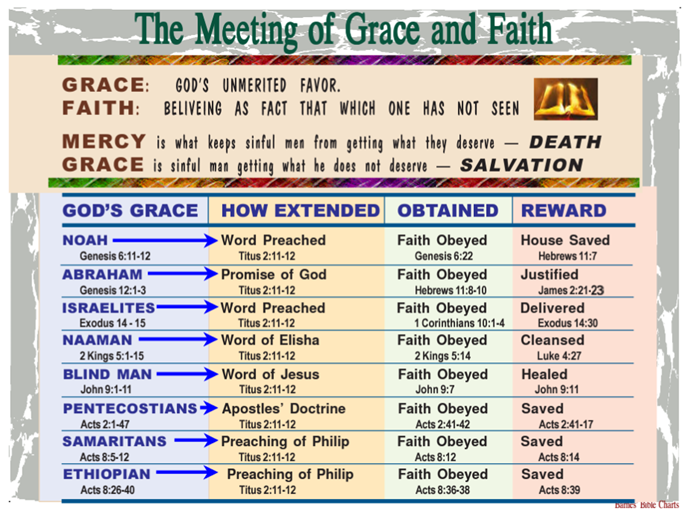
A gift has 2 parties, a Giver and a receiver. Grace is a Gift Given by God & Christ to the world (Titus 2:11). It is also given without merit on the part of the receiver. There is nothing redeeming about man that generated the gift, it was out of the love of God. “But one in a certain place testified, saying, What is man, that thou art mindful of him? or the son of man, that thou visitest him” (Heb 2:6; cf. Job 7:17; Ps 8:4; 144:3)?
“For the law was given by Moses, but grace and truth came by Jesus Christ.” (John 1:17) “But we believe that through the grace of the Lord Jesus Christ we shall be saved, even as they” (Acts 15:11).
This Gift of Grace is pertaining to Salvation for mankind. “For by Grace you are saved through faith…” Another way of saying this is that the opportunity to be saved, the method, the plan, has been given as a Gift to undeserving people (Rom 5:8-10). As we shall see in the following points, NOT EVERYONE WILL PARTICIPATE IN, NOR ACCEPT THE GIFT OF GRACE.
The Gift of Grace needs to be received (accepted), and it is possible to receive it IN VAIN (which is to try and apply grace on your own terms, without repentance).
“We then, as workers together with him, beseech you also that ye receive not the grace of God in vain” (2Cor 6:1).
Many are confused and deceived because it is taught that the Gift of Grace is given and applied universally. (Universalism is an error that teaches everyone will go to heaven even if it’s against their will, if they’re in unrepentant sins, or even an atheist). While Grace is a Gift for the whole world, not everyone will receive it, or worse, they receive it IN VAIN. To receive it IN VAIN is to make it of none effect.
It must also be noted that the GIFT of Grace may be received, but later one can FALL FROM GRACE.
“Christ is become of no effect unto you, whosoever of you are justified by the law; ye are fallen from grace” (Gal 5:4). And you can make it void; “I do not make void the grace of God: for if righteousness is through the law, then Christ died for nought” (Gal 2:21; ASV)
So you see, while GRACE is a GIFT for all, not everyone will receive (accept) it, nor will everyone remain in it.
Finally, it is THROUGH HIS GRACE & THROUGH OUR FAITH that saves.
“But we believe that through the grace of the Lord Jesus Christ we shall be saved, even as they” (Acts 15:11).
Critics will claim that if there is something a person must do to be saved, even a command from God, then it is no longer a GIFT. What they fail to realize is that God’s Gift of Grace is working THROUGH our faith (trusting belief) in God’s plan, and His Son. To obey God is not earning salvation, it’s trusting in His working THROUGH His Grace.
“In whom also ye are circumcised with the circumcision made without hands, in putting off the body of the sins of the flesh by the circumcision of Christ: Buried with him in baptism, wherein also ye are risen with him through the faith of the operation of God, who hath raised him from the dead” (Col 2:11-12) [emph mine seb].
We see that the Gift of Grace is the opportunity, and the availability of salvation, but it must be received (accepted) in truth, faith, and obedience to God who is giving it and working through it. To believe is to obey as Paul wrote in Romans 10 (often ignored by the faith only crowd). “But they have not all obeyed the gospel. For Esaias saith, Lord, who hath believed our report” (Rom 10:16)? Do you see how “obeyed” and “believed” are used inseparably?
The Ephesians were taught about Grace, and they were taught how to receive it, by being baptized into Christ (Acts 19:1-5). Paul would later write to them and say; “In whom we have redemption through his blood, the forgiveness of sins, according to the riches of his grace” (Eph 1:7). Baptism is a part of God’s Grace in saving mankind, beginning with the Death, Burial, and Resurrection of Christ (cf. Rom 6:3-4).
Jesus Gives the Gift of Grace through His sacrifice, making a way for all of mankind to be saved if they will believe it and obey it. “For by grace we are saved, it is the Gift of God.”
Spencer is an evangelist for the church of Christ at Franklin & Juniper in Borger, Texas.
A nephew came to see his kindly old uncle from the country and brought a duck. The kindly old uncle was grateful, had the bird cooked, and shared it with his nephew.
A few days later another visitor arrived.
“I am a friend,” he said, “of the man who gave you the duck.”
The kindly old uncle invited him in to some steaming hot duck soup.
Another man came the next day who was a friend of the friend of the nephew. The kind old man sat him down to a bowl of Duck Broth Soup & Rice.
One day there was a knock at the door and a stranger appeared. “I am the friend of the friend of the friend of the man who brought you the duck from the country,” he said.
“Come in,” said the kindly old uncle.
They seated themselves at the table and the kindly old uncle asked his wife to bring the soup.
When the guest tasted it, it seemed to be nothing more than warm water.
“What sort of soup is this?” he asked the Old Man.
“That,” said the kindly old uncle, “is the soup of the soup of the soup of the soup of the duck.”
This is the difference in watering the gospel and watering it down.
“So then neither is he that planteth any thing, neither he that watereth; but God that giveth the increase” (1Cor 3:7).
“I marvel that ye are so soon removed from him that called you into the grace of Christ unto another gospel: Which is not another; but there be some that trouble you, and would pervert the gospel of Christ. But though we, or an angel from heaven, preach any other gospel unto you than that which we have preached unto you, let him be accursed. As we said before, so say I now again, If any man preach any other gospel unto you than that ye have received, let him be accursed. For do I now persuade men, or God? or do I seek to please men? for if I yet pleased men, I should not be the servant of Christ” (Gal 1:6-10).








 Borger church of Christ @ Franklin & Juniper