Things to protect pt5: TIME

“O Timothy! keep that which is committed to thy trust,” (1Tim 6:20).

We’ve been taking a closer look at the 7 things we ought to protect.

This next one is about protecting our TIME. We won’t be talking about the extending of our lives, rather that we must act promptly because of the uncertainty of longevity. There’s a major reason to be concerned about TIME.

NOBODY knows how much time we have left before the Lord’s return, nor how long we will live.

“But of that day and hour knoweth no man, no, not the angels of heaven, but my Father only” (Matt 24:36).

“Whereas ye know not what shall be on the morrow. For what is your life? It is even a vapour, that appeareth for a little time, and then vanisheth away” (James 4:14).

Due to the certainty of this fact, we shall look at Paul’s discussion of time in the letter to the Ephesians. “Redeeming the time, because the days are evil” (Eph 5:15-16). He gives a list of 4 things the Saint does in Redeeming the TIME.

“Wherefore be ye not unwise, but understanding what the will of the Lord is” (Eph 5:17). The first thing Paul tells us to do in redeeming the time is to be wise, (to THINK, to Study) so we may know what God wants. This is so important because Jesus will be using His word at the judgment. “He that rejecteth me, and receiveth not my words, hath one that judgeth him: the word that I have spoken, the same shall judge him in the last day” (John 12:48; cf. Matt 7:21-23; Luke 6:46). Since this is true, it’s imperative that we spend some time learning of Him through His word.

“And be not drunk with wine, wherein is excess; but be filled with the Spirit” (Eph 5:18) The next thing is a don’t which is very much related to the first. Don’t get drunk, distracted, INTOXICATED with excesses. It’s impossible to do the first if we’re interfering with our minds ability to think. Other things that do the same are the myriad of distractions that occupy our time. The opposite of this “do not” is to “be filled with the Spirit” which points back to the first point. How is one filled with the Spirit? In as much as they are filled with the word delivered through inspiration of the Holy Spirit. Note what Paul wrote earlier through inspiration of the Holy Spirit; “How that by revelation he made known unto me the mystery; as I wrote afore in few words, Whereby, when ye read, ye may understand my knowledge in the mystery of Christ” (Eph 3:3-4; cf. John 20:30-31;).

“Speaking to yourselves in psalms and hymns and spiritual songs, singing and making melody in your heart to the Lord” (Eph 5:19); Continuing on in the discussion of redeeming the time, Paul tells the Saint to MAKE MELODY in your heart to the Lord. In the letter to the Colossians he also says, “Let the word of Christ dwell in you richly in all wisdom; teaching and admonishing one another in psalms and hymns and spiritual songs, singing with grace in your hearts to the Lord” (Col 3:16). Do you see a connection to the first part of redeeming the time? It’s about the word of Christ. In addition to knowing it ourselves, we are to teach it to other Saints. One way this is done is through song, in particular, during the time we gather together on the first day of the week. “Not forsaking the assembling of ourselves together, as the manner of some is; but exhorting one another: and so much the more, as ye see the day approaching” (Heb 10:25).

“Giving thanks always for all things unto God and the Father in the name of our Lord Jesus Christ” (Eph 5:20). At all times the Saint is to live their lives in EXPRESSING Thanks to God for EVERY THING. “In every thing give thanks: for this is the will of God in Christ Jesus concerning you” (1Thess 5:18). Joy is impossible without gratitude. It is essential for the Saints to remember; “Every good gift and every perfect gift is from above, and cometh down from the Father of lights, with whom is no variableness, neither shadow of turning” (James 1:17). This knowing that all that desire to live godly in Christ Jesus will suffer persecution, and we’re to count it all joy when we face various temptations (cf. 2Tim 3:12; Jas 1:2-4). In the passage from James, he reconnects it to THINKING on God’s word, acquiring His wisdom. “If any of you lack wisdom, let him ask of God, that giveth to all men liberally, and upbraideth not; and it shall be given him” (Jas 1:4; cf. Jas 3:17). Right back at the beginning of Redeeming the Time.

At no point have we concerned ourselves with extending our time, not that there’s anything wrong with that. The Saint is to primarily be concerned with redeeming the TIME because the days are evil. None of us wants to be caught off guard should the Lord return in our lifetime, nor be unprepared to face the Lord when our time on earth is over (cf. Luke 12:16-21).

Spencer

Proverbs 7; the HARLOT

HARLOT

Proverbs 7:6-27

Heart that is subtle to deceive. 10

“And, behold, there met him a woman with the attire of an harlot, and subtil of heart.”

Attire of a harlot. Warning, noticeable, identifiable. 10

“And, behold, there met him a woman with the attire of an harlot, and subtil of heart.”

Ruthless. 11-13

“(She is loud and stubborn; her feet abide not in her house: Now is she without, now in the streets, and lieth in wait at every corner.) So she caught him, and kissed him, and with an impudent (RUDE / Shameless) face said unto him,”

Lies, Lies in wait. 12

“Now is she without, now in the streets, and lieth in wait at every corner.)”

Our fill of Love. 18

“Come, let us take our fill of love until the morning: let us solace ourselves with loves.”

Takes one down to Sheol, death 23, 27

“Till a dart strike through his liver; as a bird hasteth to the snare, and knoweth not that it is for his life…. Her house is the way to hell, going down to the chambers of death.”

Can this have a spiritual application?

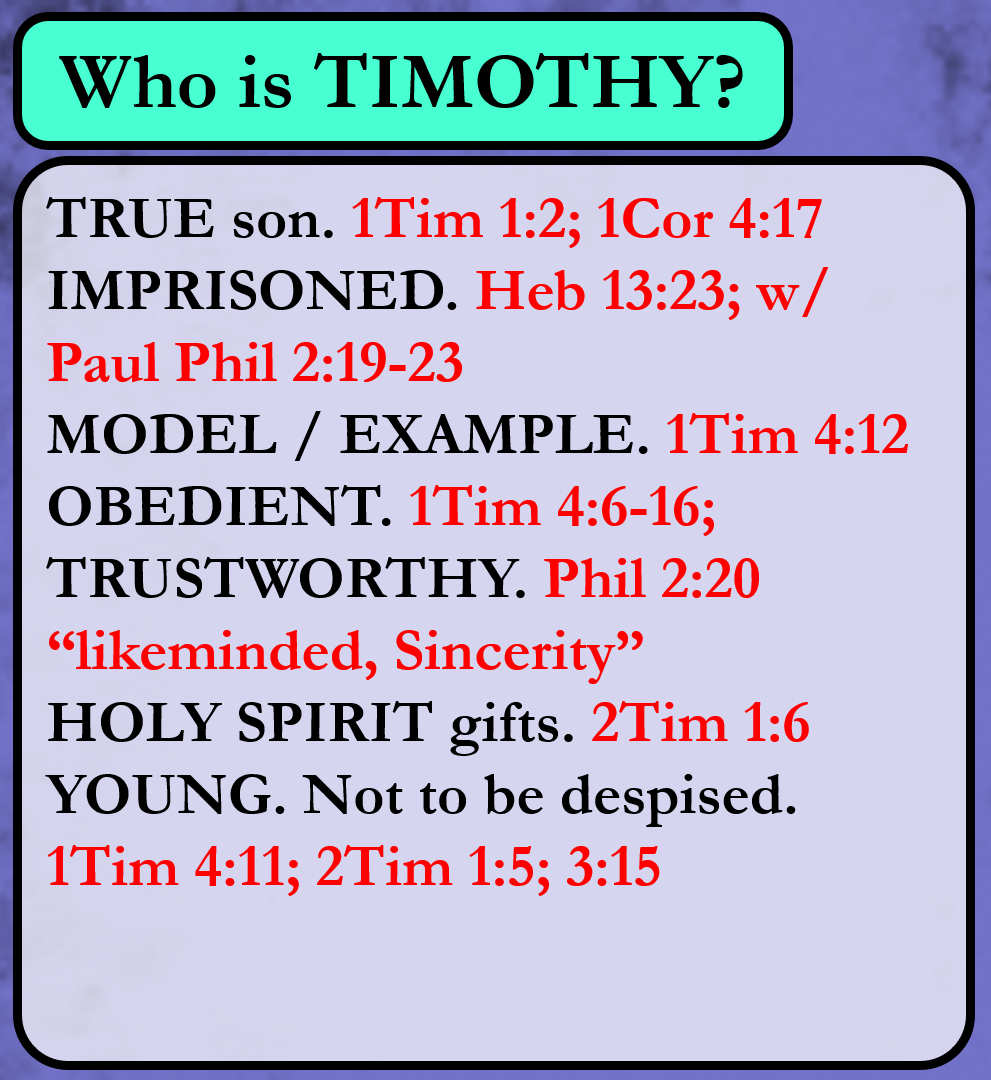
Who is TIMOTHY?

TRUE son. 1Tim 1:2; 1Cor 4:17

IMPRISONED. Heb 13:23; w/ Paul Phil 2:19-23

MODEL / EXAMPLE. 1Tim 4:12

OBEDIENT. 1Tim 4:6-16;

TRUSTWORTHY. Phil 2:20 “likeminded, Sincerity”

HOLY SPIRIT gifts. 2Tim 1:6

YOUNG. Not to be despised. 1Tim 4:11; 2Tim 1:5; 3:15

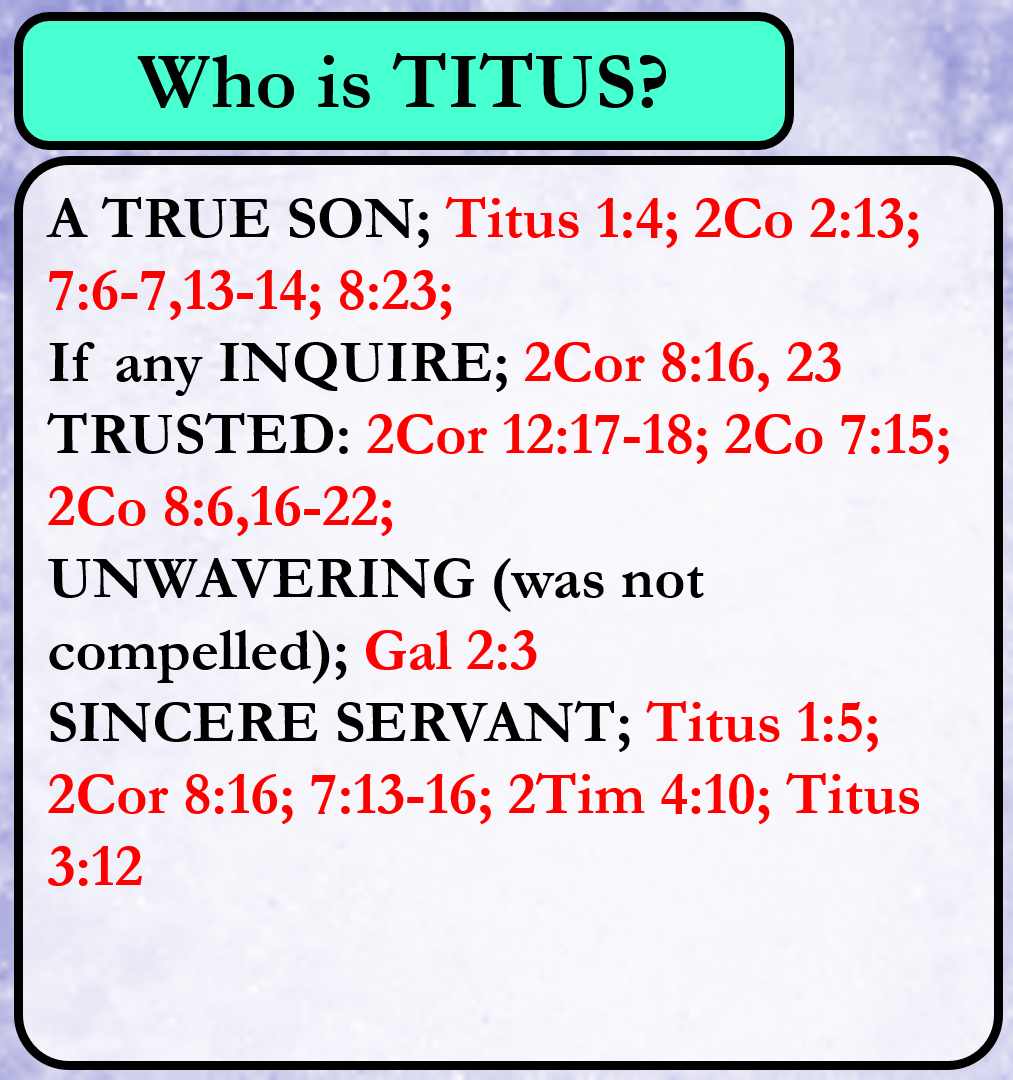
Who is TITUS?

To Titus, mine own son after the common faith: Grace, mercy, and peace, from God the Father and the Lord Jesus Christ our Saviour. (Titus1:4)

A TRUE SON; Titus 1:4; 2Co 2:13; 7:6-7,13-14; 8:23;

If any INQUIRE; 2Cor 8:16, 23

TRUSTED: 2Cor 12:17-18; 2Co 7:15; 2Co 8:6,16-22;

UNWAVERING (was not compelled); Gal 2:3

SINCERE SERVANT; Titus 1:5; 2Cor 8:16; 7:13-16; 2Tim 4:10; Titus 3:12

Protect pt 4; our OWN

PROTECT pt4. OWN.

“O Timothy! keep that which is committed to thy trust,” (1Tim 6:20).

We’ve been taking a closer look at the 7 things we ought to protect.

This next one is about protecting our OWN, which is to say, our own household.

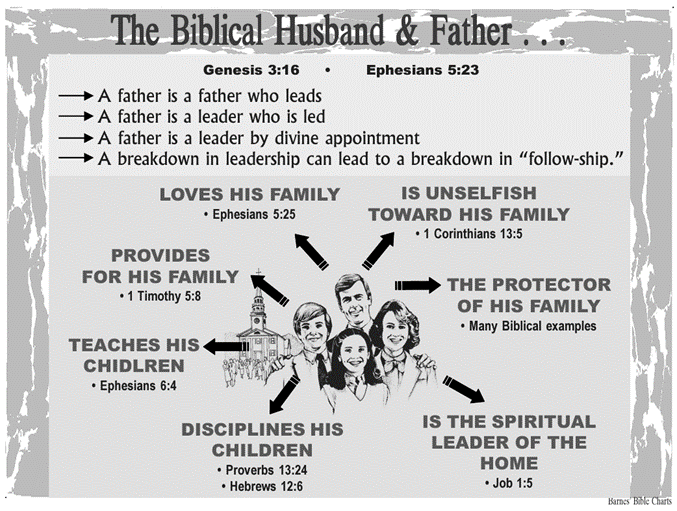
“But if any provide not for his own, and specially for those of his own house, he hath denied the faith, and is worse than an infidel.” (1Tim 5:8).

It may seem axiomatic to provide for the needs of one’s own household and family, but that is not self-evident to all.

We’re charged to guard our own family.

“If any man or woman that believeth have widows, let them relieve them, and let not the church be charged; that it may relieve them that are widows indeed” (1Tim 5:16).

Beginning with the passage in Timothy, we’re to provide for the older members of our own family. These may or may not be members of our immediate household, meaning they may or may not be living under the same roof.

“House” in the bible could refer to family as well as those living within your home (cf. 1Tim 3:4-5). We as individual members of the church have a responsibility to care for our aged parents.

Next, we see that Husbands, as leader of the home (1Cor 11:3), have a responsibility to care for his wife. For this we’ll read all of Ephesians 5:23-33.

“23 For the husband is the head of the wife, even as Christ is the head of the church: and he is the saviour of the body.

24 Therefore as the church is subject unto Christ, so let the wives be to their own husbands in every thing.

25 Husbands, love your wives, even as Christ also loved the church, and gave himself for it;

26 That he might sanctify and cleanse it with the washing of water by the word,

27 That he might present it to himself a glorious church, not having spot, or wrinkle, or any such thing; but that it should be holy and without blemish.

28 So ought men to love their wives as their own bodies. He that loveth his wife loveth himself.

29 For no man ever yet hated his own flesh; but nourisheth and cherisheth it, even as the Lord the church:

30 For we are members of his body, of his flesh, and of his bones.

31 For this cause shall a man leave his father and mother, and shall be joined unto his wife, and they two shall be one flesh.

32 This is a great mystery: but I speak concerning Christ and the church.

33 Nevertheless let every one of you in particular so love his wife even as himself; and the wife see that she reverence her husband.

The two main take aways from this passage is first, that the husband is to care for His wife as Christ does the church. Second, this marriage relationship is a physical symbol of Christ and the church. If you’ve ever wondered why God is so concerned about who can marry, this is why.

“And, ye fathers, provoke not your children to wrath: but bring them up in the nurture and admonition of the Lord” (Eph 6:4; cf. Pr 19:18; 22:6; 29:17).

Additionally, we have a responsibility toward the children who are our own. While it’s certain that we are to care, feed, and provide for our children’s physical needs, it is vital that we especially provide for their spiritual growth and nourishment.

A word about widows and orphans. It’s presumed that the local church collective has a responsibility to care for ALL Widows and Orphans. That is a mistake. The church collective in a location can only provide for the needs of saints (Making Saints Mat 28:19, Teaching Saints Matt 28:20, and helping needy Saints 1Tim 5:5-16; Acts 11:29; 1Cor 16:1,2; 2Cor 8, 9).

Individual members of the church can help out the worlds needy as they have opportunity as discussed in a previous article (Luke 10:33). Even here in 1Tim 5:16 we see the distinction made between the collective group of Christians in a location and the individual member of the church. “Let not the church be charged.”

Parents, you ought to pay careful attention to provide for your children in the event you should pass away before your children are grown. It would be a great shame if our children are moved to live and be raised by non-Christians because of the laws of the state. In this way, the church can care for orphans of Christians who’ve died, leaving behind their children.

Spencer

Lessons in 1Peter: 4:4 STRANGE

1Pe 4:4 Wherein they think it strange that ye run not with them to the same excess of riot, speaking evil of you:

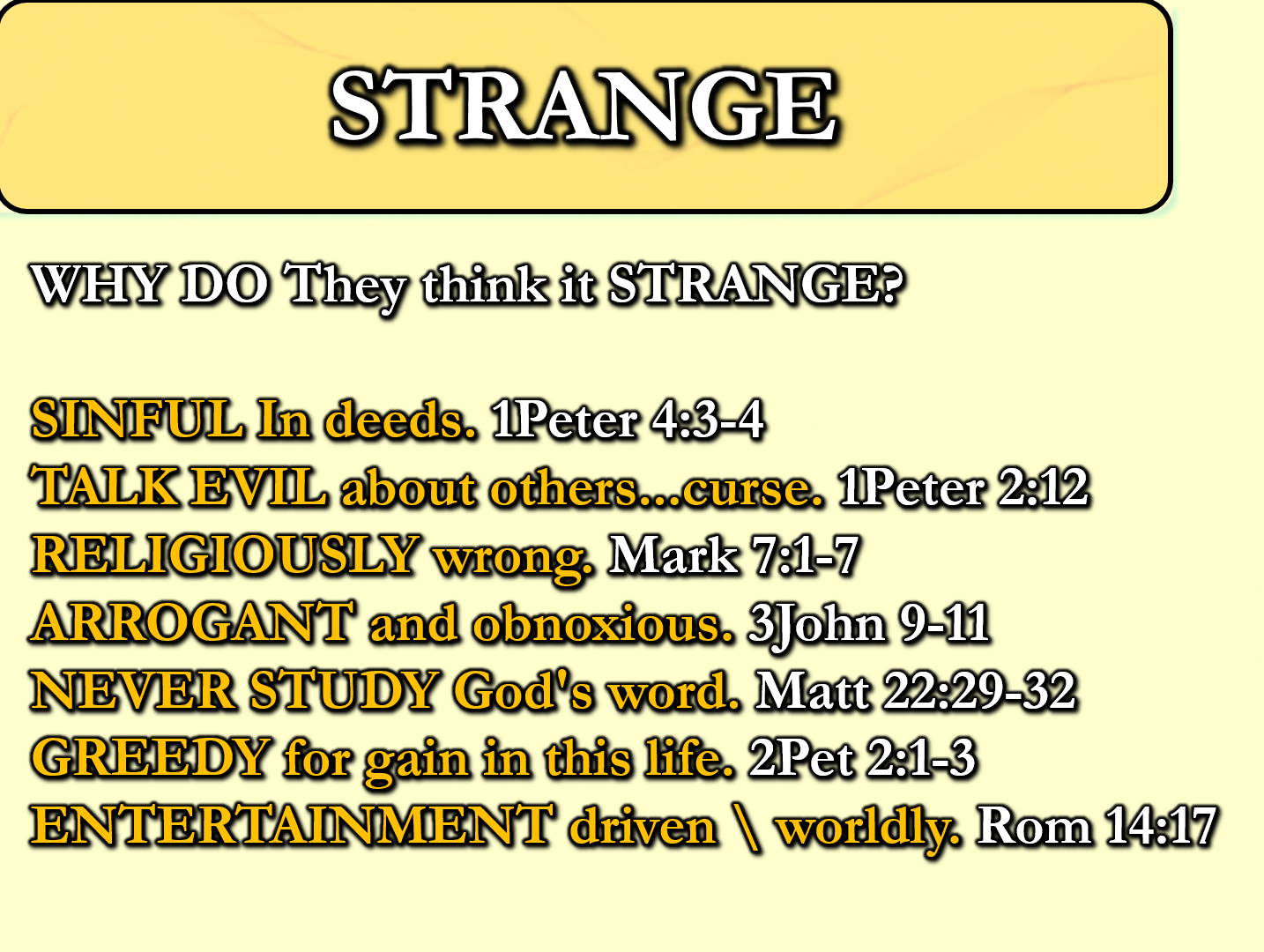
Why do those from our former lives think it STRANGE that we no longer run with them in wild living?

SINFUL In deeds. 1Peter 4:3-4

TALK EVIL about others…curse. 1Peter 2:12

RELIGIOUSLY wrong. Mark 7:1-7

ARROGANT and obnoxious. 3John 9-11

NEVER STUDY God’s word. Matt 22:29-32

GREEDY for gain in this life. 2Pet 2:1-3

ENTERTAINMENT driven \ worldly. Rom 14:17

Spencer

7 things to PROTECT #3, RESOURSES

7 Things we ought to PROTECT pt3. RESOURCES.

“O Timothy! keep that which is committed to thy trust,” (1Tim 6:20).

We’ve been taking a closer look at the 7 things we ought to protect.

This next one is about protecting RESOURCES.

Before we begin, it must be understood that we’re not talking about protecting things in this life because we trust them above God. That’s condemned.

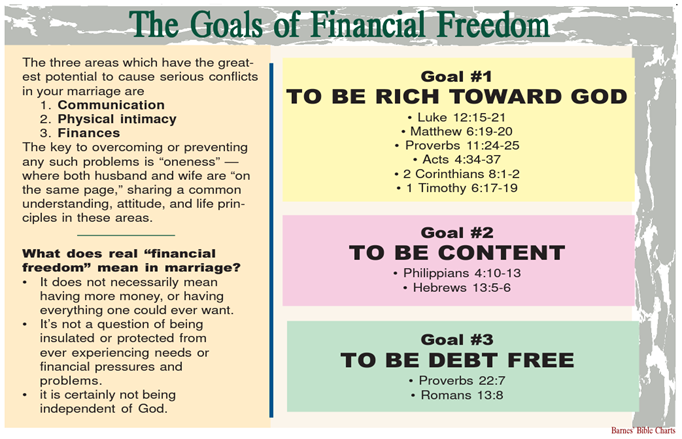
“Lay not up for yourselves treasures upon earth, where moth and rust doth corrupt, and where thieves break through and steal: But lay up for yourselves treasures in heaven, where neither moth nor rust doth corrupt, and where thieves do not break through nor steal: For where your treasure is, there will your heart be also” (Matt 6:19-21).

What is under consideration in this series is the proper use and the protection of them to guard them from Waste, Abuse, Sin, Trusting, and Exploitation (cf. Luke 15:12-14). “Every good gift and every perfect gift is from above, and cometh down from the Father of lights, with whom is no variableness, neither shadow of turning” (James 1:17).

Now that we understand that material goods are from God for our use and not for trusting in them, we can now see how to use these material blessings for HIS GLORY. Some erroneously believe that Christians (and especially preachers) are to take a vow of poverty.

Rom 13:8 Owe no man any thing, but to love one another: for he that loveth another hath fulfilled the law.

We are authorized to use resources for our personal MATERIAL needs. This is a blessing from God He gives to His children. “Now he that ministereth seed to the sower both minister bread for your food, and multiply your seed sown, and increase the fruits of your righteousness;) Being enriched in every thing to all bountifulness, which causeth through us thanksgiving to God” (2Cor 9:10-11). The Psalmist wrote, “I have been young, and now am old; yet have I not seen the righteous forsaken, nor his seed begging bread” (Psalm 37:25). Paul wrote to the church at Thessalonica, “And that ye study to be quiet, and to do your own business, and to work with your own hands, as we commanded you; That ye may walk honestly toward them that are without, and that ye may have lack of nothing” (2Thess 4:11-12; Phil 4:11; Heb 13:5).

Another use of our resources is to care for our OLDER Parents (and by extension our OLDER selves, cf. 2Cor 12:14; cf.  a warning; Luke 12:15-21) “But if any widow have children or nephews, let them learn first to shew piety at home, and to requite their parents: for that is good and acceptable before God. But if any provide not for his own, and specially for those of his own house, he hath denied the faith, and is worse than an infidel” (1Tim 5:4,8). Jesus condemned the Pharisees for their failure in caring for their parents by their erroneous dedication of their wealth for God (cf. Mark 7:9-13).

We ought also to use our resources from God to help NEEDY Saints (and as individuals, our needy NEIGHBORS, cf Luke 10:25-37). “Let him that stole steal no more: but rather let him labour, working with his hands the thing which is good, that he may have to give to him that needeth” (Eph 4:28). What we’re learning is that the Saint is to be working for his income and preserving some for use for those in NEED (cf. Gal 6:10; James 1:27).

Another blessing of the resources from above is for us to personally ENJOY (in a godly way of course). “Charge them that are rich in this world, that they be not highminded, nor trust in uncertain riches, but in the living God, who giveth us richly all things to enjoy” (1Tim 6:17). Another example that these resources are not for saving trust, but for the glory of God.

Rather than preserving resources out of worry or anxiety (cf. Matt 6:20-34), we ought to have a heart that is YEARNING to give. “Now concerning the collection for the saints, as I have given order to the churches of Galatia, even so do ye. Upon the first day of the week let every one of you lay by him in store, as God hath prospered him, that there be no gatherings when I come” (1Cor 16:1-2; cf. 2Cor 8:1-2; Acts 4:32-37 & 5:4). “But this I say, He which soweth sparingly shall reap also sparingly; and he which soweth bountifully shall reap also bountifully. Every man according as he purposeth in his heart, so let him give; not grudgingly, or of necessity: for God loveth a cheerful giver” (2Cor 9:6-7). One implied above is for the spreading of the Gospel through the support of evangelists; “For ye had compassion of me in my bonds, and took joyfully the spoiling of your goods, knowing in yourselves that ye have in heaven a better and an enduring substance” (Heb 10:34; 2Tim 2:4; cf. 1Co 9:9; 1Tim 5:18).

As you may notice, each of these uses of money are often for the helping of others. Before the ability to help another, we must first have enough for ourselves and more than we need, but don’t worry about that. When we have the proper attitude about money, God provides the increase; “And God is able to make all grace abound toward you; that ye, always having all sufficiency in all things, may abound to every good work: (As it is written, He hath dispersed abroad; he hath given to the poor: his righteousness remaineth for ever. Now he that ministereth seed to the sower both minister bread for your food, and multiply your seed sown, and increase the fruits of your righteousness;) Being enriched in every thing to all bountifulness, which causeth through us thanksgiving to God. For the administration of this service not only supplieth the want of the saints, but is abundant also by many thanksgivings unto God” (2Cor 9:8-12).

Spencer

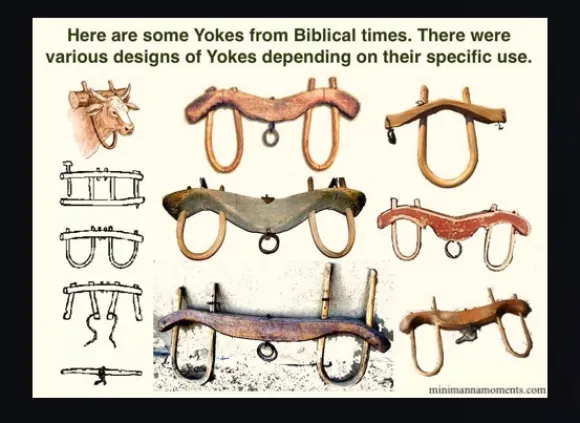
My Yoke is Easy, My BURDEN is light

My yoke is easy and My BURDEN is light.

Matt 11:28-30

28 “Come unto me, all ye that labour and are heavy laden, and I will give you rest. 29 Take my yoke upon you, and learn of me; for I am meek and lowly in heart: and ye shall find rest unto your souls. 30 For my yoke is easy, and my burden is light.”

How is the BURDEN light?

  1. we BELIEVE in the promises. Heb 12:6. 2Tim 4:6-8
  2. because of His UNSURPASSED love. Eph 3:18-21
  3. because of our REDEMPTION through Christ. 1John 1:7-9
  4. his word is DELIGHTFUL and not grievous. 1Cor 10:13. 1John 5:3; Ps 119:24
  5. because His Yoke is EASY. Mat 11:28-30
  6. because He NEVER LEAVES us nor forsakes us. Heb 13:5; Psalm 37:25

The BURDEN of Christ is easy and light.