
SHOULD, WOULD, COULD & OUGHT

Do the words SHOULD or OUGHT mean God is giving us a Hall Pass for sin?

Someone recently asked me about the word “SHOULD” in the Bible. It’s being claimed that if there are commands we SHOULD do, then God is giving a recommendation, and that we have liberty NOT to do it and suffer no penalty. Is that the proper understanding of this word? Nope, you SHOULDN’T view it this way.

I can see where the confusion lies. In our culture of free love & do whatever feels right, we can see how some might think God is just recommending we do stuff, if we want to do them. If it’s convenient.

Additionally, in the error riddled world of denominations, and the false doctrine of “once saved always saved,” it’s easy to think that God is making recommendations because we’re all going to heaven anyway.

Both of these views are completely out of sorts with the biblical use of the word and a complete misunderstanding of free will.

How that they told you there SHOULD be mockers in the last time, who SHOULD walk after their own ungodly lusts.” [Jude 1:18]

First, let’s define terms. As you can see in the above verse, SHOULD is usually replaced today with the word WOULD. The word means, “SHALL Come to pass.” It’s usually used in front of a verb to express ideas such as necessity, possibility, intention, and ability. “By faith Enoch was translated that he should not see death;” [Heb 11:5] Enoch DID NOT die. [Gen 5:22,24], it came to pass that Enoch did not see death. In Galatians 1:10, Paul wrote, “…for if I yet pleased men, I should not (WOULD NOT NKJV) be the servant of Christ.” SHOULD is a modal auxiliary verb, as are can, could, may, might, must, ought to, shall, should, will, and would. If you seek to please men over God, they you WOULD NOT be a servant of Christ. The use of SHOULD is not giving you a hall pass of disobedience.

Next, HAVING a choice in no way means you will be rewarded for choosing not to do what you SHOULD do. Free Will is not freedom from consequences. God has always given us the choice to do good or to do evil [Deut 11:26,28]. Just because we HAVE a choice, doesn’t mean God approves when we choose what we SHOULDN’T. “Thou therefore which teachest another, teachest thou not thyself? thou that preachest a man should not steal, dost thou steal?” [Rom 2:21,22] Would you say that God will give us a pass for theft just because He said we SHOULD not? In another passage, Christ gives a command to the Apostles: “…commanded them that they should not depart from Jerusalem,” [Acts 1:4]. Are you suggesting they could wait elsewhere and have the same results found in Acts 2?

Third, OUGHT is another word confused by rebels. They will focus on this word in much the same way as they do the word SHOULD. In Acts 5:28-29, we see both words being used. Read these carefully and see if we’re being given liberty to go against what we SHOULD do and OUGHT to do. “Did not we straitly command you that ye should not teach in this name? and, behold, ye have filled Jerusalem with your doctrine, and intend to bring this man’s blood upon us. Then Peter and the other apostles answered and said, We ought to obey God rather than men.” OUGHT we and SHOULD we obey God? (cf. 40)

We need to remember that UNITY with God comes from doing the things we “SHOULD” & “OUGHT” to do. “And this is love, that we walk after his commandments. This is the commandment, That, as ye have heard from the beginning, ye should walk in it.” [2John 6] Are you suggesting we can be UNIFIED with God and NOT do what we SHOULD do?

LANGUAGE may have evolved over time, but God’s word endures forever (cf. 1Peter 1:25). This is nothing more than a LAME attempt at wresting the scriptures to their own destruction [cf. 2Peter 3:16b]. An example of the evolution of a word is found in Genesis 1:28. “And God blessed them, and God said unto them, Be fruitful, and multiply, and replenish the earth,” Replenish today means: “to fill again or anew. to make full or complete again, as by supplying what is lacking, used up.” In 1611, the meaning of Replenish meant to fill, accomplish, furnish. Biblical context clearly shows it means to fill something that is empty. SHOULD might appear today as having been given a recommendation or a choice, but that’s not how God uses the word. To fail to understand correct original LANGUAGE usage is to be in jeopardy of wresting the scriptures to your own destruction.

If you DON’T do that which you SHOULD do, you’ll get what you DIDN’T want. The Hebrews writer uses the word SHOULD to show who DIDN’T do what they OUGHT to have done; “And to whom sware he that they should not enter into his rest, but to them that believed not?” They DID NOT enter His rest. [Heb 3:18; cf. Num 13 & 14] Do you suppose that they had a choice about entering God’s rest? Sure, and they SHOULD have crossed the Jordan, but they DID NOT do what they OUGHT to have done and they SHOULD NOT (DID NOT) enter His rest.

In his letter to the Galatians Paul wrote, “Ye did run well; who did hinder you that ye should not obey the truth?” They WEREN’T obeying the truth, obeying the truth had come to pass [Gal 5:7, 3:1]. Are you suggesting that the Galatians or we SHOULD NOT obey the truth and get away with it? Are you saying that we have a choice to not DO what God has commanded us to DO, to obey the truth? Are you implying that those who refuse to do what they SHOULD do, like obeying the truth, will enter heaven? I wouldn’t put my trust in that line of reasoning. Consider what Jesus will say on the judgment day…

“And why call ye me, Lord, Lord, and do not the things which I say?” [Luke 6:46]

If obey we SHOULD, then obey we COULD, and obey we OUGHT.

If obey the Gospel we DON’T, when obey the Gospel we OUGHT, then entering heaven we SHOULD NOT. (cf. 2Thess 1:8-9)

Facing WOES

1Corinthians 10:13:

There hath no temptation taken you but such as is common to man: but God is faithful, who will not suffer you to be tempted above that ye are able; but will with the temptation also make a way to escape, that ye may be able to bear it.”

Nobody likes trouble. However, God tells us in His Word to find joy in our trials…

My brethren, count it all joy when ye fall into divers temptations;” [James 1:2]

Rejoice, and be exceeding glad: for great is your reward in heaven: for so persecuted they the prophets which were before you.” [Mat 5:12]

And they departed from the presence of the council, rejoicing that they were counted worthy to suffer shame for his name.” [Acts 5:41]

Therefore I take pleasure in infirmities, in reproaches, in necessities, in persecutions, in distresses for Christ’s sake: for when I am weak, then am I strong.” [2Cor 12:10]

How are we to handle these verses? A solid biblical principle is this; When God gives a command, it’s within our ability to do it. If we SHOULD, the it is something we COULD.

Let’s examine 1Corinthinas 10:13 and see some very comforting truths…

There hath no temptation taken you but such as is common to man:”

First, we must recognize is that trouble comes to everyone, it’s WIDESPREAD. Any trouble, temptation or trial you will face will have been faced by others before. “…and there is no new thing under the sun.” [Ecc 1:9b]. There is comfort in the realization that no trouble is truly exotic. You’re not the first person to face trouble, nor the last. The main take away is this, we’re all in this together. The person that struggles with struggles often believes that they’re struggles are special. This mindset will only make things more miserable. We’ll never be able to “rejoice” if we believe we’re the only ones with trouble.

but God is faithful, who will not suffer you to be tempted above that ye are able;

Next, Paul writes that no trouble is able to OVERWHELM us beyond our ability to endure. God won’t allow it. That’s what the verse says. There’s comfort in these words. God doesn’t remove the trouble, but He does limit it to your capacity. Some might say, “I wish God wouldn’t trust me so much.” I get it, nobody likes trouble. However, we need to remember that nothing worthwhile ever comes without effort. James writes, “Knowing this, that the trying of your faith worketh patience. But let patience have her perfect work, that ye may be perfect and entire, wanting nothing.” [Jas 1:3-4]. This, along with the teaching from Hebrews 12 shows us that enduring trials makes one stronger, more experienced and more capable. This growth then puts us into the position to help others in their time of crisis. It’s through this understanding where we can begin to find Joy in suffering.

but will with the temptation also make a way to escape, that ye may be able to bear it.”

Third, God will also provide the way of ESCAPE. Comforting words to be sure. There will always be a means of ESCAPE to all of life’s temptations. Here’s the key that is often overlooked; YOU MUST SEEK IT AND TAKE IT!!! We have to participate in our own rescue. God provides the way of ESCAPE, but it’s up to each of us to take it. This key principle helps us to understand the true nature of Grace. God provides the means, that’s Grace, we must take it and utilize it. God provides the ultimate way of ESCAPE from the penalty of death for our sins; Salvation through obedience to the Gospel. That is Grace. We must act upon this Grace by doing what is commanded in the way of ESCAPE.

Yea, and for this very cause adding on your part all diligence, in your faith supply virtue; and in your virtue knowledge; and in your knowledge self-control; and in your self-control patience; and in your patience godliness; and in your godliness brotherly kindness; and in your brotherly kindness love.” [2Peter 1:5-7]

Implied in 1Cor 10:13, and directly stated elsewhere, is the command for us to apply SELF-CONTROL. The reality is that SELF is the only control we have. We cannot often control what happens to us, but we can ALWAYS control how we respond to what happens. Our response to the troubles, trials & tribulations of life are within our ability. Is it any wonder that the word ‘RESPONSIBILITY’ has within it the word ‘RESPONSE?’ Taking Responsibility for what happens to us is vital to our finding joy. This is not to say that all trouble is our fault. Often times it is not. However, acting & responding to whatever happens to us is ALWAYS our responsibility. If God says we SHOULD, we must know that we COULD.

Being challenged in life is inevitable. Being defeated is a choice. As shown through our verse, we can see that we have the means and the choice to endure temptations, trials, tribulations, and troubles. When we take responsibility, when we take action, we will instantly begin to discover JOY.

Rejoice in the Lord always:

again I will say, Rejoice.”

[Phil 4:4]

7 Lessons for FATHERS

According to the U.S. Census Bureau, 19.5 million children, more than 1 in 4, live without a father in the home. Source: U.S. Census Bureau. (2018). Living arrangements of children under 18 years old: 1960 to present.

Those are troubling numbers. FATHERS are vital to any society, but what can the church do about it. We can do what we have been appointed to do, train the brethren who are, or hope to be FATHERS. Let’s look at 7 things the Bible Teaches about FATHERS.

Fathers, and all Christians, are to be FEARLESS & FAITHFUL. An example of both is found in the Parents of Moses when they hid him from Pharoah [Heb 11:23; Ex 2:1-4; cf. Rev 21:8]. “By faith Moses, when he was born, was hid three months of his parents, because they saw he was a proper child; and they were not afraid of the king’s commandment.”

The second thing, as is seen in the stats above, Fathers are to ABIDE with their children’s mother. Marriage is honorable (Heb 13:4), and it is not good for man to be alone (Gen 2:18). Peter wrote, “Likewise, ye husbands, dwell with them according to knowledge, giving honour unto the wife, as unto the weaker vessel, and as being heirs together of the grace of life; that your prayers be not hindered.” (1Peter 3:7)

With these first two in place, then the third becomes easier. Fathers are to TRAIN their children in the nurture and admonition of the Lord (Eph 6:4; cf. Heb 12:12:3-11). Numerous Proverbs & other Old Testament passages say the same. “Correct thy son, and he shall give thee rest; yea, he shall give delight unto thy soul.” (Prov 29:17)

The fourth thing is somewhat unpopular at the moment, but is still the Truth. Fathers are to be the HEAD of the Household. He is to lead his house both for their physical needs, but especially for their spiritual needs. (1Tim 3:4; Eph 5:23; 1Cor 11:3) Leading the home is a qualification of Elders in the church.

The fifth thing is a warning to fathers not to ENABLE their children. He is to care for them, but that doesn’t mean he is to enable their sin. An example of this is found in Eli of 1Samual 2:27-36 & 3:13-14. “For I have told him that I will judge his house for ever for the iniquity which he knoweth; because his sons made themselves vile, and he restrained them not.”

RESPECT is to be given to fathers by his family, this is the sixth thing (Heb 12:9; Eph 5:33). But respect must be earned, it cannot be forced. Therefore, this is within his ability to do. Earning RESPECT from anyone requires the person desiring it to be worthy of respect. A good starting place might be 2Peter 1:5-10. “…add to your faith virtue; and to virtue knowledge; And to knowledge temperance; and to temperance patience; and to patience godliness; And to godliness brotherly kindness; and to brotherly kindness charity. For if these things be in you, and abound, they make you that ye shall neither be barren nor unfruitful in the knowledge of our Lord Jesus Christ:”

Lastly, Fathers are to provide for the SECURITY of their family. This means that he is to work to provide for the physical needs of his house; “But if any provide not for his own, and specially for those of his own house, he hath denied the faith, and is worse than an infidel.” (1Tim 5:8) Looking again at the stats at the beginning of this article, one can easily see what happens when a father fails in his duty to provide for his house. Their may be special circumstances that hinder his ability to work, but these do not negate any of his responsibilities. There are many examples of godly men providing for the security of their families, but Job stands out among them all. “And it was so, when the days of their feasting were gone about, that Job sent and sanctified them, and rose up early in the morning, and offered burnt offerings according to the number of them all: for Job said, It may be that my sons have sinned, and cursed God in their hearts. Thus did Job continually.” While we don’t offer burnt offerings today, we fathers must continually pray for our whole family, especially for our children.

Years ago, I was taught how to pray for my children. I pray 5 things for my boys still today.

  • I pray for their Physical health (3John 2).
  • I pray for their Emotional Protection. (Pr 4:23)
  • I pray that they have positive Associates to influence them. (1Cor 15:33)
  • I pray that they may be Coupled in marriage to Godly women. (1Cor 7:39)
  • I pray that they be faithful to God and have an Eternal home in Heaven. (2John 4)

Fathers, we have a vital role to play in the lives of our children, let us do it with purpose & joy.

Distracted by the CARES of the world

14 The sower soweth the word.

WAYSIDE.

15 And these are they by the way side, where the word is sown; but when they have heard, Satan cometh immediately, and taketh away the word that was sown in their hearts.

STONY GROUND.

16 And these are they likewise which are sown on stony ground; who, when they have heard the word, immediately receive it with gladness;

17 And have no root in themselves, and so endure but for a time: afterward, when affliction or persecution ariseth for the word’s sake, immediately they are offended.

THORNY GROUND.

18 And these are they which are sown among thorns; such as hear the word,

19 And the cares of this world, and the deceitfulness of riches, and the lusts of other things entering in, choke the word, and it becometh unfruitful.

GOOD GROUND.

20 And these are they which are sown on good ground; such as hear the word, and receive it, and bring forth fruit, some thirtyfold, some sixty, and some an hundred. [Mark 4:14-20]

All of us are barraged daily with things that distract. The CHALLENGES of life feel like trying to take a SIP of water from a FIREHOSE. Does your life feel like that? Mine too. Everyone seems to want / need your attention. Some of them are not sinful in themselves, but when we allow them to take away from more important things, then they become sin.

Therefore to him that knoweth to do good, and doeth it not, to him it is sin.” [James 4:17]

Paul tells us, “And be not conformed to this world” [Rom 12:2]; John says we must “not love the world or the things in the world” [1John 2:15-17]; James wrote “Do you not know that friendship with the world is enmity with God” [James 4:4] and to remain “unspotted from the world” [James 1:27]. While much can be said about all 4 soils, this article will focus on the Thorny Ground, “the CARES of this world.”

First, we all face the physical (the bible calls them CARNAL) needs of life. Food, Clothing & Shelter are necessities and not sinful. For most of us it feels like we work just to pay our bills, or that we’re in a rat race. This is telling us that the Carnal needs of life are surpassing the “weightier matters.” Another way of saying this is with one word, WORRY. Jesus gives us the remedy; “But seek ye first the kingdom of God, and his righteousness; and all these things shall be added unto you.” [Mat 6:19-34]

A second thing that is not necessarily sinful are the AMUSEMENTS we have. The scriptures teach us that God, “giveth us richly all things to enjoy.” It’s ok to relax, rest and enjoy the fruits of our labor. However, when they push out the “weightier matters” they have become sin.“There is treasure to be desired and oil in the dwelling of the wise; but a foolish man spendeth it up.” [Prov 21:20] When we take time to enjoy the fruits of our labor, do we forsake the assembling of ourselves together when we go on vacation? We’re not speaking of sinful things like adultery, fornication, stealing, drunkenness, lying, etc. Often, it’s the lawful things that we’ve placed ahead of our service to the Lord.

The third thing that can become a distraction, and I say this with all humility knowing that this one hits our heart, is our RELATIONSHIPS. Family & Friends are important, commanded, and necessary to our existence. [cf. Gen 2:18; 1Cor 7:2; 1Tim 5:16 et al] However, even these can lead to distraction if we allow relationships to take us away from that which is right. “He that loveth father or mother more than me is not worthy of me: and he that loveth son or daughter more than me is not worthy of me.” [Mat 10:37; cf. 1Cor 7:32-33] We must care for our families, AND we must serve the Lord. God is not telling us to stop loving our family, friends, or neighbors. We ought to do these things without leaving the others undone. Here’s something to remember; our family, who have gone on before us, would give this exact advice! [Luke 16:19-31:]

Fourthly, mixed in with all of the above is our need for money. Our household ECONOMICS can elevate to a point where we begin to trust it above our trust in God. “Charge them that are rich in this world, that they be not highminded, nor trust in uncertain riches, but in the living God,” [1Tim 6:10,17; cf. James 5:3; Mat 6:19] One must love and trust the Lord PREEMINENTLY [Col 1:18].

A fifth distraction can be the SOCIAL Ills of the world. Some of us have placed our concern for Societal ills ABOVE the spreading of the Gospel. This concern creeps into our practices in the church. We must be constantly reminded that the Gospel “is the power of God unto salvation to every one that believeth; to the Jew first, and also to the Greek.” [Rom 1:16]. We must help our neighbors, and the best way to do that is by teaching them the way of the Lord and by doing things His way [Mat 22:21; 2Thess 3:12; 1Tim 5:16; Eph 4:28].

Be on your guard, be watching and let’s not grow weary doing good while waiting for the Lord’s return. May we be found well doing when He returns. “Blessed are those servants, whom the Lord when he cometh shall find watching: verily I say unto you, that he shall gird himself, and make them to sit down to meat, and will come forth and serve them.” [Luke 12:37]

And take heed to yourselves, lest at any time your hearts be overcharged with surfeiting, and drunkenness, and CARES of this life, and so that day come upon you unawares.” [Luke 21:34; emp mine seb]

From the mouth of Babes

“When it’s thundering, that’s just God bowling.”

“When it’s lightening, that’s God taking pictures.”

“When it’s raining, that’s God crying.”

Perhaps many of us have heard these as children from our parents trying to comfort us. While their intentions were good, the doors were opened for more errors.

I remember hearing a little girl refer to spirits, witches, demons, devils & ghosts to explain sickness, troubles and strange events in her young life. She said, “that’s what my mom told me.”

And this mom is a church goer!!

This little person continued to describe other things she was taught from her parents. “The devil has horns, a red face and a long tale.” Truly sad.

You think that these lies will leave the heart of an imaginative child and not follow them into adulthood? Nay, Nay. An acquaintance of mine spoke about the loss of an adult son; “he had demons.” They weren’t speaking figuratively. Truly sad.

These lies continue to be taught through movies, songs, and YouTube videos. All of which our children are given unfettered and unsupervised access without giving them access to the truth, God’s word.

These stories illustrate a problem we have, people know more that isn’t so than they know about the comfort from the truth. They don’t know the truth, because they are too busy to read it.

A LITTLE MAID.

In second Kings, we hear of a little maid who offers comforting hope to the man that had stolen her from her home in Israel [2King 5:1-4]. What can we learn from a little girl, a little MAID?

The story begins with the description of a MIGHTY MAN of Valor that had stolen a little maid during a raid on Israel. He is not a friend; he is an enemy to the little maid. However, he had a problem, he was a leper.

Rather than withhold from her enemy the hope of a cure, she ADVISED her mistress, Naaman’s wife, who then told Naaman. Naaman believed and was willing to go to the land from which he stole, and went to the land for help! This all began because of the faith of a little maid. This speaks volumes about her more than it does of the others.

What was it about her that she was willing to tell of a cure to her enemy? Perhaps it was the teaching about love for an enemy… “Thou shalt not avenge, nor bear any grudge against the children of thy people, but thou shalt love thy neighbour as thyself: I am the LORD.” [Lev 19:18; cf. Mat 22:35-39] This command is connected to Loving God Himself! When a person has love for their enemy, the desire for vengeance will evaporate. Love changes our actions toward another, even toward an enemy.

But I say unto you which hear, Love your enemies, do good to them which hate you, Bless them that curse you, and pray for them which despitefully use you.” [Luke 6:27-28]

What Advice did she give her captor?

IF ONLY my master were with the prophet who is in Samaria! For he would heal him of his leprosy.” She told of a cure, not half-truths or falsehoods. She told of actual hope, not the mythological fairy tales we tell children to give them false hope. AND THEY BELIEVED HER.

We have to turn to hear Jesus to complete the story

And many lepers were in Israel in the time of Elisha the prophet; and none of them was cleansed, saving Naaman the Syrian.” [Luke 4:27] Did you catch it? She told them of a cure that She DID NOT HERSELF SEE!! She knew it because of her faith in God, her trust in the Almighty. She had more faith than the king of Israel [2King 5:7]. Jesus uses her example to illustrate Himself being rejected by his own people.

What’s the moral to the story? Children can learn the truth and be comforted by it during their time of need. They don’t need to be told myths. They can handle the truth. The truth will make them free from fear [John 8:32]. And not only that, they can grow in the grace and knowledge of the Lord Jesus Christ and share their faith with others in their time of need.

Preaching the Cross

Some will argue against the preaching of obedience to the gospel by crying, “PREACH THE MAN, NOT THE PLAN.” They may also say, “THE NEW TESTAMENT IS A LOVE LETTER NOT A LAW BOOK.”

How does one answer such charges? Are they correct in their assertions? Is preaching about baptism, the one church, and against the errors of liberalism & denominationalism opposed to preaching the Cross of Christ?

What does the Bible say? If our speech and preaching needs any revision, let us hear it from the revealed word of Jesus the Christ. Philosophies of preaching from liberal professors will not suffice. We shall appeal to the word of God for all things in word or deed [Col 3:17].

 As this article begins, we are reminded to ‘season our words with salt’ [Col 4:6]. We are not mad any anyone. Our desire is that everyone come to the knowledge of the truth and be saved. It’s to that end that we “Preach the Cross of Christ.”

To preach the CROSS is to preach “CHRIST CRUCIFIED” [1Cor 1:23]. Preaching the cross is to preach the gospel [1Cor 1:17,18]. It is not “with enticing words of man’s wisdom,” “But we speak the wisdom of God in a mystery,” which has been revealed by the Spirit of God in the book of God, the Bible [1Cor 2:1-13].

Those that heard the preaching of the Cross RECEIVED the gospel [Acts 2:41; 8:14; 1Cor 15:1]. To receive the gospel, through the word, is to receive the ‘grace of God’ [2Cor 6:1; Titus 2:11-12]. To preach the cross is to ‘testify the gospel of the grace of God’ [Act 20:24].

Until one is OBEDIENT to the word of his grace, he has not been saved by the preaching of the Cross [1Pet 1:22; 1Cor 1:18]. Whenever and wherever one is obedient to the gospel he is saved by grace [Acts 10:48; 15:11]. When Paul preached the cross to the Corinthians, they were obedient in baptism in the name of Jesus the Christ [Acts 18:8; 1Cor 1:13]. This is how they were “washed” [1Cor 6:11]. Baptism is “in the name of the Lord Jesus” [Mat 28:19; Acts 10:48; 19:5], and baptism “in the name of the Lord” is “for the remission of sins” [Acts 2:38; 10:48; 19:5].

Then, as Paul rebuked SIN found in the church at Corinth, was he not ‘preaching the cross?’ When he spoke against division, immorality, marriage, and the perversions of the Lord’s Supper, was he not ‘preaching the cross?’ [1Cor 14:37]. The entire letter is the command of the Lord, the wisdom of God, the Gospel.

When the elitist tells us to ‘preach the man, not the plan,’ without condemning the antichrist teachings of denominations, they have missed the mark regarding the connection of Jesus to His plan. To preach the Man without His plan is to miss the SYNONYMOUS terms spoken of salvation.

  • “Baptized into Christ” [Rom 6:3,4; Gal 3:27]. “Baptized into one body,” the church [1Cor 12:13, 20; Eph 1:22-23; Col 1:18, 24].
  • Reconciled unto God “in Christ” [2Cor 5:18-20]. Reconciled unto God “in one body by the cross,” the church [Eph 1:22,23; 2:16].
  • Saved, redeemed by the blood of Christ [1Peter 1:18-19; Eph 1:7; Col 1:14]. Church purchased with the blood of Christ [Act 20:28].
  • Christ “gave himself for me” and tasted “death for every man” [Gal 2:20; Heb 2:9]. Christ “gave himself for it,” the church [Eph 5:25].
  • “In Christ” – “made nigh” – “by the blood” [Eph 2:13]. “In one body” – “reconciled” – “by the cross” [Eph 2:16].

It is not off balance, nor out of focus, to speak about baptism into the body or church of Christ, to speak of reconciliation in one body, the church, to speak of Christ having purchased the church with His own blood. To speak of one, Christ, is to speak of the other, the church. Paul once “persecuted the church” [Act 8:3; Gal 1:13; 1Cor 15:9], but when the Lord appeared to him, He said, “why persecutest thou me?” [Acts 9:4; 22:7; 26:14]. To preach Christ, to preach the Cross, is to preach the church. If to persecute Christ is to persecute the church, then to preach Christ is to preach the church. It stands to reason, anyone against the doctrine of Christ, is against Christ [2John 9].

Let us therefore, speaking the truth in love, Preach the Cross.

When God’s Children Take a Stand

The language of the bible is clear, we are to take a STAND for the cause of Christ, for the Gospel.

We can and must be KIND…

Col 4:6 Let your speech be alway with grace, seasoned with salt, that ye may know how ye ought to answer every man.

We can and must have LOVE…

1Co 13:1 If I speak with the tongues of men and of angels, but have not love, I am become sounding brass, or a clanging cymbal.

Today, the Christian must STAND…

against SIN. 1Peter 1:16 because it is written, Ye shall be holy; for I am holy.

for the TRUTH. Eph 6:14 Stand therefore, having your loins girt about with truth, and having on the breastplate of righteousness;

in AGAPE Love. Eph 4:15 But speaking the truth in love, may grow up into him in all things, which is the head, even Christ:

NOTHING wavering. Jas 4:8 Draw nigh to God, and he will draw nigh to you. Cleanse your hands, ye sinners; and purify your hearts, ye doubleminded.

Proclaiming the Lord’s DEATH til He come. 1Co 11:26 For as often as ye eat this bread, and drink the cup, ye proclaim the Lord’s death till he come.

Letter to a Friend (2o3)

Dear Friend, (continued 2o3)

The church is to be subject to Christ in all things (Ephesians 5:23,24). Jesus is the head of the church (Colossians 1:18; Ephesians 1:22,23), not any representative on earth. The church that belongs to Christ requires a “thus saith the Lord,” a scriptural reason for everything that it says and does (2 Timothy 3:16,17; 1Peter 4:11; 2 John 9; Revelation 22:18,19). The church cannot go beyond that which is written. If a man teaches something other than the truth he is to be cut off from the church (Galatians 1:6-10; 2 John 9-11). That means the church will do what Christ has authorized; no more, no less (Colossians 3:17; Acts 4:7). There must be a “thus saith the Lord” before the church can act. As the army of Christ, composed of soldiers of Christ, it cannot advance unless given the command of Christ.

The commands of Christ are found in the New Testament, Jesus took the Old Testament out of the way, nailing it to the cross (Colossians 2:12-14; Ephesians 2:14-17; Galatians 3:1-5, 17-29; 4:21-5:5; Hebrews 8:1-28; 12:18-29; 13:11-12; 2 Corinthians 3:1-18). We are not under the Old Testament, for Christ is become of no effect unto you, whosoever of you are justified by the law; ye are fallen from grace (Galatians 5:4).

The conditions for pardon and fellowship are given in the New Testament. Those who receive pardon and are accepted into the fellowship of the church are:

  • those who, having HEARD the word of God, and have FAITH (Romans 10:17; Hebrews 11:1,6);
  • those whose faith causes them to REPENT (Acts 17:30; 2Peter 3:9);
  • those who CONFESS their faith in Jesus as the Son of God (Acts 8:36,37; Romans 10:9,10; Matthew 10:32,33);
  • those who are IMMERSED in water in order to obtain the remission of sins (Mark 16:16; Acts 2:38; 22:16; Galatians 3:26,27; 1Peter 3:21);
  • those who REMAIN FAITHFUL in obedience, for those who walk disorderly are rejected John 15:1-6; 2Peter 2:20-22; Revelation 3:15,16). Any other conditions are commandments and doctrines of men.

The church is subject to Christ in organization. There is no organization revealed in God’s Word larger than the local congregation. The local congregation is to have a plurality of men who watch over that congregation who are known as elders, overseers, bishops, and pastors (Acts 14:23; 20:17,28; Titus 1:5-7; Ephesians 4:11). This is not one individual, but a group of individuals. These men must meet all of the qualifications set forth to serve (1Timothy 3:1-7; Titus 1:5-9). There is no record of a singular pastor over a congregation. The local congregation also has deacons who meet the qualifications (Philippians 1:1; Acts 6:1-6; 1 Timothy 3:8-13). 

The local congregation also has preachers, or evangelists (Acts 21:8; 2Timothy 4:1-5). The church no longer has living apostles or prophets (Acts 1:21-26; Ephesians 2:20).  There is no separation of clergy and laity, for all are priests unto God (1Peter 2:5,9). A congregation can exist without elders, deacons or a preacher.  But no man has the right to assume the eldership without the correct credentials.  We cannot make up our own government for the church.

The church is to be subject to Christ in its worship. The local church meets together in one place upon the first day of the week, every week, and partakes of the unleavened bread and the fruit of the vine in the Lord’s Supper (Acts 20:7; Matthew 26:26-30; 1Corinthians 11:17-34). The church as it gathers together sings without instrumental music nor specialized singers (Ephesians 5:19; Colossians 3:16). The worship also includes prayer (Acts 2:42; 12:5), preaching (Acts 20:7), and a free will contribution (1Corinthians 16:1-2; 2 Corinthians 9:6,7). During the assembly the women are to keep silence (1Corinthians 14:34,35; 1Timothy 2:11-15).

  • Friend, do the “churches” that you are attending realize and teach that the church is the saved, and since it is that which Christ shed his blood for, and is the Savior of, you must be a part of the church to be saved?
  • Do the “churches” that you are attending teach and practice that Christ is the head of the church, rejecting all creeds and councils for the church, and accepting the New Testament as their only creed book?
  • Friend, Do the “churches” that you attend justify their actions from the Old Testament? or do they abide by the doctrine of Christ?
  • Do the “churches” you attend teach and practice the conditions of pardon and fellowship that the apostles revealed by inspiration, or do they have other conditions?
  • Friend, do the “churches” you attend have the organization found in the New Testament? or do they have a state, regional and/or national organization?
  • Do the “churches” you attend follow the New Testament plan for worship in partaking of the Lord’s Supper every week, having congregational singing without instrumental music, praying, preaching the word, and having a free-will contribution?

Ask the preachers if they have a creed book. Ask them if they have a ruling council. Ask the preachers if they justify their actions by the Old Testament. Ask them what it takes to become a member of their denomination. Are the answers to these questions the answers which are given in the New Testament? Are they the church you read about in the New Testament?

(continued next week)

Letter to a Friend 1of3

I have no idea who wrote this following letter (part 1 of 3 parts), but I found it very powerful and convicting. May it be of help to you in your personal work.

Dear Friend,

I pray that you and your family are all well.

I am sending this letter because I have been unable to see you in person to study with you concerning the church of our Lord. I do not believe this is a matter that can be put off indefinitely because of the importance of the issue and its affect upon the eternal destiny of your soul, and those of your household.

What is written in this letter is written because of the love that I have for you. Friend, I like you and want you to do what is right in the sight of God. It is difficult in writing to see the tear in the eye, and the tenderness and cry in the voice that portray the love in the heart. Words written tend to seem harsher than the same words spoken. However, be assured of the tenderness of my heart in presenting these words to you.

Please, consider all that is said. Take your Bible and check to see that those things that I have written are true. If they are not what the Scriptures teach, do not believe it! But, if it is what the Scriptures teach, believe it and obey it for the sake of your soul. If you think that I am wrong, please show me where, I do not want to be wrong.

The church in the New Testament does not refer to a building. The church is a people. The church can hear and talk (Matthew 18:17); the church can fear (Acts 5:11); the church can be persecuted (Acts 8:1); the church can pray (Acts 12:8). A people can do these things, but neither organization nor a building can.

The church of Christ in the New Testament was the people who were saved. They were those bought with the blood of Christ (Acts 20:28). They are those who upon their belief are baptized in order to obtain the remission of sins: “Now when they heard this, they wen pricked in their heart, and said unto Peter and to the rest of the apostles, Men and brethren, what shall we do? Then Peter said unto them, Repent and be baptized every one of you in the name of Jesus Christ for the remission of sins… Then they that gladly received bis word were baptized: and the same day were added unto them about three thousand soul… And the Lord added unto the church daily such as should be saved.” (Acts 2:37,38,41,47; Mark 16:16). Being bought with a price they were God’s, and temples. (1Corinthians 6:19,20). They were redeemed, not with corruptible things, as silver and gold, from your vain conversation received by tradition from your fathers, but with the precious blood of Christ, as of a lamb without blemish and without spot: who verily was foreordained before the foundation of the world, but was made manifest in these last times for you: (1Peter 1:18-20). The Lord adds the saved to His church.

The church is to be subject to Christ in all things (Ephesians 5:23,24). Jesus is the head of the church (Colossians 1:18; Ephesians 1:22,23), not any representative on earth. The church that belongs to Christ requires a “thus saith the Lord,” a scriptural reason for everything that it says and does (2 Timothy 3:16,17; 1Peter 4:11; 2 John 9; Revelation 22:18,19). The church cannot go beyond that which is written. If a man teaches something other than the truth he is to be cut off from the church (Galatians 1:6-10; 2 John 9-11). That means the church will do what Christ has authorized; no more, no less (Colossians 3:17; Acts 4:7). There must be a “thus saith the Lord” before the church can act. As the army of Christ, composed of soldiers of Christ, it cannot advance unless given the command of Christ.

The commands of Christ are found in the New Testament, Jesus took the Old Testament out of the way, nailing it to the cross (Colossians 2:12-14; Ephesians 2:14-17; Galatians 3:1-5, 17-29; 4:21-5:5; Hebrews 8:1-28; 12:18-29; 13:11-12; 2 Corinthians 3:1-18). We are not under the Old Testament, for Christ is become of no effect unto you, whosoever of you are justified by the law; ye are fallen from grace (Galatians 5:4).

The conditions for pardon and fellowship are given in the New Testament. Those who receive pardon and are accepted into the fellowship of the church are:

  • those who, having HEARD the word of God, have FAITH (Romans 10:17; Hebrews 11:1,6);
  • those whose faith causes them to REPENT (Luke 13:3; Acts 17:30; 2Peter 3:9);
  • those who CONFESS their faith in Jesus as the Son of God (Acts 8:36,37; Romans 10:9,10; Matthew 10:32,33);
  • those who are IMMERSED (baptized in water) in order to obtain the remission of sins (Mark 16:16; Acts 2:38; 22:16; Galatians 3:26,27; 1Peter 3:21);
  • those who REMAIN FAITHFUL IN OBEDIENCE, for those who walk disorderly are rejected (John 15:1-6; 2Peter 2:20-22; Revelation 3:15,16).

Any other conditions are commandments and doctrines of men. There is only one DOCTRINE of CHRIST and we are not to change it by adding to it or taking from it. (2John 9; Rev 22:18; De 4:2; 12:32; Pr 30:6). Neither do we blend it with the Law of Moses. (Col 2:14)

The MANIFOLD wisdom of God

The MANIFOLD wisdom of God.

One thing that keeps us from talking to others about the Gospel of Christ is the fear someone will challenge us with something we don’t know how to answer. We are also afraid of steering anyone in the wrong direction, so we do nothing.

What if I told you that the vast majority of challenges you will encounter could be traced back to just a few simple principles? What if I told you that if you learned these handful of principles you could answer most OBJECTIONS to the gospel? How would that affect your confidence?

We need not study the teachings of denominations. If we study these few truths, we will be equipped.

And ye shall know the truth, and the truth shall make you free.” [John 8:32] 

How would you like to learn just a few biblical truths and be able answer all these errors…?

COMMON ERRORS taught by denominations.

Saved by Faith only, Grace alone, Eph 2:8-9 only, There’s Nothing man can do to be saved, Baptism does not save, John 3:1-5 is physical birth, The Jailor was told to just believe, What if you’re in a desert without water, Infant Baptism, What if you’re on the way to be baptized and die, What’s in the water, It’s a good idea to be baptized but not necessary, The Bible Doesn’t say we can’t do ___, We have liberty to do whatever is not spoken against directly, We don’t have to be accurate with the word of God, You’re a Legalist, The End justifies the means, We draw people in with Bands, brews & burgers, varying Worship activities & practices, varying days of corporate worship, Tithing v giving, Rapture, TULIP (Total depravity, Unconditional election, Limited Atonement, Irresistible Grace, Perseverance of the saints), Racial Prejudice, Men & women roles, women preachers / pastors, Popes, Cardinals & Priests, “God spoke to me,” Predestination, “I’m too sinful to be saved,” Marriage Divorce & Remarriage, Marriage perversions, Holy Spirit gifts, Another Testament of Jesus Christ, Mormons, Speaking in tongues, “God called me,” Seeing visions & dreams, Premonitions, mediums etc, Hardening pharaoh’s heart, Why does God allow evil, God is not good because of evil & pain, God isn’t good if He doesn’t end evil, God is not good if He can’t stop the evil, God has a plan for you, Demon possession, Direct operation of the Holy Spirit, Instrumental music in worship, David used instruments, Sabbath keeping, Feast days of the Old Testament, the 10 commandments, “What about the Thief on the cross,” “John 3:16 is all I need,” It’s just love, Love not Legalism, “You hate people because you judge them,” “there are Many ways to Christ,” God’s Love is so big that He has Many drawers (one for every denomination), Denominationalism, division in Religion, “God called you to your church and He called me to my church, Many churches, There are many ways to Christ, “many ships headed to one destination,” Institutionalism, Herald of Truth, In Search of the Lord’s way, Missionary Societies, church sponsored institutions, the sponsoring church, clothing rooms, general benevolence, “Christians aren’t supposed to debate,” “Let’s agree to disagree,” Once Saved always saved, Emotionalism, Gnosticism, “you think you’re the only ones going to heaven,” “You’re closed minded,” and more.

Yes, you can. By thoroughly learning a few foundational biblical truths, you can answer all of the above errors.

8 Foundational Truths

  1. Everyone MUST obey the Gospel to be saved.

[2Thess 1:8-9; Heb 5:8-9]

  • All AUTHORITY is in Christ, and His commands are written in the New Testament.

[Mat 28:18; Luke 6:46; 1Cor 14:37]

  • God is NO RESPECTER of persons.

[Acts 10:34; James 2:1-12]

  • The INSPIRATION of the Holy Spirit is complete.

[John 20:30-31; Eph 3:3-4; 1Cor 13:8-13; 2Tim 3:15-17]

  • The FREE WILL of man is never infringed.

[Deut 30:19; Josh 24:15; Mat 15:14; Philemon]

  • The Old Testament Law has ended.

[Hebrews 7,8,9,10; Col 2:14]

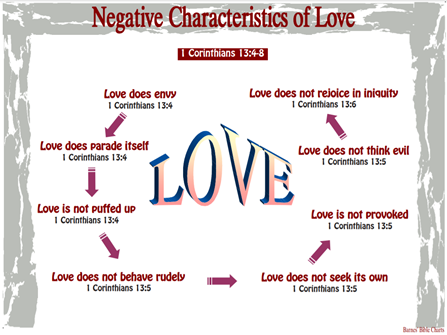
  • LOVE does not mean the acceptance of sin or that repentance is not required of us.

[John 13:35; 14:15; 15:14; Luke 6:46; 1John 5:3; 1Cor 13]

  • There is only one DOCTRINE of CHRIST and we are not to change it by adding to it or taking from it.

[2John 9; Rev 22:18; De 4:2; 12:32; Pr 30:6]

These 8 truths, if learned well, will aid you in facing nearly all of the challenges you will face in your personal evangelism.

May God Bless you all.