Who are we? We are just CHRISTIANS.

“Then Agrippa said unto Paul, Almost thou persuadest me to be a Christian. And Paul said, I would to God, that not only thou, but also all that hear me this day, were both almost, and altogether such as I am, except these bonds.” (Acts 26:28,29).

We’re often asked to show our ID’s. From getting on a plane, to buying things on credit, or to the police officer that pulled me over looking for my autograph.

We use identification to gain access to banking accounts, safety deposit boxes, and the like.

When we speak about locating the Lord’s church, we look for its identifying marks. What does it teach about salvation, assembling together for worship, morality, and eschatology.

The Christian has an identity also. It’s interesting to note that our identity is in relationship to our God and to fellow Christians.

Let us explore our multifaceted identity as outlined in God’s Word.

When viewed in relation to God we are His children. “And will be a Father unto you, and ye shall be my sons and daughters, saith the Lord Almighty.” (2Cor 6:18)

When viewed in relation of hope we are heirs. “And if children, then heirs; heirs of God, and joint-heirs with Christ; if so be that we suffer with him, that we may be also glorified together.” (Rom. 8:17)

When viewed in relation to each other we are brethren. “I beseech you therefore, brethren, by the mercies of God, that ye present your bodies a living sacrifice, holy, acceptable unto God, which is your reasonable service.” (Rom. 12:1)

When viewed in relation to character we are saints. “To all that be in Rome, beloved of God, called to be saints: Grace to you and peace from God our Father, and the Lord Jesus Christ.” (Rom. 1:7)

If viewed as fighters we are soldiers. “Thou therefore endure hardness, as a good soldier of Jesus Christ.” (2Tim. 2:3)

When viewed in relation to our abode upon earth we are pilgrims. “Dearly beloved, I beseech you as strangers and pilgrims, abstain from fleshly lusts, which war against the soul.” (1Pet. 2:11.)

When viewed as the Image of Christ we are persecuted. “But rejoice, inasmuch as ye are partakers of Christ’s sufferings; that, when his glory shall be revealed, ye may be glad also with exceeding joy.” (1Pet 4:13; cf. Matt 10:24,25; 2Tim 3:12).

When viewed as learners of Christ we are disciples (adherents). “Go ye therefore, and make disciples of all the nations, baptizing them into the name of the Father and of the Son and of the Holy Spirit” (Matt. 28:19 ASV).

When viewed in relation to Christ we have a name; we are called Christians. “And the disciples were called Christians first in Antioch.” (Acts 11:26b).

When viewed as workers for the Lord we are servants of Christ. “For, brethren, ye have been called unto liberty; only use not liberty for an occasion to the flesh, but by love serve one another.” (Gal. 5:13).

Agape,

Spencer

We are striving to be undenominational and non-sectarian. We plead for a restoration of New Testament Christianity. It is our sincere conviction that one cannot be right in the sight of God by ignoring and disregarding the teaching of God’s word. Let us strive to “do all in the name of the Lord Jesus” (Col. 3:17).
From Milk to Meat, Heb 5:12-6:2

“Therefore leaving the principles of the doctrine of Christ, let us go on unto perfection; not laying again the foundation of repentance from dead works, and of faith toward God, Of the doctrine of baptisms, and of laying on of hands, and of resurrection of the dead, and of eternal judgment” (Heb 5:12-6:2).

In the book of Hebrews, the writer admonishes believers to progress from the foundational principles of the doctrine of Christ towards spiritual maturity, (Heb 5:12-14).

Believers are likened to infants who require milk, unable to digest the deeper truths of the gospel. Instead, they are urged to embrace the “strong meat” of the Word, reserved for those who are mature and spiritually discerning. The writer then lists 6 foundational principles that believers are to be building upon.

The first principle is repentance from dead works. Galatians 5:19-26 underscores the contrast between the works of the flesh and the fruit of the Spirit, emphasizing the need for genuine repentance and fruits worthy of repentance.

The next is faith toward God, which is central to the doctrine of Christ. This faith is not merely intellectual assent but a deep-seated trust in the character and promises of God. Without faith it is impossible to please God. (Heb 11:6). Believers are commanded to add to their faith (2Peter 1:5-11).

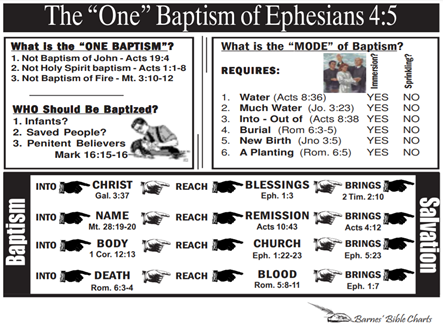
The third is the doctrine of baptisms which encompasses various forms of baptism, including water baptism and baptism in the Holy Spirit. Hebrews 9:10 references the ceremonial washings prescribed in the Old Testament law, while Ephesians 4:4-6 emphasizes the unity of believers through the one baptism in Christ. Believers are called to understand the significance of water baptism as the moment one’s sins are washed away and marks the beginning of a new life in Christ (Acts 2:38; 8:35-39; 22:16; Rom 6:3-4).

Next is the laying on of hands which has 3 forms in the NT Apostolic age of the church; the impartation of spiritual gifts, in healing the sick, and commissioning for ministry. Acts 8:17 shows through the laying on of the Apostles’ that the Holy Spirit was given, while Acts 6:6 and Acts 13:3 shows the ordination of individuals for service in the early church. Believers today are only able to practice the ordination of men to the work of the ministry.

Fifth is the resurrection of the dead which is a foundational truth of the Christian faith, affirming the hope of eternal life. Scriptures such as Matthew 22:23 and 1Corinthians 15:12-19 underscore the reality of resurrection and its implications for believers. Acts 17:32 shows how the resurrection is a stumbling block for unbelievers. As followers of Christ, believers are called to live in light of eternity, knowing that death is not the end but the beginning of a glorious new existence in Christ (1Thess 4:13-18).

Finally, believers are reminded of the reality of eternal judgment, wherein every person will give an account for their actions. Matthew 25:26 and Mark 9:41-50 emphasize the seriousness of sin and its consequences. Believers are called to live in reverence and obedience to God, knowing that we must all appear before the judgment seat of Christ (2Cor 5:10-11a).

The doctrine of Christ is not merely a set of beliefs to be acknowledged but is foundational truth from which we are expected to grow & mature, and become effective citizens in the Lord’s Kingdom. “But grow in grace, and in the knowledge of our Lord and Saviour Jesus Christ. To him be glory both now and for ever. Amen” (2Pet 3:18).

Agape,

Spencer

This article is part 3 of a series titled, God’s Moral Law. click here for part one.

You are invited to visit one of our services in Borger Texas. Here is a link to information about finding a church, who we are, and why we’re different.

Sinning against the Holy Spirit

“Let the word of Christ dwell in you richly in all wisdom” (Colossians 3:16).

The concept of blasphemy against the Holy Spirit has long intrigued and, at times, perplexed believers. In Mark 3:29, Jesus warns about an unforgiveable sin called blasphemy against the Holy Spirit. Some have said that it’s saying a certain phrase. That view doesn’t fit with the rest of the scriptures on this matter.

It makes sense that this blasphemy involves disobeying the written word of God and remaining unrepentant unto death. It is the Holy Spirit that reveals God’s will to man. This is true for the Old and the New Testaments.

“For the prophecy came not in old time by the will of man: but holy men of God spake as they were moved by the Holy Ghost”

(2Pet 1:21; Acts 1:16; Heb 9:8; 2Tim 3:16-17).

To better understand this ultimate sin, let’s explore the many ways we sin against the Holy Spirit as revealed in the written word.

Ephesians 4:30 implores believers not to grieve the Holy Spirit. Sorrowing the Spirit occurs when we engage in actions contrary to God’s commands. Look at what Isaiah wrote; “But they rebelled, and vexed his holy Spirit: therefore he was turned to be their enemy, and he fought against them” (Isaiah 63:10). This grief is a result of our disobedience and disregard for His word. When we knowingly choose sin over righteousness, we grieve the Spirit.

In 1 Thessalonians 5:19, we are warned not to quench the Spirit. The Holy Spirit is often symbolized as a flame or fire (Acts 2:3-4). To quench the Spirit is to suppress His influence in our lives through the word. When we ignore His revealed word, or neglect the pursuit of spiritual growth, we extinguish the flame of the Spirit that should cause a burning within us. “Did not our heart burn within us, while he talked with us by the way, and while he opened to us the scriptures?” (cf. Luke 24:32).

Acts 5:1-11 recounts the tragic tale of Ananias and Sapphira, who lied to God the Holy Spirit. Deception never draws us closer to God. They chose to lie to be seen as being more generous than they were. We can fake out men, but we’ll never pull the wool over the all-seeing eyes of God.

In Acts 7:51, Stephen accuses the religious leaders of resisting the Holy Spirit. Resistance involves actively opposing the Spirit’s instructions in the revealed word. When we resist the Holy Spirit, we interfere with the saving power of the Gospel (Romans 1:16).

The account of Simon the sorcerer in Acts 8:17-24 illustrates the danger of insulting the Holy Spirit. Simon sought to purchase the power of the Holy Spirit, demonstrating a profound misunderstanding of the Spirit’s purpose. This sin lies in attempting to commercialize the divine. When we seek to use the Word for personal gain, we insult His sovereignty and it seeks to take advantage (cf. 2Pet 2:3).

Mark 3:22-30 warns against turning away from the Holy Spirit in an unrepentant state. Turning away involves a deliberate rejection of the Spirit’s convicting work and a refusal to acknowledge our need for repentance. If this form of rebellion continues until death, it closes the door to God’s mercy and forgiveness. Unrepentance signifies a hardened heart that resists the transformative power of the Gospel leading to eternal death.

 Agape,

Spencer

Here’s a link for additional reading on how we’re led by the Holy Spirit.

This is part 3 of a series “Preaching through Mark.” Click here for the complete series.

What is Grace pt5, it brings ETERNAL life.

“For by grace are ye saved through faith; and that not of yourselves: it is the gift of God.”

(Eph 2:8)

“But we believe that through the grace of the Lord Jesus Christ we shall be saved, even as they.” (Acts 15:11)

“For the grace of God that bringeth salvation hath appeared to all men,” (Titus 2:11)

“That being justified by his grace, we should be made heirs according to the hope of eternal life” (Titus 3:7).

Grace is the gift of God that brings us Eternal Life. “For the wages of sin is death; but the gift of God is eternal life through Jesus Christ our Lord” (Romans 6:23).

It may be helpful to some, as it is me, to think about the grace of God that enables us to have ETERNAL life.

First, we need to explain what ETERNAL means, (I know, but some “scholars” try to tell us it doesn’t mean what we think it means). It means EVERLASTING; perpetual, forever, ongoing. We look forward to a time when we can live with the Lord forever and ever.  

How to attain to Eternal life is TAUGHT by the Word of Christ. “Then Simon Peter answered him, Lord, to whom shall we go? thou hast the words of eternal life” (Joh 6:68). “Labour not for the meat which perisheth, but for that meat which endureth unto everlasting life” (John 6:27). “Verily, verily, I say unto you, He that heareth my word, and believeth on him that sent me, hath everlasting life, and shall not come into condemnation; but is passed from death unto life” (John 5:24). “Search the scriptures; for in them ye think ye have eternal life: and they are they which testify of me” (John 5:39). We would know nothing about it separate and apart from the revealed will of God in the Scriptures.

Eternal life is our lifelong EXPECTATION of hope that is in Christ. “And this is the promise that he hath promised us, even eternal life” (1John 2:25). “In hope of eternal life, which God, that cannot lie, promised before the world began” (Titus 1:2; 3:7). “To them who by patient continuance in well doing seek for glory and honour and immortality, eternal life” (Romans 2:7). Without eternal life, where is the hope?

Eternal life is for the RIGHTEOUS as defined by God. “And these shall go away into everlasting punishment: but the righteous into life eternal” (Matt 25:46). “That as sin hath reigned unto death, even so might grace reign through righteousness unto eternal life by Jesus Christ our Lord” (Rom 5:21). We are made righteous through the blood of Christ when we are baptized into Christ (Rom 5:9; Rev 1:5).

There is a NEGATIVE aspect to eternal life. The same length of eternity that awaits those that are in Christ also awaits those who are outside of Christ. The difference will be location. “Then shall he say also unto them on the left hand, Depart from me, ye cursed, into everlasting fire, prepared for the devil and his angels” (Matt 25:41-46). “But he that shall blaspheme against the Holy Ghost hath never forgiveness, but is in danger of eternal damnation” (Mark 3:29). “Who shall be punished with everlasting destruction from the presence of the Lord, and from the glory of his power” (2Thess 1:9). “Even as Sodom and Gomorrha, and the cities about them in like manner, giving themselves over to fornication, and going after strange flesh, are set forth for an example, suffering the vengeance of eternal fire” (Jude 1:7). Some will claim that the lost will be annihilated; the scriptures teach something different.

Back to the positive aspects of eternal life. We can be ASSURED of eternal life by our faithfulness to Christ. “These things have I written unto you that believe on the name of the Son of God; that ye may know that ye have eternal life, and that ye may believe on the name of the Son of God” (1John 5:13). When our faith begins to waver, perhaps it’s an indication of a need to study His word, examine ourselves, and make correction so we may return to that confidence we have in Christ. “And now, little children, abide in him; that, when he shall appear, we may have confidence, and not be ashamed before him at his coming” (1John 2:28; cf Heb 3:14; 10:22).

We can LAY HOLD of eternal life; “Fight the good fight of faith, lay hold on eternal life, whereunto thou art also called, and hast professed a good profession before many witnesses… Laying up in store for themselves a good foundation against the time to come, that they may lay hold on eternal life.” (1Tim 6:12, 19). This is done when we remain in the LOVE of Christ. “Keep yourselves in the love of God, looking for the mercy of our Lord Jesus Christ unto eternal life” (Jude 1:21). We love God when we keep His commandments. “For this is the love of God, that we keep his commandments: and his commandments are not grievous” (1John 5:3; cf John 14:15). The New Testament Scriptures are consistent on this point. “For he that soweth to his flesh shall of the flesh reap corruption; but he that soweth to the Spirit shall of the Spirit reap life everlasting” (Gal 6:8). “And being made perfect, he became the author of eternal salvation unto all them that obey him” (Heb 5:9).

Spencer

If you are in the Borger area and would like to attend one of the services of the church of Christ at Franklin and Juniper, click here for location, and time.

Examples of those that READ pt4

4 Examples of those who READ the Bible, and the Results.

#4 Daniel.

This amazing man (cf. Ezek 14:14,20) could interpret the Kings dream of the tall statue, and read the handwriting on the wall. (Dan 2; 5). This is the Daniel that was rescued by God out of the Lions den. (Dan 6).

This inspired man STUDIED the word of God. Specifically he was READING from Jeremiah 25:11; 29:10.

Daniel 9:2 KJV

In the first year of his reign I Daniel understood by books the number of the years, whereof the word of the Lord came to Jeremiah the prophet, that he would accomplish seventy years in the desolations of Jerusalem.

LESSON FOR US TODAY.

We can know God’s intentions for us today when we READ.

Can you see how important God’s people placed on reading?

Let’s read the bible through in 2023

Here’s a link to some printable Bible reading Bookmarks.

If you live in the Borger area and would like to study the bible better, we invite you to one of our services with the church of Christ on Franklin and Juniper.

4 Examples of those that READ. pt1

4 Examples of those who READ the Bible, and the Results.

I often encourage folks to READ the Bible. There are several examples of those that READ the bible and the results that followed.

#1 King Josiah Read & RESTORED OT Worship.

He was commanded to Read.

Deut 17:18 And it shall be, when he sitteth upon the throne of his kingdom, that he shall write him a copy of this law in a book out of that which is before the priests the Levites: 19 And it shall be with him, and he shall read therein all the days of his life: that he may learn to fear the LORD his God, to keep all the words of this law and these statutes, to do them:

But they had neglected that over the years, until they found a copy and he READ it.

2Kings 22:11 And it came to pass, when the king had heard the words of the book of the law, that he rent his clothes. 13 Go ye, enquire of the LORD for me, and for the people, and for all Judah, concerning the words of this book that is found: for great is the wrath of the LORD that is kindled against us, because our fathers have not hearkened unto the words of this book, to do according unto all that which is written concerning us.

(BTW, Based on the chart above, if you consider Genesis – Deuteronomy to be the Law of Moses, then this reading took about about 14 hours to read orally) In 2Chron 35:4, there is reference to the writings of King David.

2Kings 23:21 And the king commanded all the people, saying, Keep the passover unto the LORD your God, as it is written in the book of this covenant. 22 Surely there was not holden such a passover from the days of the judges that judged Israel, nor in all the days of the kings of Israel, nor of the kings of Judah;

LESSON FOR US TODAY.

We can RESTORE New Testament worship when we READ.

Luke 22:15-20; 1Cor 11:17-34

1Cor 11:29 For he that eateth and drinketh unworthily, eateth and drinketh damnation to himself, not discerning the Lord’s body. 30 For this cause many are weak and sickly among you, and many sleep.

Let’s read the bible through in 2023

Here’s a link to some printable Bible reading Bookmarks.

If you live in the Borger area and would like to study the bible better, we invite you to one of our services with the church of Christ on Franklin and Juniper.

Increase our FAITH

add to your faith…

“And the apostles said unto the Lord, Increase our faith.” (Luke 17:5).

All of us could use a little bit more faith, and if we had the faith of a mustard seed, we could move mountains (cf. Luke 17:6).

The word ‘Faith’ can be confusing. In one place it says, “Where is your faith?” Yet, in another place it says that FAITH was once delivered (cf. Luke 8:25; Jude 3).

In one place it says, “faith cometh by hearing,” and in another it says that faith is a gift of the Holy Spirit.

It’s easy to see how we become confused by this very complex and powerful word. It’s up to us to study and to understand what it is the Lord is conveying through this little word.

Let’s look at faith.

The Greek word translated ‘FAITH’ is; pistis; persuasion, i.e. credence; moral conviction (of religious truth, or the truthfulness of God or a religious teacher), especially reliance upon Christ for salvation; abstractly, constancy in such profession; by extension, the system of religious (Gospel) truth itself: –assurance, belief, believe, faith, fidelity. (W.E. VINES)

That’s the definition of the word, but to fully appreciate FAITH, we need to look into scripture for its use. Would it surprise you to learn that scripture records FAITH in 7 different ways?

FAITH as it is used in the scriptures.

What we usually think when we say “FAITH” is BELIEF. “But without faith it is impossible to please him” (Heb 11:6; cf John 12:42). Consider that James uses belief and faith synonymously, “Yea, a man may say, Thou hast faith, and I have works: shew me thy faith without thy works, and I will shew thee my faith by my works. Thou believest that there is one God; thou doest well: the devils also believe, and tremble” (Jas 2:18-19).

Another common way we understand FAITH is with the word TRUST. “And he saith unto them, Why are ye fearful, O ye of little faith? Then he arose, and rebuked the winds and the sea; and there was a great calm” (Matt 8:26). Abraham trusted God when he offered up the son of promise. “By faith Abraham, when he was tried, offered up Isaac: and he that had received the promises offered up his only begotten son, Of whom it was said, That in Isaac shall thy seed be called: Accounting that God was able to raise him up, even from the dead; from whence also he received him in a figure” (Heb 11:17-19; cf. Rom 9:17-20; John 14:1; Luke 7:9).

Here’s where it gets difficult for some. FAITH is also used in conjunction with OBEDIENCE. Paul wrote in Romans, “By whom we have received grace and apostleship, for obedience to the faith among all nations, for his name:” “But now is made manifest, and by the scriptures of the prophets, according to the commandment of the everlasting God, made known to all nations for the obedience of faith” (Romans 1:5; 16:26).

FAITH is also an objective content called “the faith” that is delivered. “So then faith cometh by hearing, and hearing by the word of God” (Rom 10:17). Jude says, “Beloved, when I gave all diligence to write unto you of the common salvation, it was needful for me to write unto you, and exhort you that ye should earnestly contend for the faith which was once delivered unto the saints” (Jude 1:3; cf Gal 1:11,23).

FAITH is also used to mean LOYAL. To be faithful is to be loyal. “Let us hold fast the profession of our faith without wavering; (for he is faithful that promised;)” (Heb 10:23) “Fear none of those things which thou shalt suffer: behold, the devil shall cast some of you into prison, that ye may be tried; and ye shall have tribulation ten days: be thou faithful unto death, and I will give thee a crown of life” (Rev 2:10).

Yet another way FAITH is used is seen in one’s strong personal conviction. “Above all, taking the shield of faith, wherewith ye shall be able to quench all the fiery darts of the wicked” (Eph 6:16). “Him that is weak in the faith receive ye, but not to doubtful disputations. For one believeth that he may eat all things: another, who is weak, eateth herbs” (Rom 14:1-2).

Lastly, FAITH is listed among the 9 spiritual gifts early saints could receive during the writing of the New Testament (1Cor 12:8-9; 13:2; Matt 17:20)

As you can see, FAITH is a very complex word. To disconnect it from its full meaning for one definition is to pervert the word of God.

Spencer is an evangelist for the church of Christ at Franklin & Juniper in Borger Texas.

Bible Reading Plan for 2022

One of the difficulties in reading the Bible is confusion over the how each book fits in with the chronology of the other books. This is especially true with the Old Testament prophets.

This Bible Reading plan will include a list for each book in chronological order (or at least in order of its period in the Old Testament).

It is still possible to read the whole bible in about one year, just 15 – 20 minutes per day.

“Whereby, when ye read, ye may understand my knowledge in the mystery of Christ)” [Eph 3:4] “So then faith cometh by hearing, and hearing by the word of God.” [Rom 10:17]

These bookmarks will help you to know how each of the books of the Old Testament and the Prophets fit into the narrative. The book of Job fits in the Patriarchal period. The Psalms, Proverbs, Ecclesiastes, & Song of Songs fit into the time of the United Kingdom under David & Solomon.

Here is a chart showing you how much time it takes to read the Whole Bible in 1 year or years, or multiple times in a year.

May God bless our efforts to know more of His word.

     — spencer

Spencer is an evangelist for the Franklin & Juniper St church of Christ in Borger Texas. If you live in the Borger area and would like a personal bible study, please reach out & let us know how we can help.

Why We Left the World

It was a dark and stormy night that frigid evening in November of 1997. It was dark, and the storm was within our hearts, because we had just learned some things about our condition toward God.

By that time my wife and I had been engaged for a few weeks in some simple bible studies with Uncle Charlie.  

The study had just ended having studied what God required of us to receive His grace. We didn’t answer at that moment. Uncle Charlie said, “Ok then, I guess I’ll be going.” I knew he wanted an answer, but none came.

After he left, we talked. We talked for an hour.

WHY WE LEFT THE WORLD.

We weren’t terrible people; we were just a young couple with 3 children trying our best to take care of ourselves. We both believed in God but never really knew about our responsibility toward Him. Until that night.

That night we realized the LOVE that God had toward us and the whole world. “For God so loved the world, that he gave his only begotten Son, that whosoever believeth in him should not perish, but have everlasting life.” (John 3:16) We realized that this LOVE was demonstrated through the death of Christ on a cross. “But God commendeth his love toward us, in that, while we were yet sinners, Christ died for us.” (Romans 5:8) We realized that to LOVE God we must keep His commandments. “If ye love me, keep my commandments.” (John 14:15; 1John 5:3; Luke 6:46)

That night we heard a very clear EXPLANATION from the scriptures about our sin condition and the sin solution. There were no words without a passage to support them. The passages themselves are very EASY to understand.

  • “I said therefore unto you, that ye shall die in your sins: for if ye believe not that I am he, ye shall die in your sins.” (John 8:24)
  • “I tell you, Nay: but, except ye repent, ye shall all likewise perish.” (Luke 13:3)
  • “Whosoever therefore shall confess me before men, him will I confess also before my Father which is in heaven.” (Matt 10:32-33)
  • “Repent, and be baptized every one of you in the name of Jesus Christ for the remission of sins, and ye shall receive the gift of the Holy Ghost.” (Acts 2:38)
  • “But he that shall endure unto the end, the same shall be saved.” (Matt 24:13)

We knew that it was an all or nothing decision. Before we would do anything, we agreed that this was an all or nothing endeavor.

God would not take a half-hearted lip service. “The fear of the LORD is the beginning of knowledge: but fools despise wisdom and instruction.” (Prov 1:7) We had a godly FEAR of the Lord. A mix of Reverence, Awe and Terror. “It is a fearful thing to fall into the hands of the living God.” (Heb 10:31)

We agreed together, but when? “Now,” we said. “TONIGHT.” To delay may mean death. It was well after 10:00pm when I called Uncle Charlie to tell him we desired to obey the gospel in water baptism. He asked, “when?” I answered, “TONIGHT.” He joyfully replied, “LET’S GO!” Had he tried to put us off, or schedule a TIME to be baptized we would likely never have done it. We knew that the TIME was right now, as soon as possible. “For he saith, I have heard thee in a time accepted, and in the day of salvation have I succoured thee: behold, now is the accepted time; behold, now is the day of salvation.” (2Cor 6:2)

What is the biblical TIMING for baptism? Immediately upon understanding your condition toward God and understanding what HE requires of thee. “And he took them the same hour of the night, and washed their stripes; and was baptized, he and all his, straightway.” (Acts 16:33)

That night we put on Christ through baptism. That night we obeyed the Gospel. That night we began our newness of life.

We slept peacefully that night knowing that we had done what the Lord had commanded to be done. We rejoiced and continue to rejoice giving thanks to God for His indescribable gift.

“Thanks be unto God for his unspeakable gift.” (2Cor 9:15)

— spencer

Manifold wisdom pt 6; the OT is over

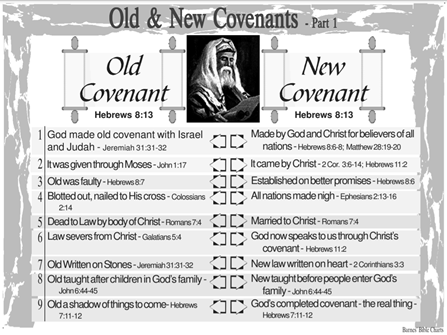
the OLD COVENANT has been taken away.

This topic is most often seen when those objecting to the practices of the New Covenant of Christ bring up…

  • Instrumental music in worship.
  • Sabbath Keeping.
  • Food restrictions.
  • Priests & Clergy Laity.
  • Saving the Thief on the cross.
  • misc. practices.

It is true that the Old Testament was written for our learning, it is not used to be used for doctrine under the New Covenant of Christ. [Rom 15:4; 1Cor 10:6,11].

If we understand the OT is over, we can answer the vast majority of challenges by denominations.

The Bible Calls the Law of Moses OLD.

We don’t call it OLD or New of ourselves, God calls it OLD. “In that he saith, A new covenant, he hath made the first old. Now that which decayeth and waxeth old is ready to vanish away.” [Heb 8:13]

The purpose of the Law of Moses was because of TRANSGRESSIONS.

If God had in mind a New Covenant, why did He make the Law of Moses? “It was added because of transgressions, till the seed should come to whom the promise was made; and it was ordained by angels in the hand of a mediator… Wherefore the law was our schoolmaster to bring us unto Christ, that we might be justified by faith.” [Gal 3:19-24]

The Bible also says that the Law of Moses is LIMITED, Faulty & Weak as compared to the Law of Christ.

“For it is not possible that the blood of bulls and of goats should take away sins.” [Heb 10:4]

“For if that first covenant had been faultless, then should no place have been sought for the second.” [Heb 8:7]

“But now, after that ye have known God, or rather are known of God, how turn ye again to the weak and beggarly elements, whereunto ye desire again to be in bondage?” [Gal 4:9]

These verses don’t teach that God made a mistake. They teach that the Old Covenant served a Temporary purpose, “to bring us to Christ.” [Gal 3:19-24].

When the Seed Promise, who is Christ, appeared, the Law of Moses was ABOLISHED on the cross.

“Blotting out the handwriting of ordinances that was against us, which was contrary to us, and took it out of the way, nailing it to his cross;” [Col 2:14]

“Having abolished in his flesh the enmity, even the law of commandments contained in ordinances; for to make in himself of twain one new man, so making peace; And that he might reconcile both unto God in one body by the cross, having slain the enmity thereby:” [Eph 2:15-16]

What does OLD, LIMITED, ABOLISHED, & WEAK, mean to you?

Lastly, the Law of Moses WAS a SHADOW of good things to come.

“For the law having a shadow of good things to come, and not the very image of the things, can never with those sacrifices which they offered year by year continually make the comers thereunto perfect.” [Heb 10:1]

“Which are a shadow of things to come; but the body is of Christ.” [Col 2:16-17]

“But Christ being come an high priest of good things to come, by a greater and more perfect tabernacle, not made with hands, that is to say, not of this building;” [Heb 9:11]

“Who serve unto the example and shadow of heavenly things, as Moses was admonished of God when he was about to make the tabernacle:” [Heb 8:5]

When presented with these truths, some may ask, “Why then do we study the Old Testament?” This is a great question which God answers in His word. It is for our learning from their examples [1Cor 10:6,11]. What should we learn? Let’s read…

“Now these things were our examples, to the intent we should not lust after evil things, as they also lusted. Neither be ye idolaters, as were some of them; as it is written, The people sat down to eat and drink, and rose up to play. Neither let us commit fornication, as some of them committed, and fell in one day three and twenty thousand. Neither let us tempt Christ, as some of them also tempted, and were destroyed of serpents. Neither murmur ye, as some of them also murmured, and were destroyed of the destroyer. Now all these things happened unto them for ensamples: and they are written for our admonition, upon whom the ends of the world are come.”

Just because the Law of Moses was abolished DOES NOT MEAN there is no Law nor Doctrine. That’s another mistake being made.

“Bear ye one another’s burdens, and so fulfil the law of Christ.”

[Gal 6:2]

“Whosoever transgresseth, and abideth not in the doctrine of Christ, hath not God. He that abideth in the doctrine of Christ, he hath both the Father and the Son.” [2John 1:9; Heb 6:1]